





Street Food Platters Compared: How to Build a Balanced Indian Sharing Meal
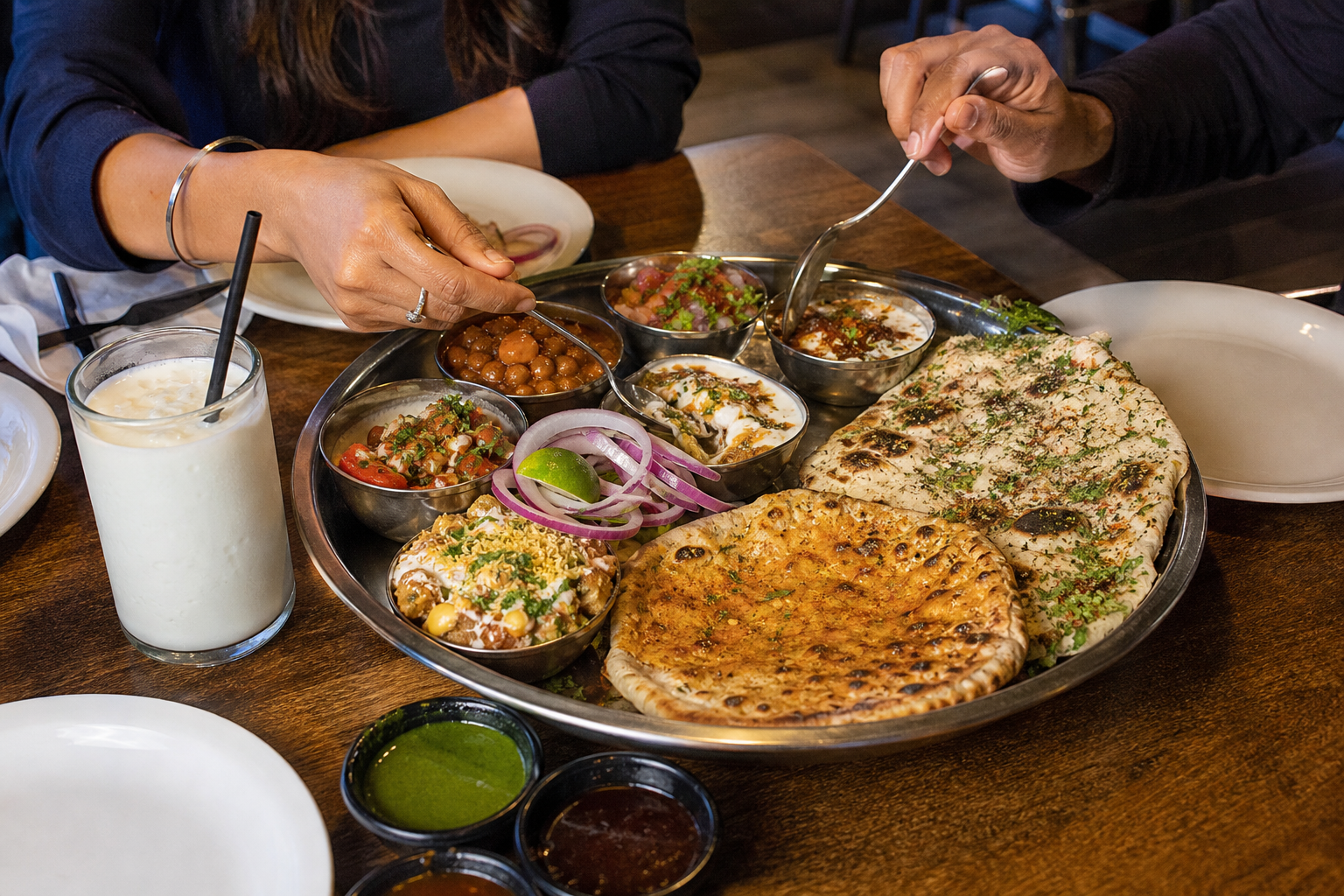
The best street food platter is not simply the one with the most dishes. It should match your group’s appetite, spice preferences, desired texture, and serving time. Chaat brings tang and crunch, kulcha and chole create a hearty Amritsari meal, tandoori items add smoky flavour, and crisp starters suit casual grazing.
The combinations below are planning ideas, not confirmed platter packages from any one restaurant. If you are ordering in Brampton, confirm current availability, ingredients, portions, preparation timing, and event options directly before placing your order.
What belongs on a well-balanced street food platter?
A useful platter usually has four roles: a substantial base, a crisp or grilled element, sauces or chutneys for contrast, and something cooling or refreshing. This gives diners variety without making every item rich, spicy, soft, or fried.
Punjabi street fare can bring together stuffed breads, chickpeas, snacks, chutneys, and tandoori foods in a shared meal. You can explore the wider context of Punjabi street fare before choosing a combination. A platter may be a small snack selection, a complete meal, or a group spread built around one signature item.
A substantial bread or curry can anchor the order, while chaat, grilled items, or traditional starters supply contrast. Chutneys add brightness, and a lassi or another refreshing drink can make a rich or spicy meal feel more balanced.
Compare four street food platter combinations

There is no single best combination for every table. Use the following options according to the occasion and the kind of eating experience your group wants.
1. Chaat-focused platter for freshness and contrast
A chaat-focused platter is built around crisp toppings, chutneys, and softer ingredients such as potato or chickpeas. It suits diners who enjoy tangy, layered flavours and several textures in each serving. It can also work well as a starter before a main meal.
The tradeoff is timing. Crisp elements can lose their texture when they sit under chutney or yogurt. Ask whether the street-style chaat will be assembled close to serving and whether wet toppings can be kept separate for takeaway or events.
2. Kulcha-and-chole platter for a hearty Amritsari meal
Kulcha and chole create a filling, bread-and-curry combination. Stuffed kulcha provides a crisp, substantial base, while spiced chickpeas add moisture and depth. Chutney or a fresh accompaniment can cut through the richness.
This is a strong direction for diners seeking Amritsari cuisine or an authentic Punjabi meal rather than a light snack. Confirm the current menu, fillings, serving format, and portion size instead of assuming that a restaurant offers a named kulcha platter.
3. Tandoori-and-chutney platter for smoky flavour
Tandoori items add roasted aroma and a firmer, grilled texture to a shared order. Paneer tikka, tandoori paneer, or chaap-style choices can provide a smoky centrepiece alongside chutneys and fresh accompaniments. This option suits guests who prefer grilled food over fried or bread-based dishes.
Ingredients, marinades, dairy content, and preparation methods can vary, so confirm current details before ordering. A tandoori combination may also need bread, curry, or a lighter side if it is intended to serve as a complete meal.
4. Crisp-starter mix for casual grazing
A crisp-starter mix suits informal gatherings where people want to sample several flavours. Traditional starters, street-style bites, chutneys, and a cooling drink can create a relaxed spread without one dominant dish.
Variety is the advantage, but holding time is the limitation. Fried or crisp foods are generally best soon after preparation, so order according to when guests will eat. If the starters are part of a larger meal, keep the mix focused and include contrasting textures.
Choose the combination by your group
For a family with mixed preferences, combine one substantial item with one grilled or crisp option, then add chutneys and a cooling drink. This gives guests different textures without requiring everyone to eat the same level of spice or richness.
For kulcha-focused diners, make the stuffed bread and chole the centre of the order, then add a lighter or tangy accompaniment. For guests who prefer grilled food, use tandoori items as the main feature and add bread or curry only if the meal needs more substance.
For spice-conscious guests, ask which dishes are milder and whether accompaniments can be served separately. Groups with vegetarian, vegan, dairy-free, gluten-related, or allergy concerns should ask specific ingredient and cross-contact questions before ordering.
For parties and casual events, a customizable chaat or street-food station may be easier to manage than one pre-mixed platter. Confirm servingware, preparation timing, current availability, and whether the restaurant provides the required service.
Manage the main platter tradeoff: variety versus freshness
More variety does not always produce a better platter. Chaat toppings, fried starters, breads, chutneys, and grilled items have different holding qualities, so a large selection can become soggy, cool, or uneven if prepared too early.
- Serve chaat close to assembly so crisp toppings remain crisp.
- Keep wet chutneys, yogurt, or gravies separate when food will travel or sit.
- Place fried starters on the table near serving time.
- Ask whether breads and grilled items are prepared for immediate service or plated ahead.
- Use fewer, contrasting items when transport or waiting time is long.
These questions matter especially for takeout and event orders. Preparation and packaging practices may change by dish, order size, and service format, so confirm them directly.
Balance spice, richness, and drinks
A balanced platter alternates rich and bright elements. Stuffed kulcha, fried starters, and heavily spiced dishes benefit from tangy chutneys, fresh accompaniments, or a cooling drink. Tandoori items can provide roasted depth without adding another soft curry.
Lassi can offer a creamy, cooling contrast to bold Punjabi flavours. Sweet lassi is generally a lightly sweet, yogurt-based drink, but confirm the restaurant’s current preparation and sweetness if that distinction matters to your group.
Spice tolerance varies. Ask which dishes are naturally mild, which are chili-forward, and whether sauces or chutneys can be served on the side. Treat “mild” as something to clarify rather than a guarantee.
Street food platter ordering checklist
- Group: How many people are eating, and is the platter a snack, starter, or full meal?
- Preferences: Does the group prefer chaat, kulcha, grilled items, fried starters, or a combination?
- Spice: Are guests comfortable with chili, tangy chutneys, and strongly seasoned dishes?
- Balance: Does the order include contrasting textures and a lighter or cooling element?
- Dietary needs: Which ingredients, marinades, chutneys, dairy products, or preparation areas need checking?
- Freshness: Will crisp toppings and fried items be eaten promptly?
- Availability: Are the chosen items currently on the menu and available in the needed quantity?
- Format: Is this for dine-in, takeaway, or a larger event?
Dine-in sharing versus party or event service
A platter enjoyed immediately at a table can include foods that would not hold as well during transport. For dine-in, chaat may be assembled just before eating, breads can be served hot, and grilled items can be enjoyed at their best texture.
For a party, ask whether components can be separated, how food should be served, and whether reheating is appropriate. A self-serve station gives guests more control but requires bowls, serving utensils, napkins, and a plan for keeping wet and crisp ingredients apart.
Do not assume that a restaurant offers catering, fixed packages, event platters, or a particular serving size. Confirm those details directly.
Questions to ask before ordering
Ask which items are currently available and what each serving includes. For several people, clarify whether the restaurant recommends individual portions, shared dishes, or a custom combination.
For dietary concerns, ask about dairy in yogurt-based toppings, chutneys, marinades, breads, and drinks. Guests managing a serious allergy should provide the specific concern and rely on current information from the restaurant rather than assuming a dish is allergen-free.
Finally, ask whether crisp items will be assembled close to serving, whether wet toppings can be packed separately, and whether spice levels or accompaniments can be adjusted.
Frequently asked questions about street food platters
Does a street food platter have to include chaat?
No. Chaat is one possible centrepiece, but a platter can focus on kulcha and chole, tandoori items, or traditional starters. Choose chaat when you want tangy flavour and textural contrast.
How can I keep chaat and fried items crisp when serving a group?
Serve them as close to preparation as possible and keep wet chutneys, yogurt, and other moist toppings separate until serving. Ask whether components can be packed separately for takeaway or events.
Should I choose kulcha and chole or tandoori items?
Choose kulcha and chole for a hearty, bread-and-chickpea meal with a clear Amritsari direction. Choose tandoori items for smoky grilled flavour and a firmer texture. If preferences are mixed, combine smaller amounts of each, subject to availability and portion guidance.
What should I ask about ingredients for guests with dietary restrictions?
Ask about ingredients in the main dish, marinades, chutneys, yogurt toppings, breads, and drinks. Also ask about cross-contact and substitutions. Do not rely on a dish name alone to establish that food is vegetarian, vegan, dairy-free, gluten-free, or allergy-safe.
Make the platter fit the occasion
Use chaat when freshness, tang, and crunch are the priority. Choose kulcha and chole for a filling Amritsari meal, tandoori items for smoky flavour, and crisp starters for relaxed grazing. The strongest order combines contrasting textures while respecting the group’s spice preferences and the time between preparation and eating.
Taste of Amritsar is located at 27 Main Street North in Brampton and serves Amritsari and Punjabi dishes including street-style chaats, kulchas, tandoori specialties, starters, curries, and lassis. Review the current menu and confirm availability for your intended order with tasteofamritsar.com.


Leave A Comment