




Authentic Indian Cooking vs Indian-Inspired Food
Authentic Indian cooking is not one fixed recipe or level of chilli heat. It reflects a regional tradition through its ingredients, spice balance, cooking method, texture, and cultural context. This guide explains how those signals appear in Punjabi and Amritsari food, so you can understand what you are eating before choosing a dish.
What Authentic Indian Cooking Means
Authentic Indian cooking means that a dish has a clear connection to a regional food tradition and is prepared in a way that respects its usual ingredients, techniques, textures, and flavour balance. It does not mean that every dish must be extremely spicy, cooked in exactly one way, or presented as a rigid historical recipe.
A colourful curry is not automatically authentic, and a mild dish is not automatically inauthentic. Look for several signals working together:
- Regional identity: The dish belongs to a recognizable tradition, such as Punjabi, Amritsari, South Indian, Bengali, or Gujarati cooking.
- Ingredient logic: Spices, grains, dairy, legumes, vegetables, breads, and cooking fats support the style of food instead of being added only for decoration.
- Traditional technique: The method suits the dish, whether that means tandoor cooking, griddling, simmering, frying, tempering, or fermenting.
- Layered flavour: Aroma, chilli, acidity, sweetness, smoke, richness, and salt are balanced instead of being reduced to heat alone.
- Appropriate texture: A kulcha should eat differently from a curry, a chaat, or a tandoori skewer because each uses a different preparation method.
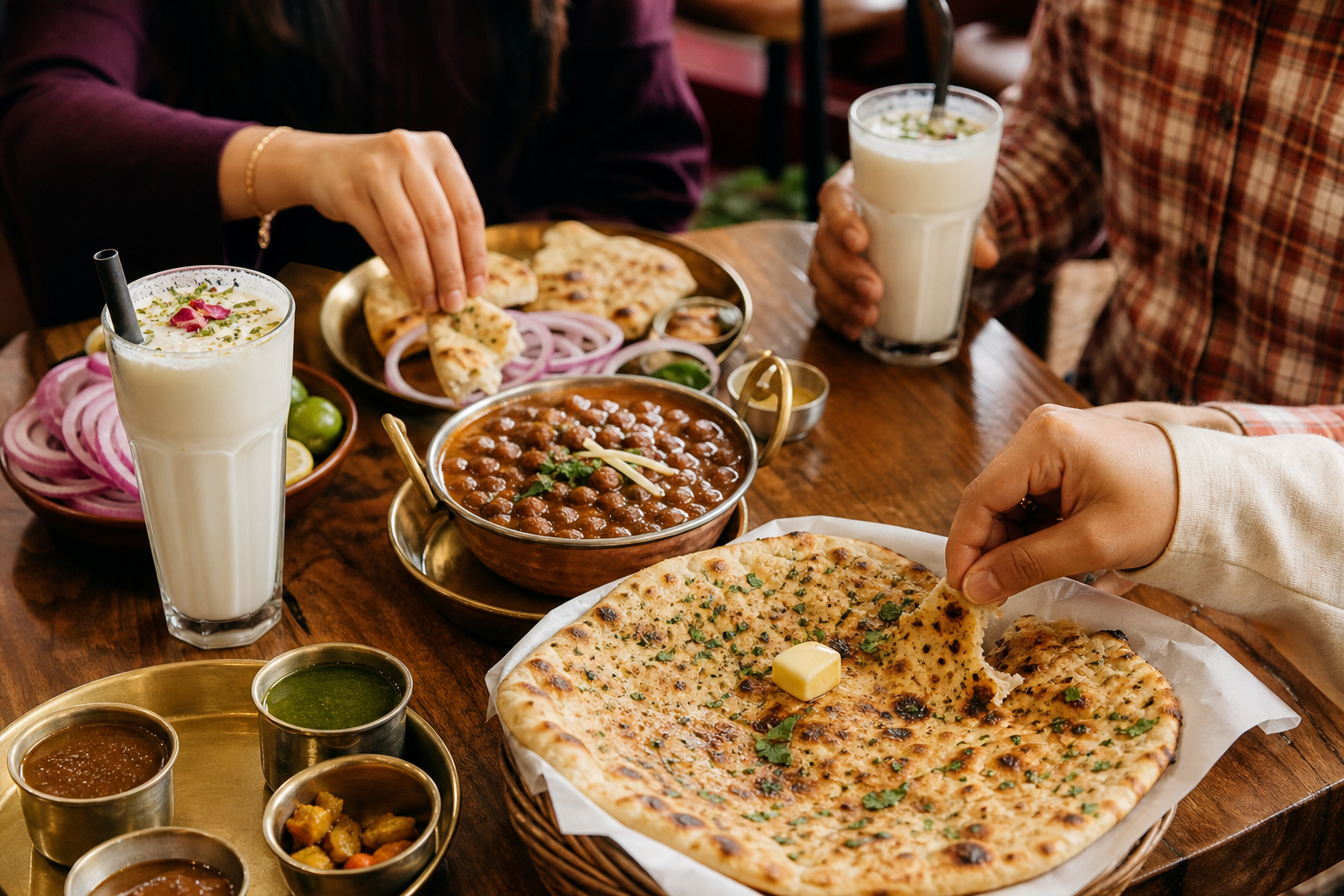
- Food context: Accompaniments and serving customs matter. Chole with a stuffed bread, chutney with a snack, or lassi with a rich meal all form part of the eating experience.
For a Brampton diner, the most useful question is not “Does this look Indian?” Ask instead: “Which regional tradition does this represent, how was it prepared, and what should its texture and flavour deliver?”
Where Punjabi and Amritsari Cooking Fits in Indian Cuisine
Indian cuisine is a collection of regional traditions, not one uniform cooking style. Punjabi and Amritsari food is associated with hearty breads, chickpea dishes, robust curries, tandoori cooking, street-style snacks, dairy, and bold spice blends, while other regions place greater emphasis on different grains, vegetables, seafood, fermented batters, or cooking techniques.
A useful way to understand the distinction is to compare the emphasis, not rank one region against another:
| Food tradition | Common emphasis | What to expect as a diner |
|---|---|---|
| Punjabi | Hearty breads, legumes, dairy, curries, tandoor cooking, and robust seasoning | Comforting, substantial dishes suited to pairing with breads or cooling drinks |
| Amritsari | Punjab’s city and street-food traditions, stuffed breads, chickpeas, fried or griddled snacks, and tandoori flavours | Bold textures, savoury accompaniments, smoky dishes, and food with a strong connection to casual eating |
| South Indian | Rice, lentils, fermented batters, coconut, curry leaves, and distinct tempering methods | Different breads, textures, sourness, and spice aromas from a Punjabi meal |
| Other regional styles | Local grains, vegetables, seafood, meats, spices, and cooking methods | A different definition of balance and authenticity shaped by that region’s food culture |
This guide to regional Indian dishes can help you compare traditions before choosing a dish.
Taste of Amritsar states that its culinary identity is rooted in traditional Amritsari and Punjabi dishes, recipes inspired by the streets and kitchens of Punjab, rich spices, and smoky tandoori flavours. It also states that its signature spices are imported directly from India to preserve the bold character of its cooking. That is a focused regional identity, not a claim to represent every Indian cuisine.
How Ingredients and Technique Signal Regional Identity
Authenticity becomes easier to assess when you connect an ingredient to the job it performs in the dish. A spice blend should contribute a recognizable combination of aroma, warmth, earthiness, sweetness, bitterness, or heat, while a cooking fat, dairy ingredient, legume, or grain should support the dish’s intended texture and richness.
Technique matters just as much. The same ingredient can produce a very different result when it is simmered in a gravy, cooked on a griddle, fried until crisp, or exposed to the high heat of a tandoor.
Tandoor cooking
A tandoor uses intense heat to create roasted aroma, surface char, and a firm exterior while the interior remains properly cooked. Marination helps season the ingredient and can influence tenderness, colour, and moisture.
Griddling and stuffing
Stuffed breads such as kulcha depend on the relationship between dough, filling, heat, and finishing fat. A successful result should offer a clear contrast between the bread’s exterior and its soft, seasoned centre.
Slow simmering
Curries and lentil dishes develop through time as aromatics, spices, liquids, and main ingredients combine. The finished dish should taste integrated, not like raw spice added at the last moment.
Frying and street-food preparation
Street-style dishes often depend on contrast: crisp and soft, hot and cool, tangy and savoury. Chutneys, yogurt, spices, and fried components should work together instead of leaving one element to dominate.
For a closer look at the relationship between high heat, marination, char, and texture, use this guide to fresh and authentic tandoori specials.
Spice Is More Than Chilli Heat
Indian food spice is not a single scale. Chilli creates heat, while spices such as cumin, coriander, cardamom, cloves, black pepper, and other masala components contribute aroma, earthiness, sweetness, warmth, or depth without necessarily making a dish hotter.
A dish can therefore be highly aromatic but mild in chilli, or moderately aromatic with a sharp chilli finish. Smokiness, tang from sour ingredients, sweetness, richness from dairy or ghee, and bitterness from certain spices also change how intense a meal feels.
For a closer look at how Punjabi spices add flavour, separate three questions when you read a menu or speak with a restaurant:
- How hot is it? This refers mainly to chilli intensity and can often be adjusted.
- How aromatic is it? This describes the depth created by whole spices, ground masalas, herbs, and toasted ingredients.
- How rich or sharp is it? Dairy, ghee, acidity, smoke, sweetness, and bitterness shape the overall impression.
There is no universally spiciest Indian dish. Chilli level depends on the regional recipe, the cook’s preparation, the type of chilli, and the requested adjustment, so ask about the current preparation instead of relying on a fixed ranking.
How Traditional Preparation and Freshness Show Up on the Plate
Traditional preparation becomes easier to recognize when you connect the cooking method with the result. Tandoori food, for example, should show the effects of marination and high heat through roasted aroma, balanced char, and a texture that is cooked through without becoming dry or rubbery.
General preparation guidance places many tandoori items at roughly 15 to 25 minutes and many curries at about 20 to 30 minutes. These are broad expectations because dish complexity, order size, and kitchen conditions affect the wait.
Use these practical checks when you are evaluating a dish:
- Ask whether the item is finished in the tandoor for your order or reheated from an earlier preparation.
- Ask what the dish is marinated or seasoned with if the flavour profile matters to you.
- Look for clear, specific answers about preparation instead of a vague promise that everything is “fresh.”
- Expect char to support the food, not cover it with a burnt taste.
- For tandoori food, be cautious of a consistently rubbery or unusually dry texture, which can indicate overcooking or reheating.
- For desserts, consider aroma, texture, serving temperature, storage, and how long the item has been held.
Freshness is not separate from authenticity. A traditional recipe can still disappoint if its texture has deteriorated through overholding, reheating, or poor storage.
Why “Authentic” Does Not Mean One Fixed Recipe
Regional cooking changes across households, cities, generations, ingredient supplies, and personal preference. Two cooks can prepare recognizably Punjabi food with different levels of chilli, dairy, smoke, or richness while still respecting the same broad tradition.
Restaurant cooking also involves practical adaptation. Ingredients may be sourced in a different country, equipment may vary, and a kitchen may adjust heat for its customers. Those changes do not automatically erase regional identity, provided the dish still has a coherent connection to its ingredients, method, flavour, and cultural context.
The better test is consistency between the promise and the plate. If a dish is described as tandoori, you should be able to identify the effects of high heat. If it is presented as Punjabi comfort food, its seasoning, texture, and accompaniments should make sense within that tradition.
Questions to Ask About Dietary Fit and Availability
A short call or conversation with the restaurant can prevent an avoidable mistake. Ask about the specific dish and its preparation, not only the broad category on a menu.
- How much chilli heat should I expect in this dish?
- Does it contain dairy, paneer, yogurt, cream, ghee, butter, or another cooking fat?
- Does it contain nuts, wheat, gluten-containing bread, or another ingredient I need to avoid?
- Can this be prepared vegetarian or vegan, and are shared utensils or cooking surfaces involved?
- Is the dish cooked to order, finished in the tandoor, or prepared ahead?
- Is the item available today, and what does the order include?
- For dessert, how has it been stored and what is its serving temperature?
For a wider framework on vegetarian categories and the difference between vegetarian, vegan, and allergy-conscious ordering, read about vegetarian Indian choices.
If you have a serious food allergy, cross-contact can create a real risk even when a dish does not intentionally contain the allergen. Ask the restaurant directly about ingredients, shared equipment, and whether it can safely accommodate your requirement before ordering.
What to Look for When You Order
Use a short authenticity check instead of judging a dish by colour, name, or chilli level alone:
- Identify the region: Find out whether the dish is Punjabi, Amritsari, South Indian, Bengali, Gujarati, or connected to another tradition.
- Identify the method: Ask whether it is tandoor-cooked, griddled, fried, simmered, steamed, or fermented.
- Identify the texture: Decide whether the dish should be crisp, soft, creamy, smoky, firm, fluffy, or layered.
- Separate heat from flavour: A chilli-heavy dish is not automatically more authentic.
- Check the context: Notice the bread, chutney, yogurt, drink, or other accompaniment that completes the dish.
- Confirm the details: Ask about ingredients, preparation, dietary fit, and current availability when those details affect your decision.
This approach gives you a more reliable answer to “Is this authentic?” because it tests the whole eating experience, not one visual or flavour cue.
Questions Diners Still Ask About Authentic Indian Cooking
Which Indian dishes are authentic?
Authentic dishes are connected to a recognizable regional tradition and prepared with suitable ingredients, techniques, textures, and flavour balance. General Punjabi and Amritsari examples include kulcha with chole, tandoori preparations, paneer tikka, Punjabi curries, chaat, and lassi. Check the current menu before assuming that a particular restaurant offers any one of these dishes.
What makes Indian cooking authentic rather than Indian-inspired?
Authentic Indian cooking has a clear regional and culinary context, while “Indian-inspired” may borrow selected spices or formats without following a particular tradition. The strongest practical signs are coherent seasoning, an appropriate cooking method, recognizable texture, and a dish that makes sense within the meal.
Is Indian cuisine healthy?
Indian cuisine can be part of a balanced meal, but the answer depends on frying, cream, ghee, sugar, dairy, bread, portion size, and the amount of vegetables or legumes included. Choose a mix of cooking methods and ask how a specific dish is prepared instead of treating the cuisine as uniformly healthy or unhealthy.
What is the spiciest Indian dish?
There is no single universally spiciest Indian dish because chilli type, quantity, regional recipe, and kitchen preparation vary. Tell the restaurant how much heat you want and ask which current dishes are chilli-forward.
How can a first-time diner understand an unfamiliar Indian dish?
Ask what region the dish represents, how it is cooked, what its main texture is, and whether it is mild, aromatic, tangy, rich, or chilli-forward. Then ask about dairy, cooking fat, allergens, preparation, and availability if those details affect your choice.
How do I ask whether an Indian dish is vegetarian, vegan, or suitable for an allergy?
Ask about the exact ingredients, dairy and ghee, cooking surfaces, shared utensils, nuts, wheat, and cross-contact for the specific dish. Vegetarian status does not prove that a dish is vegan or allergy-safe, so explain your requirement clearly before ordering.
Authentic Indian cooking becomes easier to understand when you start with region and technique, then assess texture, flavour, heat, and dietary fit. Taste of Amritsar states a Punjabi and Amritsari focus and operates at 27 Main St N in Brampton. To explore the restaurant’s current categories and details, review the current menu and ask about any dish-specific questions before ordering.


Leave A Comment