





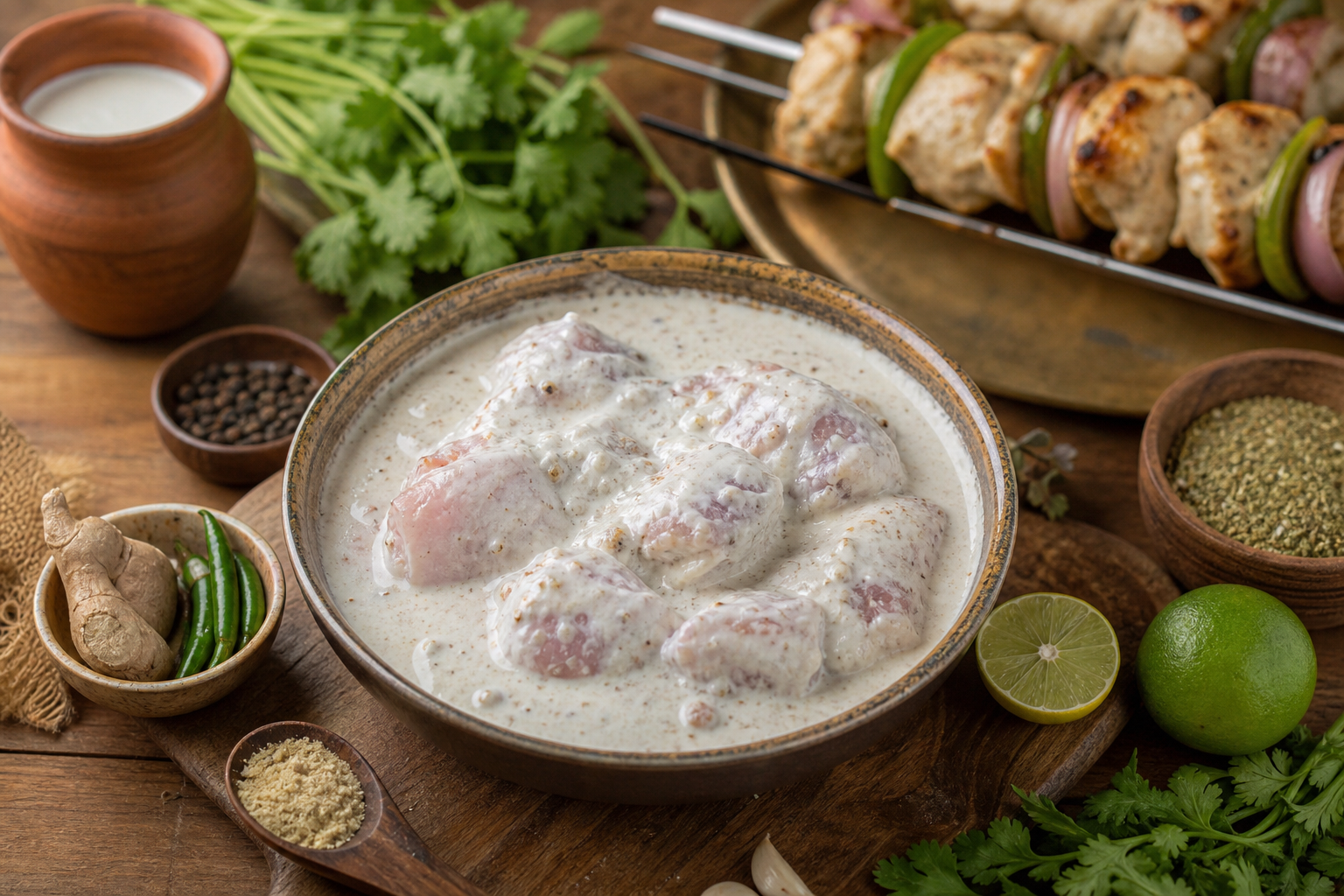
How do you make malai tikka marinade?
This step-by-step malai tikka marinade explains the flavour building blocks chefs use to create a creamy, mildly spiced tikka that works on chicken or paneer. The method focuses on texture cues and finishing options so you can reproduce a restaurant-style result at home, even without a tandoor. Taste of Amritsar lists malai and other tandoori specialties on its menu and highlights imported masalas as part of the authentic profile you are aiming to recreate (Taste of Amritsar).
At-a-glance recipe and who should use it
Malai tikka marinade is a dairy-forward mixture whose purpose is to tenderize, coat, and carry gentle spice and a buttery-smooth finish. The finished tikka should be creamy on the inside with a lightly caramelized, slightly charred exterior when cooked. This approach suits:
- Home cooks who want restaurant-style tandoori flavours without specialised equipment.
- Vegetarian cooks using paneer or firm tofu as the protein.
- Anyone who prefers a mild, creamy spice profile rather than a very hot, heavily spiced tikka.
Ingredients: essential items and restaurant-style choices
Rather than exact measures, think in proportions and texture targets. The core components are a dairy base for creaminess, a binder to hold spices, fat for flavor and browning, acid to balance richness, and aromatic spices for the classic Punjabi profile.
- Dairy base: use thick cream and full-fat plain yogurt in roughly equal parts to create a silky coating. The cream gives richness, the yogurt brings gentle tang and helps the marinade cling.
- Fat: a spoonful of neutral oil or melted butter adds shine and helps the surface brown during cooking.
- Binder and bulk: a small amount of ground cashew paste or grated paneer blended into the marinade builds body and a subtle nuttiness without changing flavour dramatically.
- Acid and aromatics: a touch of fresh ginger-garlic paste and a dash of lemon or lime juice are used to brighten the marinade and aid tenderization.
- Spices: use mild chilli powder or Kashmiri chilli for colour, and a teaspoon-level mix of coriander, cumin, and garam masala to give the classic profile. Freshly ground spice or imported masalas deliver a more authentic aroma; Taste of Amritsar notes that imported masalas are part of their authentic Amritsari flavour profile (Taste of Amritsar).
- Salt and finishing: season to taste and finish with a small knob of butter when serving for extra sheen.
Substitutions, vegetarian notes, and spice choices
Paneer is the natural vegetarian partner to malai tikka. If you plan to use paneer, choose firm paneer and press excess moisture before marinating, which helps the marinade adhere and prevents sogginess. For a vegetarian-focused menu or if you want to sample a restaurant-style paneer tikka, see the paneer-specific offering on the restaurant’s appetizer page (paneer tikka appetizer brampton).
If dairy is a concern, use cashew cream or full-fat coconut cream to mimic the body of cream and yogurt. Expect a modest shift in aroma and mouthfeel: coconut cream will give a sweeter, tropical note, while cashew cream stays neutral and closer to the original texture. For a lower-fat option, use strained yogurt as the primary base and reduce cream accordingly.
Step-by-step: how to make the marinade and the texture cues to watch
- Prepare aromatics: grind or whisk fresh ginger and garlic to a smooth paste. The paste should be fine, not chunky, so it distributes evenly in the final coating.
- Combine the dairy base and binder: whisk thick cream and plain yogurt together until smooth. If using cashew or paneer paste, fold it in now to create a homogeneous, slightly thick mixture that will cling to protein.
- Add spices and fat: stir in your chosen ground spices, a little oil or melted butter, and the ginger-garlic paste. The finished marinade should be thick enough to coat the back of a spoon and slightly loose so it spreads over each piece of protein without dripping excessively.
- Final texture cue: a successful malai tikka marinade looks glossy and creamy, with visible flecks of ground spice but no graininess. It should form a smooth layer over your pieces and not separate when resting.
- Hygiene stop point: if you are using raw chicken, keep the marinating container covered and refrigerated. Use separate utensils and plates for raw and cooked items to prevent cross-contamination.
How to adapt the marinade for chicken versus paneer

Chicken and paneer respond differently to the same marinade because of their textures. Choose based on dietary needs and the result you want.
- Chicken: chicken will absorb more marinade and release juices as it cooks. For even results, score thicker pieces lightly so the marinade can penetrate. Use a firm, even cut so pieces cook uniformly.
- Paneer: paneer will not break down the way meat does, so the marinade primarily coats the surface. Press paneer gently to remove excess water so the marinade sticks better and forms a creamy crust on the exterior.
- Cross-contamination: never reuse the raw marinade unless you cook it separately to a safe temperature. Keep cooked and raw handling tools separate.
Decide which protein by the audience: paneer for vegetarian or mixed groups, chicken when you want a meat-forward main. The same marinade profile delivers the recognizable malai richness in both cases.
Finishing without a tandoor: oven, broiler, grill, air fryer, and stovetop options
A tandoor produces intense radiant heat and smoke, which creates the classic char and smoky aroma. If you do not have a tandoor, pick a finishing method based on the trade-offs you can accept.
- Oven and broiler: a high-heat oven or broiler encourages surface browning and caramelization. Broiling gives quick sear and char to the edges, while an oven provides more even cooking across thicker pieces. Expect a slightly milder smoky note than a tandoor.
- Charcoal or gas grill: grilling over charcoal provides the best smoky approximation because it imparts real smoke and direct flame contact. For gas grills, increase flame contact to get better charring.
- Air fryer: good for small batches and consistent browning. The air fryer will crisp the surface quickly but offers limited smoke; finish with a quick butter brush for shine.
- Hot cast-iron pan: a very hot cast-iron pan gives attractive crust and can be paired with a quick smoking trick: briefly hold a small piece of hot charcoal wrapped in foil above the pan and capture smoke with a lid for a smoky finish. Use this technique carefully and only with proper ventilation.
Oven and broiler method: what to expect
When using a broiler, watch visual cues instead of exact timing. The tikka is ready when the edges show golden to darkened spots and the surface looks set and slightly blistered. Remove pieces promptly to avoid drying and rest briefly before serving to let juices redistribute.
Grill, air fryer, and quick stovetop options
On a charcoal grill you will see charring and hear a brief sizzling when pieces hit the grate. An air fryer produces a uniformly crisp surface but less smoke, while a hot pan gives good crust with minimal fat splatter if you keep the heat high and the pieces spaced apart. Each method has a trade-off between smoke, char, and juiciness—pick the one that matches the texture you prefer.
Serving and pairings to recreate a restaurant experience
To present malai tikka like a restaurant plate, think of colour contrast, texture, and small finishing touches.
- Breads: serve with soft kulcha, naan, or tandoori roti to soak up the creamy juices; a desi ghee brushed naan amplifies the traditional feel. Kulcha pairs especially well with chole for a fuller plate.
- Chutneys and condiments: a bright green cilantro-mint chutney and a tamarind-date chutney provide fresh and sweet-acid contrast. A small wedge of lemon on the side helps diners add brightness to taste.
- Sides and drinks: a simple shredded onion and cucumber salad adds crunch. Finish with masala or sweet lassi for an authentic Punjabi touch.
- Presentation tip: finish with a light brush of melted butter and a sprinkle of fresh chopped coriander. Arrange tikka on a warm platter with chutney in a dipping ramekin for a restaurant-style impression.
Troubleshooting, make-ahead, storage, and common mistakes

- Marinade too runny: thicken by folding in a small amount of ground cashew or strained yogurt until it clings to protein. Avoid adding excess liquid.
- Marinade too thick: loosen with a tablespoon of cream or a splash of oil until it spreads easily.
- Over-souring: if the marinade tastes too acidic, temper with a bit more cream or cashew paste to round the flavour.
- Make-ahead advice: you can mix the marinade a day ahead and refrigerate in a sealed container. If marinating raw protein ahead, refrigerate and do not extend beyond overnight; always discard used raw marinade or cook it thoroughly before using as a sauce.
- Common mistake: cooking at too low a heat will leave the surface pale and the interior dry. Aim for methods that generate quick surface color while preserving internal juiciness.
Taste of Amritsar note and how to try the restaurant version
Taste of Amritsar features malai and other tandoori-style dishes and emphasizes authenticity by importing masalas to retain true Amritsari flavours; you can view their menu and tandoori offerings on their homepage (Taste of Amritsar) and explore their paneer tandoori options on the appetizer page (paneer tikka appetizer brampton). The restaurant is located at 27 Main St N, Brampton, ON L6X 1M8 and lists regular opening hours for daytime and evening service.
Frequently asked questions
Can I use this malai tikka marinade for both chicken and paneer?
Yes. The same creamy marinade works for both proteins, though chicken will absorb more of the mixture while paneer mainly gets a surface coating. Press paneer to remove excess water and score chicken lightly so the marinade penetrates.
How long should I marinate chicken or paneer with malai tikka marinade?
For paneer, a short rest is enough for surface flavour to develop. For chicken, allow a longer refrigerated rest so the marinade penetrates more deeply. Always refrigerate while marinating raw protein and follow safe food handling practices; do not leave raw protein at room temperature.
Can I make malai tikka marinade ahead and freeze or refrigerate it?
You may prepare the marinade a day ahead and refrigerate it in a sealed container. If you plan to freeze the marinade, keep it separate from raw protein and thaw it safely before use. Do not reuse raw marinade as a finished sauce unless it is cooked to a safe temperature.
What is the best way to get a smoky, tandoori-like finish without a tandoor?
Charcoal grilling gives the most authentic smoke. For indoor options, use a broiler, hot cast-iron pan with a brief smoking step, or an air fryer for quick browning. Focus on visual cues: blistering, caramelized edges, and a glossy surface.
Which chutneys and breads pair best with malai tikka for a restaurant-style plate?
Serve malai tikka with a cilantro-mint chutney for freshness and a tamarind-date chutney for sweet-acid contrast. Soft kulcha or naan and a side of shredded onion salad recreate the classic restaurant pairing.
Ready to taste the restaurant version or try this at home? Visit the official website to see the menu and plan your visit.


Leave A Comment