






How Do Tandoori Chaap Techniques Prevent Dryness at Home?
Tandoori chaap stays smoky and tender when you control moisture before cooking, use a marinade that clings, apply strong heat, and stop cooking before the surface dries. The goal is a seasoned, lightly charred exterior with a soft interior, not a thick coating that burns while the centre remains underheated.
The steps below are general home-cooking guidance. They are not Taste of Amritsar’s proprietary recipe or a description of the restaurant’s equipment, marinade, cooking temperature, or preparation sequence.
Quick summary

- Drain and prepare the chaap so excess moisture does not dilute or loosen the marinade.
- Use a coating that is thick enough to cling but not so heavy that it burns quickly.
- Choose high heat, leave space between pieces, and turn in a controlled way.
- Judge progress by coating adhesion, browning, char, firmness, and tenderness, not colour alone.
- Follow the product’s handling instructions and food-safety requirements before serving.
What makes tandoori chaap different?
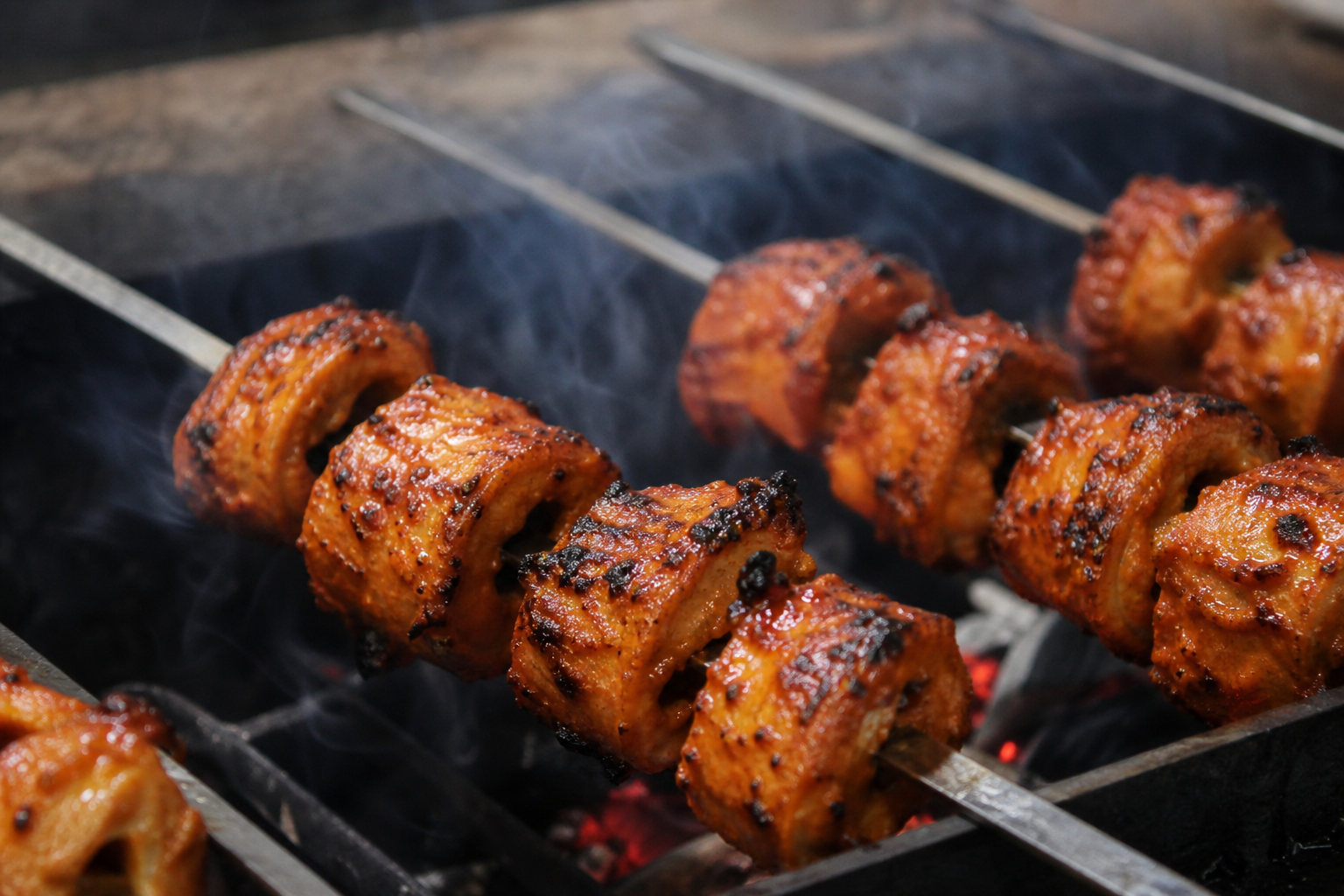
Tandoori chaap is prepared around the contrast between a richly seasoned exterior and a tender centre. High heat helps the outside develop browned edges and char, while careful moisture control helps prevent the inside from becoming dry or chewy.
The technique is less about adding as much marinade as possible and more about building a coating that remains attached during cooking. A wet surface can steam instead of brown, while an excessively thick coating can darken before the chaap is properly heated.
Step 1: Prepare the chaap for an even coating

Begin by following the handling directions for the chaap product you have chosen. Drain excess liquid and separate pieces that are stuck together. If pieces are large or uneven, prepare them so the exposed surfaces are reasonably similar in size.
Pat the surface dry when the product instructions allow it. This does not remove all moisture. It simply reduces the liquid that would otherwise thin the marinade and make it slide away.
Stop point
Do not move on until the pieces are separated, reasonably dry on the surface, and stable enough to coat without breaking apart.
Step 2: Build a marinade that stays on the surface
A useful marinade balances several functions. A moist ingredient carries seasoning, a small amount of fat can support browning, acidity can add brightness, and spices provide the main flavour. A thickening element helps the mixture cling to the chaap instead of running into the bowl.
The exact ingredients and proportions should come from the recipe or product directions you are using. The important texture is spreadable and cohesive. If the mixture pours like a thin sauce, it may not adhere well. If it is stiff and heavily layered, the outside may burn before the chaap is heated evenly.
Step 3: Marinate in stages and check the coating
Apply the first layer evenly, turning each piece so the surfaces are covered without leaving pools of liquid. A staged approach can help: use a lighter seasoned layer first, then add a finishing coating shortly before cooking if your chosen recipe calls for one.
Keep the timing consistent with the recipe and ingredient instructions. Longer marination is not automatically better. Excess moisture, strong acidity, or repeated handling can affect surface texture.
Stop point
The chaap is ready for cooking when the coating clings to the pieces, covers the exposed surfaces, and does not immediately run off when a piece is lifted.
Step 4: Choose the right high-heat cooking method
An oven offers control and easier cleanup, but the surface may need careful positioning to develop pronounced char. A grill can provide stronger browning and a more noticeable smoky impression, but flare-ups and hot spots require close attention. A tandoor-style setup can expose food to intense radiant heat, although it demands suitable equipment and safe handling.
For a helpful explanation of tandoor-style heat, read how a tandoori grill works and shapes popular dishes. Do not use equipment that is not designed for high heat, and do not improvise with unstable skewers or open flames indoors.
Choose the method that gives you the best control over browning and the safest handling conditions. Strong heat is useful, but uncontrolled heat commonly causes burnt coating and dry chaap.
Step 5: Skewer and space the pieces properly
Use skewers that are stable for your cooking method and secure the pieces without crushing them. Leave space between pieces so hot air or radiant heat can reach more of the surface. Crowding traps moisture and encourages steaming rather than browning.
Keep coated pieces away from raw ingredients, used marinade, and utensils that have touched uncooked food. Place loaded skewers on a suitable tray, rack, or grill surface before moving them to the heat.
Stop point
Each piece should be secure, separated from its neighbours, and positioned so you can turn it without touching hot metal or reaching across an uncontrolled flame.
Step 6: Cook with strong heat and controlled turning
Start with a properly heated cooking surface or appliance according to its instructions. Strong, steady heat helps the coating set and encourages browning. Weak heat can leave the surface pale and wet for too long, while excessive exposure can dry the exterior.
Turn pieces when the first contact surface has begun to set and brown. Avoid constant movement, which can disturb the coating, but do not leave one side exposed so long that it burns. If a finishing coating is part of your recipe, apply it carefully and return the pieces to heat only long enough to set that layer.
Watch the cooking process rather than relying on a fixed time. Appliance strength, piece size, starting temperature, and spacing all change how quickly chaap cooks.
Step 7: Use texture and surface cues to judge doneness
Look for a coating that has adhered, browned in places, and developed some char without turning uniformly black. The pieces should feel heated through and tender when checked with a clean utensil appropriate for the product.
Appearance alone is not a food-safety test. Follow the package directions and applicable food-safety guidance for the ingredients you are cooking. If product instructions require a specific internal check, use that check rather than estimating from colour.
Stop point
Remove the chaap once the coating is set, the desired browning has developed, and the texture is tender according to product instructions. Continuing to cook only to deepen colour can make the surface dry.
Step 8: Finish without losing the smoky texture
Let cooked chaap rest briefly according to the recipe you are following. This gives the coating a chance to settle and makes the pieces easier to handle. Add fresh finishing ingredients after cooking rather than returning the chaap to heat unnecessarily.
Serve promptly with the accompaniments specified by your recipe. If preparing several batches, keep cooked food protected from raw ingredients and avoid leaving it in the high-heat cooking area after it reaches the desired texture.
Safety limits for high-heat chaap cooking
Wash your hands before preparation and after handling uncooked ingredients. Use separate utensils or wash them thoroughly between raw and cooked food. Keep used marinade away from finished chaap unless it has been handled and cooked according to safe food-handling directions.
High-heat cooking creates hot skewers, trays, racks, and grease. Use suitable heat protection, keep handles and cables away from flames or heating elements, and follow appliance instructions. Ventilate the area when cooking produces smoke.
Use chaap within the storage period stated on its packaging, and follow product instructions for thawing, preparation, cooking, and storage. Do not use surface colour as a substitute for those directions.
Troubleshooting: dry, pale, loose, or burnt chaap
| Problem | Likely cause | Adjustment |
|---|---|---|
| Dry or chewy texture | Excessive heat exposure or continued cooking | Monitor earlier and remove the chaap when the coating is set and the texture is tender. |
| Pale, wet surface | Excess moisture, weak heat, or crowding | Drain thoroughly, preheat the surface, and leave space between pieces. |
| Marinade slides off | The chaap is too wet or the coating is too thin | Reduce surface moisture and use a cohesive coating. |
| Coating burns quickly | A thick layer or uncontrolled heat | Apply a thinner layer and manage hot spots. |
| Uneven cooking | Different piece sizes or touching pieces | Prepare even pieces and space them for better heat circulation. |
What does Taste of Amritsar list for Brampton diners?
Taste of Amritsar is an Indian restaurant in Brampton focused on Amritsari and Punjabi cuisine. Its stated food approach includes traditional Punjabi recipes, authentic Indian spices, imported masalas, and smoky tandoori flavours.
The restaurant lists Tandoori Chaap, Afghani Chaap, Tandoori Paneer Tikka, Paneer Tikka, and other tandoori dishes. Review the current Taste of Amritsar menu before deciding what to order.
This article does not verify the restaurant’s chaap recipe, equipment, cooking sequence, ingredient proportions, or cooking times. The home technique above is general guidance, not a claim about how Taste of Amritsar prepares its food.
Should you make tandoori chaap or order it?
Make it at home if you want to practise coating, heat control, skewering, and texture checks. Home cooking gives you control over seasoning and method, but it also requires suitable equipment, careful handling, and adjustment between batches.
Ordering may make more sense when you want to explore Punjabi tandoori food without managing high heat and cleanup. It is also a practical option for diners who want to compare chaap with listed dishes such as tandoori paneer options or curries.
Choose home preparation when technique is part of the enjoyment. Choose a local restaurant when you would rather focus on sharing a meal and exploring an established menu.
Tandoori chaap techniques FAQ
Why does tandoori chaap marinade slide off during cooking?
The surface may carry too much moisture, or the marinade may be too thin to cling. Drain the chaap as directed, prepare the surface evenly, and use a cohesive coating that covers the piece without pooling.
How can you add char without drying out tandoori chaap?
Use strong, controlled heat and monitor the pieces as the coating sets. Leave space between them, turn deliberately, and remove them once the surface has browned and the texture is tender.
Is an oven enough to create tandoori-style chaap at home?
An oven can cook chaap with a seasoned, browned exterior, although char and smoky character depend on the appliance, cooking surface, heat control, and recipe. Use an oven-safe setup and follow its instructions.
How do you know when tandoori chaap is ready to remove from the heat?
Check that the coating has adhered, the surface has browned, and the pieces feel tender and heated through. Also follow the product’s required food-safety checks, since extra cooking can make the surface dry.
Choose the technique that fits your meal
The most reliable tandoori chaap techniques work as a sequence: control surface moisture, build a coating that clings, use suitable high heat, leave room for circulation, turn with restraint, and stop when the texture is tender.
If you prefer to cook, use a recipe and product instructions that provide the handling and safety details your kitchen needs. If you would rather explore Punjabi tandoori food locally, Taste of Amritsar lists Tandoori Chaap and is located at 27 Main Street North, Brampton, Ontario. Visit Taste of Amritsar’s official website before your visit.


Leave A Comment