





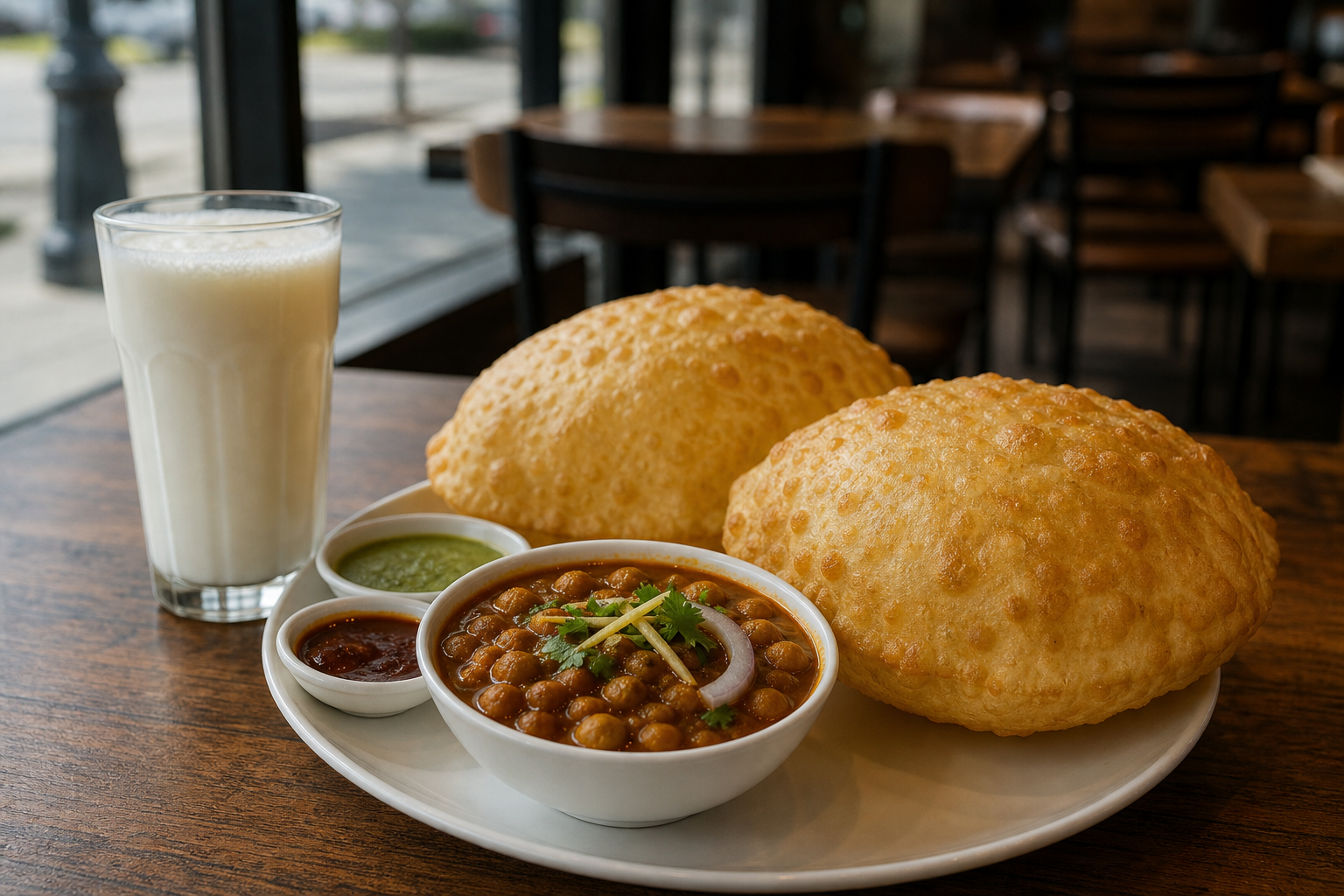
Which Chole Bhature Details Matter Before You Order?
Chole bhature pairs seasoned chickpeas with bhature, a substantial fried bread designed to be eaten with them. Choosing a satisfying order involves more than recognizing the dish name. You should also consider what is included, how the bread and chole work together, how much spice you prefer, whether the meal suits your dietary needs, and whether a kulcha-based alternative would fit better.
This chole bhature guide is for Brampton diners choosing Punjabi or North Indian food at a restaurant. It is an ordering guide rather than a recipe. The aim is to help you ask useful questions and make a decision without assuming ingredients, portions, preparation methods, or accompaniments that a restaurant has not confirmed.
What Is Chole Bhature?
Chole bhature brings together two components intended to be eaten as one meal. Chole refers to chickpeas prepared in a seasoned, saucy form. Bhature is the bread component, commonly recognized by its puffed and substantial format. The chole contributes the savoury, spiced element, while the bhature provides a bread to tear, scoop, and combine with it.
The relationship between the two components is the key to assessing the dish. A plate is not only about whether the chickpeas taste good by themselves or whether the bread looks appealing alone. The meal should feel coherent when eaten together. You may prefer more sauce for dipping, a particular level of heat, or a bread texture that feels more or less substantial. These are useful preferences to communicate before ordering.
Chole bhature fits naturally within a Punjabi and North Indian dining context, but a dish label does not reveal every detail of a restaurant’s version. Recipes, seasoning, texture, serving format, and accompaniments can differ. If a detail matters to you, ask the restaurant instead of treating a general description as a guarantee.
It is also important to separate a restaurant decision from a recipe search. Someone cooking at home needs measurements, soaking instructions, cooking times, and a dough method. Someone deciding what to order needs different information: what the dish contains, how it compares with other menu choices, whether it suits the table, and what needs to be confirmed.
What Should You Check Before Ordering?

A useful pre-order check has four parts: serving details, the bread and chole pairing, personal preferences, and the context of your meal. These checks can prevent common disappointments, such as expecting a side that is not included, ordering more food than the table needs, or choosing a bread style that does not suit you.
Start with the menu description and identify anything it does not answer. Is the dish a complete plate, or is it one item with sides ordered separately? Does the listing describe the number of breads? Are drinks included or listed elsewhere? If the answer is unclear, asking staff is more reliable than making an assumption.
Next, consider what you want from the meal. You might be looking for a hearty bread-and-chickpea centrepiece, a vegetarian option, a dish to share, or an introduction to Punjabi flavours. The same order can make sense in one situation and be less suitable in another.
Finally, allow for individual needs. Spice tolerance, allergies, ingredient concerns, and preferences about fried or rich foods are personal matters. A popular dish can still be unsuitable for a particular diner. The goal is not to find a universally perfect order, but to choose knowingly.
Confirm What the Order Includes
Menus often use a short dish name to represent a more detailed serving. Chole bhature may appear as one listing, but the exact contents can vary by restaurant and change over time. Before ordering, check whether the item includes only chole and bhature or also comes with specific accompaniments.
- What exactly comes with the chole bhature?
- Are chutneys, pickles, onions, or other sides included?
- Is a drink included, or should it be ordered separately?
- Does the dish have a stated serving size?
- Can sides or drinks be added separately?
These questions matter particularly when ordering for children, a family, or a group with different appetites. Someone expecting a complete meal may order differently from someone planning to add starters and share everything. Confirming the format also helps you compare chole bhature fairly with a kulcha dish or a broader combination of starters and mains.
Taste of Amritsar lists chole bhature on its menu, alongside other Punjabi and Amritsari options. Use the current listing as your starting point, but contact the restaurant if a particular side, portion detail, or availability question affects your decision.
Do not treat a photograph or familiar name as a complete serving promise. Images can show presentation without explaining what is included, and listings can change. A clear question before ordering is especially useful when travelling to the restaurant or planning a meal around one particular dish.
Evaluate the Chole and Bhature Together
The central quality question is whether the two components work together. You can assess this through sauce, texture, and balance. These are not rigid rules or specialist tests. They are ways to describe what you want from the meal.
Consider the sauce and bread relationship
Chole is generally eaten with bread, so the amount and consistency of sauce affect the experience. If you enjoy tearing bread and scooping up chole, ask whether the dish is served in a format that supports that style. If you prefer a drier or more distinct bite, explain that preference or compare another menu item.
There is no single correct sauce consistency. The useful point is that chole should be considered as the partner to bhature, not judged in isolation. Ask staff to describe the dish if the menu wording is brief.
Think about the bhature texture
Bhature is a substantial bread, so it may appeal to diners who want a filling and bread-forward meal. If you prefer a different texture, a thinner bread, or a stuffed bread with its own filling, a kulcha-based choice may be more suitable. The choice is about the eating experience, not declaring one bread superior.
Some diners enjoy the contrast between airy bread and saucy chickpeas. Others prefer a more structured or stuffed bread with a distinct flavour and texture. If you already know that you prefer kulcha, compare the options before automatically selecting chole bhature.
Look for balance
Balance can refer to the amount of bread relative to the chole, the intensity of seasoning, the richness of the meal, or the combination of food and drink. There is no universal portion or flavour standard supplied here, so use balance as a personal decision check.
Ask yourself whether this will be the whole meal or one part of an order that also includes starters, curries, tandoori dishes, drinks, or dessert. The answer can change whether a full chole bhature order feels appropriate for one diner or for the table.
Ask About Spice and Dietary Needs
Do not assume that a dish name tells you how hot it will be. “Punjabi,” “Amritsari,” and “spiced” suggest a culinary direction, but they do not provide a precise heat level for every restaurant or diner. If you are sensitive to heat, ask how the dish is usually seasoned and whether your preference can be considered.
- How spicy is the chole usually served?
- Can the kitchen accommodate a preference for less heat?
- Are any accompaniments spicy, sweet, or tangy?
- What should a diner with an allergy or ingredient concern know?
- Which items should I avoid if I need a specific dietary accommodation?
Be specific about the difference between a preference and a safety requirement. “I prefer less heat” is different from “I have an allergy and need to know about possible cross-contact.” Staff can explain the available information, but diners with serious allergies should clearly communicate their needs and decide whether the restaurant can meet them.
Chole bhature is often considered during vegetarian meal planning, but confirm ingredients and preparation if vegetarian, vegan, gluten-free, or another dietary requirement is important. Do not assume that every side, sauce, or bread meets the same requirement as the main dish.
This is also relevant for groups. One table may include someone who wants bold spice, someone who prefers mild food, and someone with a dietary restriction. Discussing preferences first usually creates more options than trying to correct the order afterward.
How Does Chole Bhature Compare With Related Punjabi Choices?
Chole bhature is one route into Punjabi food, not the only one. Comparing the bread style and meal structure can help you choose between similar options without relying on vague ideas about authenticity. The distinctions below are broad ordering guidance, not claims about every restaurant’s recipe.
| Choice | What defines it | Question to ask |
|---|---|---|
| Chole bhature | Chole paired with bhature for a substantial bread-and-chickpea meal. | What comes with the pairing, and how spicy is it? |
| Chole kulcha | Chole paired with kulcha rather than bhature. | How does the kulcha differ from the bhature? |
| Amritsari kulcha with chole | A kulcha-focused option within an Amritsari menu direction. | Which kulcha varieties and accompaniments are available? |
| Mathi chole | A chole-based option using mathi as the accompanying element. | Does it suit the meal size and texture I want? |
| Street-style chaat | A chaat-focused choice with a different texture and flavour balance. | What ingredients and sides are included? |
| Tandoori or curry meal | A meal built around a tandoori specialty or curry, with breads and sides chosen separately. | Which additions would make the order work for the table? |
If you are deciding between bhature and kulcha, read the Amritsari chole kulche guide for more context. The important distinction is not that one dish is automatically better. The bread changes the texture, structure, and feel of the meal.
You can also explore this overview of Punjabi Indian cuisine to understand how a chole-based order fits within a wider menu.
Choose the Dish That Fits Your Meal
The right order depends partly on the meal you are creating. A solo diner may want one clear, filling dish. A couple may prefer to compare two bread styles. A family or group may want one chole-based item alongside starters, tandoori dishes, curries, drinks, and dessert.
For one diner
Decide whether chole bhature is your main meal or one part of a larger order. If it is the centrepiece, confirm what is included and whether the serving is intended for one diner. If you plan to add several dishes, consider whether a more varied order would better suit you.
For couples and small groups
Sharing can help you compare chole bhature with a kulcha option or another Punjabi dish, but do not assume a portion will divide evenly. Ask staff for guidance if appetites differ. You should also decide whether everyone wants the same spice level.
For families
Families often need to balance familiar choices with exploration. One chole bhature order can introduce the pairing while other diners choose a curry, tandoori item, kulcha, or drink. If children or spice-sensitive diners are included, ask about heat and ingredients before selecting shared food.
For first-time diners
If this is your first Punjabi or Amritsari meal, unfamiliar names are not a test of expertise. Ask staff to explain the difference between bhature, kulcha, and other breads. Clear guidance can help you explore at a comfortable pace.
If you want vegetarian Indian food, review the choices carefully and confirm ingredients where necessary. A vegetarian Indian restaurant menu guide can help you consider how a chole-based dish fits into a wider meal.
What Should You Pair With Chole Bhature?
Pairings should support the meal rather than be added automatically. First ask what sides are included. If the dish already comes with accompaniments, you may not need additional ones. If it does not, decide whether you want a condiment, starter, vegetable dish, curry, or another item for variety.
Taste of Amritsar lists lassi options, including masala lassi and sweet lassi, among its drinks. These are menu choices to consider, not guaranteed accompaniments. Ask about current availability and choose according to your sweetness preference and the rest of your order.
For groups, separate “What sounds interesting?” from “What does the meal need?” If the table already has several rich dishes, a drink or lighter side may provide contrast. If everyone wants a filling bread-based meal, the group may prefer to keep the order focused.
Do not assume that a chutney, pickle, onion preparation, or beverage is included unless the menu or staff confirms it.
What Does Restaurant Transparency Tell You?
Before committing to a restaurant, look for information that helps you set realistic expectations. A clear menu, accessible location, and staff who can answer reasonable questions are useful signs of a straightforward ordering experience. Transparency cannot guarantee that every dish will match every preference, but it supports an informed choice.
Check whether the online menu describes dishes consistently and whether you can identify chole bhature, kulcha, chole-based alternatives, drinks, and other categories without guessing. Use the restaurant’s contact details if you have questions about availability or dietary needs.
The supplied review analysis for Taste of Amritsar reports frequent praise for authentic Punjabi or Amritsari taste, freshness, kulcha quality, and friendly service. It also records some reports involving inconsistent service, timing, or individual dish quality.
This mixed information is best treated as context rather than a definitive rating. If timing matters, confirm the current situation. If one particular dish matters, ask whether it is available and how it is served. Also review current location information rather than relying only on old photographs or assumptions about seating.
Exploring Chole Bhature in Brampton
Taste of Amritsar is a local Indian restaurant at 27 Main Street North in Brampton, Ontario, focused on Amritsari and Punjabi cuisine. Its business information describes traditional Punjabi recipes, authentic Indian spices, imported masalas, smoky tandoori flavours, and a warm, homely dining experience.
Chole bhature is listed alongside Amritsari kulcha, Nutri Kulcha, Mathi Chole, street-style chaat, signature curries, tandoori specialties, and lassi. This gives diners several ways to plan a meal. Someone wanting a direct chole-and-bread pairing can consider chole bhature, while someone comparing bread styles can ask about kulcha-based choices.
The restaurant context does not remove the need to check details. Menu items, accompaniments, prices, portions, hours, and availability can change. Review the current menu or contact the restaurant before setting out if one of these details affects your plans.
A Simple Chole Bhature Ordering Checklist
- Check availability. Confirm that chole bhature is currently offered if it is the reason for your visit.
- Read the listing. Look for price, serving information, stated sides, and notes.
- Ask what is included. Clarify chutneys, pickles, onions, drinks, and other accompaniments.
- Communicate spice needs. Explain your heat preference and ask about allergies or ingredients.
- Compare the bread. Decide whether bhature suits you better than kulcha or another option.
- Match the order to the table. Consider whether you are eating alone, sharing, or adding other dishes.
- Choose additions intentionally. Ask about sides and consider lassi only if it suits the meal.
- Confirm practical details. Check location and contact information before travelling if timing matters.
This checklist is not meant to make a restaurant meal complicated. It turns assumptions into questions, helping you order with realistic expectations.
Chole Bhature Questions Brampton Diners Ask
What is the difference between chole bhature and chole kulcha?
Both pair chole with bread, but the bread is different. Chole bhature uses bhature, while chole kulcha uses kulcha. This changes the texture and overall eating experience. Ask how the restaurant’s current versions are served rather than assuming every menu uses the same format.
What should I ask before ordering chole bhature?
Ask what the order includes, whether sides or drinks are separate, how spicy the chole is, and whether the restaurant can address your dietary requirements. If portion suitability matters, ask how the dish is intended to serve. You can also ask staff to compare it with a kulcha-based option.
Is chole bhature suitable for sharing?
It can be part of a shared meal, but suitability depends on appetites, preferences, and the restaurant’s serving format. Do not assume one order will divide evenly. Ask staff for guidance, then consider ordering it alongside other dishes so diners have alternatives.
What can I order if I prefer kulcha or a lighter meal?
Ask about Amritsari kulcha, chole kulcha, Mathi Chole, street-style chaat, or other current menu choices. A kulcha-based dish may suit you if you prefer that bread style, while chaat may offer a different meal structure. Confirm ingredients, serving details, appetite, and dietary suitability with the restaurant.
Make the Order Fit the Meal You Want
A reliable chole bhature decision starts with the pairing. Think about how you want to eat the chole with the bhature, then clarify what the restaurant includes, how the dish is seasoned, and whether the bread suits your preference. If you are uncertain, compare it with Amritsari kulcha, chole kulcha, Mathi Chole, chaat, or another Punjabi choice instead of ordering by name alone.
The most useful questions are practical: Is it available today? What comes with it? How spicy is it? Can the restaurant accommodate my dietary needs? Will it work for the number of people at the table? Clear answers help you set realistic expectations while leaving room to explore.
Brampton diners can review the current Taste of Amritsar menu or contact the restaurant before visiting at 27 Main Street North, Brampton, Ontario.


Leave A Comment