






How to choose an Indian restaurant: menu decoder, spice levels, and ordering tips
Key Takeaways
- Look for clarity in regional focus on menus to set expectations for flavor and cooking style.
- Fresh spices and aromatics are indicators of a quality kitchen.
- Understanding spice levels can enhance your dining experience—don’t hesitate to ask for adjustments.
- Pairing dishes thoughtfully can elevate your meal; consider textures and flavors.
- Hospitality matters—good restaurants will guide you through the menu based on your preferences.
Whether you’re a first-time diner or a long-time fan, finding an Indian restaurant that truly fits your taste can feel overwhelming. With hundreds of regional dishes, varied spice levels, and cooking methods ranging from slow-simmered gravies to blazing-hot tandoor grills, the choices are vast. This guide breaks down what to look for, how to read the menu, and how to order confidently—so your next meal is flavorful, balanced, and memorable.
What makes a great Indian restaurant
At its best, an Indian restaurant balances depth of flavor, technique, and hospitality. While styles differ across regions and kitchens, you can use a simple framework to evaluate your options:
- Clarity of regional focus: Menus that explain regional specialties (for example, Punjabi, Amritsari, Hyderabadi, Goan) help set expectations for flavor and cooking style.
- Fresh aromatics and spices: Aromas of toasted spices, ginger, garlic, and slow-cooked onions are a strong sign of care in the kitchen.
- Heat versus flavor balance: Spice doesn’t have to mean “too hot.” A good kitchen offers heat levels without drowning out the dish’s character.
- Textural integrity: Breads should be fresh and pliant, tandoori items gently charred yet juicy, and gravies glossy rather than oily.
- Menu navigation: Starters, tandoori, curries, breads, rice, drinks, and desserts should be clear, with sensible pairings.
- Hospitality: Friendly guidance about spice levels, dietary needs, and portion sizes ensures a better dining experience.
Regional cuisines explained
“Indian food” covers a spectrum of regional traditions. Understanding a few signposts helps you match a restaurant to your preferences:
- Punjabi and Amritsari: Hearty, robust flavors with tandoori specialties (like paneer or vegetables marinated and cooked in a clay oven), stuffed breads (such as kulcha), and buttery gravies. Expect warming spices, rich onion–tomato bases, and breads made from the tandoor.
- North Indian (broader): Creamy gravies, slow-braised lentils, and a wide array of breads including naan, roti, and paratha. Many familiar restaurant curries belong here.
- South Indian: Rice-forward meals with dosas, idlis, sambars, and coconut-based curries. Flavors often highlight mustard seed, curry leaves, and tamarind.
- Coastal and Western: Seafood, kokum or tamarind for tang, and coconut in gravies. Goan and Konkan styles balance spice with acidity.
- Eastern: Delicate mustard-oil accents, fish, and subtly spiced vegetable dishes; desserts often feature chenna (fresh cheese) and syrupy sweets.
Many restaurants mix influences; the key is seeing whether the kitchen highlights a core specialty and executes it consistently.
Menu decoder: starters to desserts
Here’s how to read a typical Indian restaurant menu and build a balanced meal:
Starters and street-style plates
- Pakoras/Bhajis: Fritters made from gram flour, onions, potatoes, or spinach—lightly crisp, best with mint or tamarind chutney.
- Chaat: Layered textures—crisp, tangy, cooling, and spicy—often with yogurt, chutneys, and crunchy sev. Great for sharing.
- Tikkas and chaap: Marinated paneer or soy-based chaap skewered and tandoor-fired for a smoky edge.
Tandoori specials
The tandoor (clay oven) delivers distinctive char and tenderness. Look for a light smoky aroma, gentle charring, and juicy centers. Popular items include paneer tikka, malai-style marinades, and tandoori roti baked against the oven walls.
Signature curries and sabzis
- Onion–tomato gravies: Versatile bases for paneer or vegetables; balanced sweetness and tang are hallmarks.
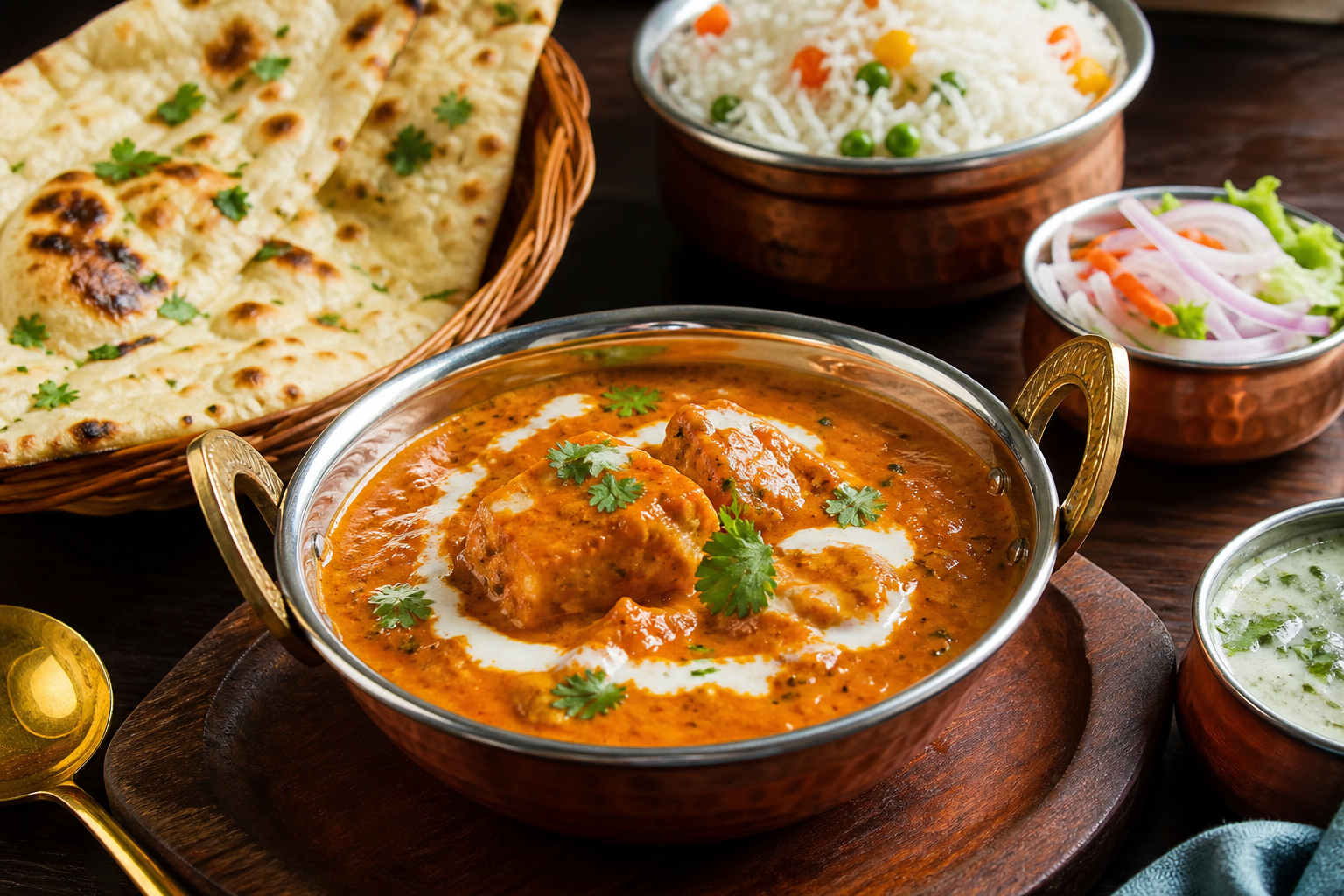
- Cream-enriched gravies: Rich and mellow; best paired with neutral breads to avoid heaviness.
- Spinach and lentil dishes: Earthy, comforting, and often milder heat; dal varieties showcase slow-cooking techniques.
Ask how hot a curry is by default and whether the kitchen can tailor the heat to your comfort.
Breads and rice
- Naan: Soft, slightly chewy; great with creamy gravies.
- Roti: Whole-wheat and lighter; pairs well with spicier sabzis.
- Paratha: Layered or stuffed; ideal with yogurt and pickles.
- Kulcha: Leavened, often stuffed (aloo pyaaz, for instance), with a crisp exterior and soft interior; excellent with chickpea gravies.
- Jeera rice/steam rice: Lets gravies shine without overfilling.
Lassis and refreshing drinks
Lassi (sweet or masala-spiced) cools the palate and complements tandoori heat or tangy chaats. For richer meals, alternate sips of lassi or water to keep flavors distinct.
Desserts
Indian desserts often spotlight dairy richness and cardamom warmth. Choose something light and cool after a spicy spread, or a syrup-soaked sweet if you opted for milder mains.
Spice levels and dietary choices
Heat tolerance is personal. Most kitchens can adjust spice levels upon request, but “spicy” can refer to both chili heat and aromatic intensity. Clarify what you mean when you order.
- Mild: Emphasis on aromatics, cream, tomato, or spinach bases without sharp chili heat.
- Medium: Noticeable warmth; chutneys can amplify or soften it.
- Hot: Prominent chili; choose cooling sides like raita or sweet lassi.
How to order like a pro
Use these balanced combinations to build a satisfying meal at any Indian restaurant:
- First-timer sampler: One chaat or pakora to share, a tandoori paneer or vegetable tikka, one creamy curry, one spicier dry-style sabzi, naan plus roti, and a cooling lassi.
- Vegetarian comfort spread: Dal makhani or another slow-braised lentil, seasonal vegetable stir-fry, stuffed kulcha, raita, and jeera rice.
- Smoky-and-spice duo: Tandoori specialty for char and aroma, paired with a tangy tomato-onion gravy. Balance with roti and a simple salad.
- Light but flavorful: Grilled tandoori item, dry sautéed vegetables, roti, and a tang-forward chaat instead of dessert.
- Feast for a group: Mix textures—one chaat, two tandoori plates, two gravies (one creamy, one tomato-forward), two bread types, one rice, and a shared dessert.
Tip: Match bread to gravy weight. Creamy gravies love naan or kulcha; spicier, drier dishes pair better with roti. If you’re unsure, ask for the house recommendation on bread and heat level.
Signals of quality in the kitchen
Even without peeking behind the line, you can spot telltale signs of a well-run Indian restaurant:
- Aromatics come first: Dishes built on patiently cooked onions, garlic, and spices create a rich foundation for flavor.
- Fresh ingredients: Look for vibrant vegetables, quality proteins, and homemade breads that indicate a commitment to authenticity.
- Consistency: Regular diners should notice that their favorite dishes taste the same each time they visit.
Sources & References
For more insights on Indian cuisine and dining experiences, consider exploring the following authoritative sources:
- CNN Travel: A Guide to Indian Cuisine
- BBC Good Food: Understanding Indian Cuisine
- The New York Times: A Guide to Indian Food


Leave A Comment