





10 Foods Punjabi Cuisine Is Known For
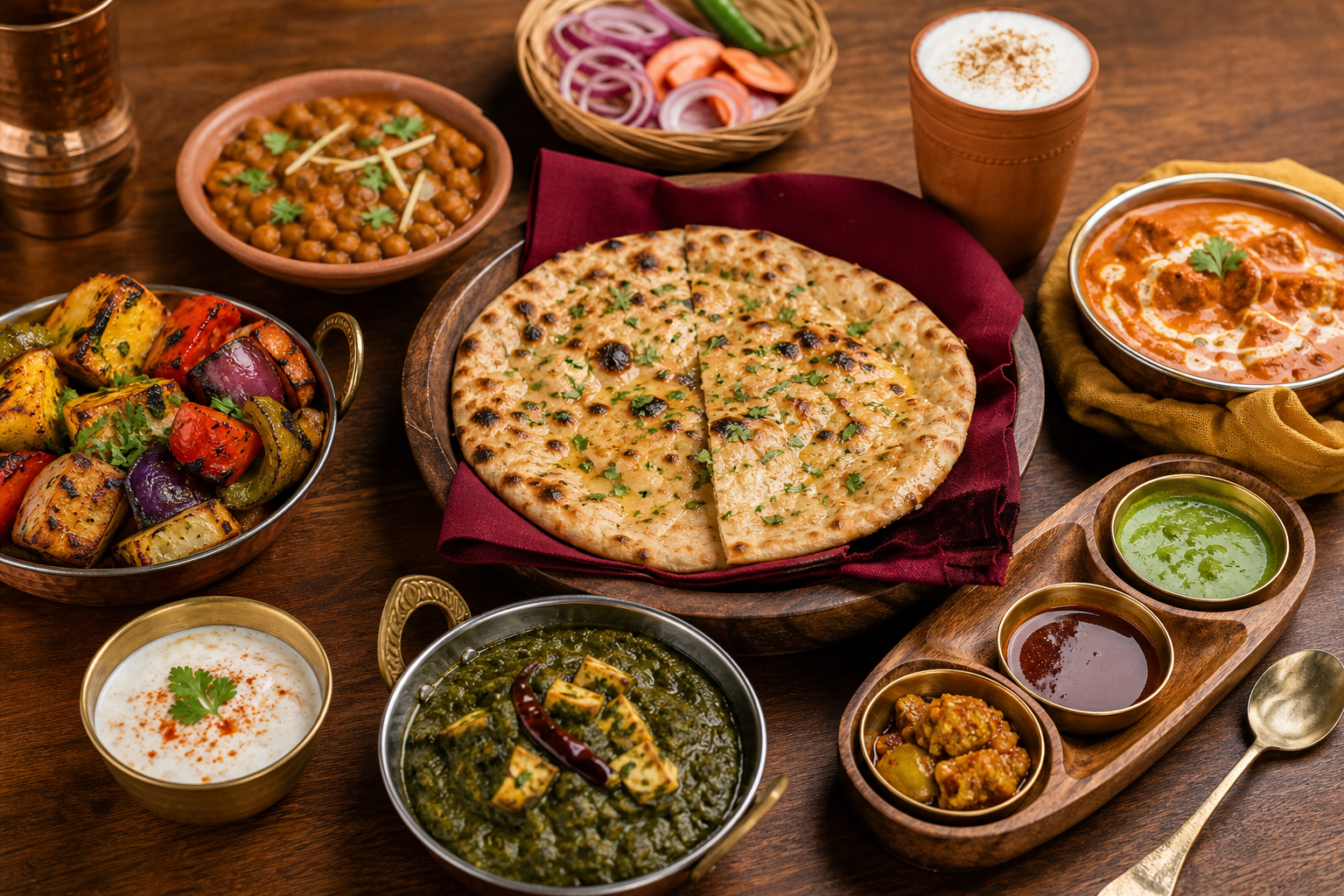
Punjabi cuisine is known for hearty breads and kulchas, chickpea and legume dishes, rich curries, smoky tandoori cooking, substantial vegetarian and meat dishes, and cooling lassi. Amritsari cuisine is one specific regional expression within Punjabi food, associated with stuffed kulcha, chole, street-food textures, and bold spice blends. Together, these categories explain why Punjabi food offers such a wide range of rich, smoky, crisp, tangy, and refreshing flavours.
What Punjabi Cuisine Is Known For at a Glance
Punjabi food is a broad regional tradition from the Punjab region of India and Pakistan. Its best-known features include tandoori cooking, rich and buttery flavour profiles, and an extensive range of vegetarian and meat dishes. Punjabi cuisine is widely associated with these characteristics, but the food is not one uniform style.
Some Punjabi dishes are deeply rich, while others are crisp, tangy, fresh, or lightly spiced. A meal may combine a stuffed bread, chickpeas or lentils, a tandoori item, chutneys, and lassi so each bite offers a different texture and intensity.
The Foods That Define Punjabi Cuisine
The easiest way to understand Punjabi food is to see how its categories work together. On an Indian restaurant menu, Punjabi and Amritsari choices commonly appear alongside starters, tandoor specials, curries, breads, rice, drinks, and desserts.
Representative Punjabi dishes to know
If you are looking for the most recognizable examples, these dishes show the range of Punjabi cooking. Recipes and availability vary by region and restaurant, but each illustrates a familiar part of the tradition.
- Dal makhani: Slow-cooked black lentils with a creamy, buttery texture and deep savoury flavour.
- Sarson da saag with makki di roti: Mustard-green preparation served with rustic corn flatbread, especially associated with Punjabi home cooking.
- Rajma: Kidney beans simmered in a spiced gravy, commonly served with rice.
- Butter chicken: Tender chicken in a smooth, tomato-based, buttery sauce with gentle aromatic spice.
- Amritsari kulcha: Stuffed, browned flatbread with a crisp or blistered exterior and savoury filling.
- Chole bhature: Spiced chickpeas served with puffy fried bhature for a rich, bread-led meal.
- Paratha: Layered or stuffed flatbread that can be served with yogurt, pickles, vegetables, or curry.
- Tandoori chicken: Marinated chicken cooked at high heat for roasted aroma, charred edges, and a tender centre.
- Paneer tikka: Marinated pieces of paneer cooked with high heat for a firm texture and smoky exterior.
- Lassi: A yogurt-based drink served in sweet or savoury styles to refresh the palate.
Breads and stuffed kulchas
Breads are not an afterthought in Punjabi cooking. They carry curries, add substance, and can be the main attraction themselves. Kulcha is a particularly important example: a leavened or fermented-style flatbread that is often stuffed, shaped, and finished on a griddle or in a tandoor.
Fillings can include potato, onion, paneer, or other seasoned mixtures. The appeal is the contrast between a browned, crisp or blistered exterior and a soft, savoury centre.
Chickpeas, lentils, and other legumes
Chickpeas and lentils provide the earthy, filling centre of many Punjabi meals. Chole, a spiced chickpea preparation, is commonly paired with breads such as kulcha or bhature. Dal dishes bring a softer texture and a slower, more comforting eating experience.
These foods also make Punjabi cuisine easy to explore as a vegetarian diner. A chickpea dish with stuffed bread can feel complete without relying on meat.
Curries and slow-simmered gravies
Punjabi curries range from tomato-based and robust to creamy, buttery, or deeply spiced. The gravy is designed to be eaten with bread or rice, so its texture matters as much as its seasoning.
A mild, creamy curry offers a different experience from a sharply spiced or tomato-forward one. The same distinction helps explain why Punjabi menus can suit both first-time diners and people looking for assertive regional flavours.
Tandoori dishes
Tandoori cooking uses intense heat to create roasted aroma, browned edges, and a distinctive smoky character. It can be used for meats, paneer, chaap, and vegetables, so “tandoori” does not automatically mean a meat dish.
Tandoori foods are usually drier than curries and work well as a textural contrast. They may be served with chutney, onions, lemon, bread, or a saucy dish that adds moisture.
Starters, chaats, and chutneys
Punjabi starters often bring crunch, tang, heat, and brightness before the richer parts of the meal. Chaat-style dishes may combine crisp components with chickpeas, yogurt, chutneys, and spices.
Mint-cilantro chutney adds freshness, while tamarind chutney contributes sweetness and acidity. These sharp flavours prevent a table built around breads and gravies from becoming one-note.
Lassi and desserts
Lassi is a yogurt-based drink served in sweet or savoury styles. Sweet lassi gives a creamy, gently sweet finish, while masala lassi brings a savoury, spiced contrast. Desserts provide another way to end the meal, often through dairy, sugar, cardamom, or warm textures.
Punjabi Breads, Kulchas, and Chickpea Dishes
Punjabi breads matter because they turn a curry or chickpea dish into a hands-on, satisfying meal. A classic combination such as Amritsari kulcha with chole brings crisp bread, a seasoned filling, soft chickpeas, chutney, and cooling lassi into the same meal.
Amritsari kulcha is a useful first dish for someone who wants to understand the regional style through texture. It is more substantial than a plain flatbread, while the accompanying chickpeas add moisture and earthy spice. The pairing is hearty without requiring a meat dish.
Chole bhature follows a different path. The chickpea preparation is paired with bhature, a puffy fried bread, creating a richer and more indulgent combination. Kulcha and chole offer stuffed bread with a more pronounced toasted or tandoor-finished character.
Taste of Amritsar is associated with Amritsari kulcha and vegetarian-friendly North Indian dining in Brampton. The broader examples above describe Punjabi cuisine generally, so use the current menu to identify which dishes are available on a particular visit.
Why Tandoori Cooking Matters in Punjabi Food

Tandoori cooking adds a flavour that a covered curry cannot provide: direct high heat, roasted aroma, and charred edges. The result should have a lightly smoky surface and a tender interior, with the marinade complementing rather than hiding the main ingredient.
Paneer, vegetables, and chaap can all take a tandoori treatment. This makes the category useful for mixed groups because a table can share smoky vegetarian dishes alongside meat-based choices.
Tandoori dishes are not interchangeable with curries. Order them for char and a relatively dry bite; choose curry for sauce with bread or rice. Combining one of each gives a table more textural variety.
For a closer look at freshness, cooking technique, and vegetarian alternatives, explore these tandoori specials considerations before ordering.
Punjabi Curries, Starters, and Street-Style Flavours
Punjabi curries provide the saucy, warming side of the cuisine, while starters and chaats supply contrast. A balanced Punjabi meal often includes both: one dish that is soft and rich, plus another that is crisp, tangy, smoky, or fresh.
A creamy or buttery curry can be paired with tandoori roti or another plain bread, then balanced with sharp chutney or a crunchy starter. A strongly spiced curry may work better with a cooling yogurt-based drink and less heavily seasoned bread.
Street-style flavours make Punjabi food feel lively rather than heavy. Chaat, fried bites, chickpeas, yogurt, and chutneys can deliver several sensations in one serving, making them practical for sharing.
Vegetarian and Meat Dishes: What Can You Expect?
Punjabi cuisine includes both vegetarian and meat-based traditions, so it is not accurate to describe it as exclusively vegetarian or meat-focused. Paneer, chickpeas, lentils, stuffed breads, vegetables, and plant-based tandoori dishes sit alongside chicken, lamb, and other meat curries or grilled preparations.
| Preference | Good category to explore | What it contributes |
|---|---|---|
| Vegetarian comfort | Kulcha, chole, dal, or paneer curry | Soft, hearty textures with bread-friendly sauces or fillings |
| Smoky vegetarian food | Paneer or vegetable tandoori dishes | Char, roasted aroma, and a firmer bite |
| Meat-based richness | Meat curries or tandoori meat | Deep savoury flavour, either saucy or grilled |
| Mixed-group dining | One bread or legume dish, one tandoori dish, and one curry | Different textures and variety for several preferences |
For a vegetarian Punjabi meal, the broadest categories to explore are stuffed breads, chickpeas, lentils, paneer, vegetable curries, and plant-based tandoori dishes. At a restaurant, ask which of these are available and whether the preparation suits your dietary needs.
How Spice, Butter, Dairy, and Lassi Shape the Meal
Punjabi food can be bold without every dish being hot. Spice may mean aromatic cumin, coriander, cardamom, or garam masala, while heat depends on the chilli used and the kitchen’s preparation.
Butter, ghee, cream, and yogurt can add body and richness, but they do not appear in the same way in every dish. A stuffed kulcha may be rich from its filling and cooking fat, while a tandoori vegetable dish gets its character mainly from marinade and high heat.
Lassi creates contrast. Sweet lassi brings creamy sweetness, while masala lassi contributes savoury spice. Chutneys provide acidity, herbs, or sweetness. If the table includes rich dishes, a sharper starter or cooling drink can provide a better balance than another heavy item.
Punjabi Cuisine and Amritsari Cuisine: What Is the Difference?
Punjabi cuisine is the broader regional food tradition, while Amritsari cuisine is a more specific expression associated with Amritsar and its distinctive street-food and tandoori influences. Amritsari food often brings stuffed kulcha, chole, bold masala, crisp textures, and smoky cooking into sharper focus.
“Punjabi” may describe a wide range of breads, curries, legumes, grilled foods, and drinks. “Amritsari” signals a more specific regional direction, though individual menus differ and the label does not guarantee that every classic dish is available.
Taste of Amritsar presents its Brampton restaurant around authentic Amritsari and Punjabi cuisine, imported masalas, traditional recipes, handcrafted dishes, tandoori flavours, kulchas, lassis, and warm, homely dining. That positioning connects the restaurant to the regional tradition without suggesting that every food discussed here is currently on its menu.
How to Start Exploring Punjabi Food in Brampton

For a local introduction, begin by identifying the Punjabi category that interests you most: stuffed breads and chickpeas, smoky tandoori cooking, slow-simmered curries, or refreshing lassi. Taste of Amritsar presents its Brampton dining experience around Amritsari and Punjabi flavours, including kulchas, tandoori cooking, lassis, imported masalas, and warm hospitality.
Review the current Amritsari and Punjabi dining options in Brampton for local context, then use the menu to check which representative dishes are available for your visit.
Punjabi Cuisine Questions First-Time Diners Still Ask
Is Punjabi cuisine mostly vegetarian?
Punjabi cuisine includes substantial vegetarian and meat-based traditions. Vegetarian diners can build a complete meal from kulcha, chole, dal, paneer, vegetables, tandoori dishes, chutneys, and lassi.
Is Punjabi food always spicy?
Punjabi food is not always hot. It is often aromatic and strongly seasoned, but chilli levels vary by dish and preparation.
What are some famous Punjabi dishes?
Well-known examples include dal makhani, sarson da saag with makki di roti, rajma, butter chicken, Amritsari kulcha, chole bhature, paratha, tandoori chicken, paneer tikka, and lassi.
What is the difference between Punjabi and Amritsari cuisine?
Punjabi cuisine covers a broad regional tradition. Amritsari cuisine points to the food culture associated with Amritsar, especially stuffed kulcha, chole, crisp street-food textures, bold masalas, and tandoori cooking.
Explore Punjabi Food in Brampton
Punjabi cuisine combines cooking methods and meal roles: breads carry fillings and sauces, legumes provide substance, tandoori cooking adds smoke and char, curries bring depth, and lassi supplies contrast. To compare these categories in person, explore the current Punjabi and Amritsari menu at tasteofamritsar.com in Brampton and choose a meal that matches your appetite, dietary preferences, and desired texture.


Leave A Comment