




Tandoori Recipes: Chicken, Paneer, Fish, and More
Tandoori recipes use a spiced marinade, commonly built with yogurt, aromatics, and warming spices, followed by high-heat cooking that creates charred edges and smoky flavor. Use one adaptable marinade for chicken, paneer, vegetables, fish, or chaap, but adjust marinating and cooking times for each ingredient. For chicken, keep the marinade within the recommended window and follow applicable Canadian food-safety guidance for poultry handling and doneness. Source: Tandoori chicken.
What Is Tandoori Food?
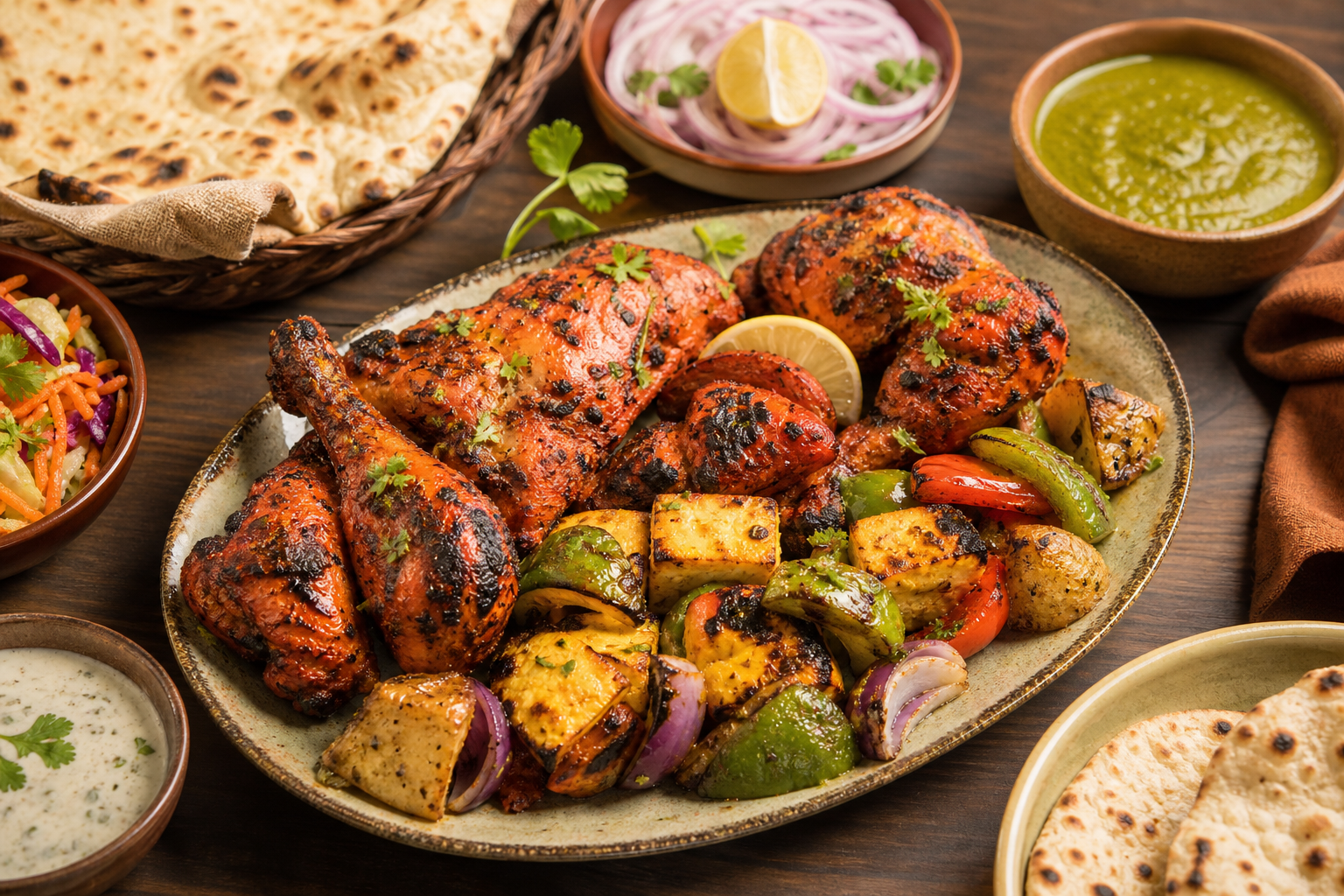
Tandoori food is marinated meat, poultry, fish, paneer, or vegetables cooked with intense heat, traditionally in a clay tandoor or over charcoal. The combination of yogurt or another coating, Indian spices, radiant heat, and browning creates the familiar smoky aroma and charred edges. TERMIUM Plus describes tandoori dishes as marinated with herbs and spices before being grilled or cooked over charcoal in a clay oven. Source: FOOD QUALITY SPECIFICATIONS –.
Tandoori chicken usually refers to larger bone-in pieces or sometimes a whole chicken that has been deeply scored, marinated, and cooked at high heat. Chicken tikka uses smaller boneless pieces, so it cooks faster and is commonly threaded onto skewers. Both can use similar spices and yogurt, but the cut changes the texture, cooking time, and best serving format. Tandoori chicken may be served as a starter or main course with flatbread and other sides.
The red color comes from a combination of paprika, mild chili powder, tandoori masala, saffron-toned spices, or food coloring in some recipes. Color alone does not prove that a dish is authentic or properly cooked. A better result has balanced tang, heat, spice, moisture, and char.
Taste of Amritsar describes its Brampton menu around Amritsari recipes, rich spices, and smoky tandoori flavors. Those stated priorities are useful reference points when deciding what to cook or order, but the restaurant’s preparation should not be assumed to be the same as this home recipe.
Choose Your Tandoori Recipe
Choose the ingredient according to the texture, speed, and portion you want. Bone-in chicken gives you a juicy, substantial meal; paneer and vegetables work well for a vegetarian shared plate; fish cooks quickly; and chaap offers a chewy, Punjabi-style meat-free option.
| Ingredient | Best use | Marinating time | Cooking note |
|---|---|---|---|
| Bone-in chicken | Juicy main course or family meal | 4 to 24 hours | Needs the longest cooking time and careful checking near the bone |
| Boneless chicken | Quick skewers or chicken tikka | 2 to 12 hours | Cut evenly and avoid overcooking |
| Paneer | Vegetarian starter or shared plate | 30 minutes to 2 hours | Cook quickly so the cheese stays tender |
| Vegetables | Mixed platter or side dish | 30 minutes to 2 hours | Drain watery vegetables and leave space between pieces |
| Fish | Fast weeknight meal | 20 to 45 minutes | Use a thick, firm fillet and watch it closely |
| Chaap | Chewy, Punjabi-style vegetarian option | 1 to 4 hours | Press out excess moisture before coating |
For a tandoori chaap recipe, use the same spice direction but shorten the cooking time if the chaap is already cooked or par-cooked. Its texture is less delicate than paneer, yet a wet coating can still slide off and prevent browning.
The Core Tandoori Marinade
This amount coats about 2 pounds of chicken, 1 pound of paneer, or a generous tray of vegetables. For fish, reserve part of the marinade before it touches the raw fish and use only a thin coating.
- 1 cup thick plain yogurt, preferably Greek-style or strained
- 2 tablespoons lemon juice
- 1 tablespoon neutral oil
- 1 tablespoon grated ginger
- 1 tablespoon grated garlic
- 2 teaspoons paprika or mild chili powder
- 1 teaspoon ground cumin
- 1 teaspoon ground coriander
- 1 teaspoon garam masala
- 1 to 1 1/2 teaspoons salt, adjusted to the quantity of food
- 1/4 teaspoon cayenne, optional
How to mix it
Stir the yogurt, lemon juice, oil, ginger, garlic, spices, and salt until smooth. If the yogurt is loose, strain it through a fine sieve or clean cloth for 20 to 30 minutes. A thick marinade clings to the ingredient and browns; a watery one runs onto the tray and steams instead.
Yogurt contributes tang and helps the spice coating adhere. Lemon adds brightness, oil supports browning, and paprika or mild chili supplies color without requiring extreme heat. Cumin, coriander, and garam masala provide the warm spice profile. If you cannot find garam masala, use a small amount of curry powder, recognizing that the final flavor will be different. Kashmiri chili can replace paprika when you want deeper red color with moderate heat.
Marinating and Preparing Chicken
Marinate chicken for several hours, ideally 4 to 12 hours for bone-in pieces. You can hold it for up to 24 hours, but longer marination can make the surface soft or oddly textured because the yogurt and lemon continue acting on the meat.
Bone-in pieces and drumsticks
Pat the chicken dry, then make two shallow diagonal cuts through the thickest parts of each piece. The cuts help the marinade reach below the surface without cutting the meat into separate sections. Coat every piece, cover it, and prepare it according to applicable Canadian food-safety guidance.
For tandoori chicken drumsticks, make two or three shallow cuts on each drumstick, coat them thoroughly, and marinate for 4 to 12 hours. Roast or grill them until fully cooked according to applicable Canadian food-safety guidance, then give them a short final burst of high heat if the surface needs more char.
Boneless pieces
Cut boneless chicken into pieces about 1 1/2 inches across so they cook at the same rate. Two to eight hours of marination is usually sufficient. Thread the pieces onto skewers with a little space between them, or place them on a rack so hot air can reach the sides.
Whole chicken
A whole chicken needs more preparation and a longer cooking path. Spatchcocking it, which means removing the backbone and flattening the bird, exposes more surface area to heat and produces more even cooking than roasting it whole. Make shallow cuts in the thickest parts, coat it carefully, and follow applicable Canadian food-safety guidance before serving.
Adapt the Marinade for Paneer, Vegetables, Fish, and Chaap
Paneer, vegetables, fish, and chaap all accept the same broad flavor profile, but they do not need the same treatment. For paneer, use large cubes and fold them through the marinade gently so the edges do not crumble. Thirty minutes to two hours is enough; a much longer soak can make the surface soft.
For vegetables, choose pieces that can tolerate high heat, such as bell pepper, onion, cauliflower, mushroom, or zucchini. Pat them dry, cut them into similar sizes, and avoid overcrowding the tray. Mushrooms and zucchini release water, so a hot rack and generous spacing matter more than a thick coating.
Firm fish needs only a thin layer of marinade and a short rest. Twenty to 45 minutes is usually enough. Delicate fish can break under a heavy yogurt coating, so place it on an oiled rack or lined tray and turn it only if the fillet is firm enough to handle.
For chaap, press out excess liquid, coat it lightly, and use skewers or a rack. Cook until the outside is browned and the centre is hot. For regional context on paneer tikka and other traditional tandoori starters, compare the ingredient, texture, and role each preparation plays in a Punjabi meal.
Choose Your Cooking Method: Oven, Grill, or Broiler

To cook tandoori-style food at home, use the hottest practical method available, keep the food elevated or spaced for airflow, and finish with direct heat for char. A home oven, grill, or broiler can produce browned edges and a smoky profile, although none exactly reproduces the intense radiant heat of a clay tandoor.
| Method | Setup | Best for | Practical guidance |
|---|---|---|---|
| Oven | 450°F, food on an oiled rack over a lined tray | Bone-in chicken, whole spatchcocked chicken, paneer | Roast until nearly done, turn once if needed, then broil briefly for char |
| Grill | Two-zone fire with a hot direct side | Drumsticks, skewers, paneer, vegetables | Start over indirect heat for thick pieces, then move over direct heat to brown |
| Broiler | Food 4 to 6 inches below the element | Boneless chicken, paneer, fish, vegetables | Watch continuously and turn once the top surface blisters and browns |
Oven method
Heat the oven to 450°F and place a sturdy rack over a foil-lined tray. Shake off excess marinade without scraping the food bare, arrange the pieces with space between them, and roast until nearly cooked. A short broil at the end develops darker edges, but the marinade can burn quickly, so stay beside the oven.
Boneless chicken pieces generally need about 15 to 22 minutes at this heat, while drumsticks and other bone-in pieces often need 30 to 45 minutes. These are starting ranges, not substitutes for applicable Canadian food-safety guidance, because piece size and oven performance vary.
Grill method
Set up a hot direct zone and a cooler indirect zone. Cook thick chicken pieces mostly over indirect heat with the lid closed, turning occasionally, then move them over direct heat for final browning. Paneer, vegetables, and boneless chicken can go directly over the hot zone, but turn them before the yogurt coating blackens.
Broiler method
Place the rack 4 to 6 inches from the broiler and preheat the element fully. Broiling is useful when the food is nearly cooked and you want fast surface color. Use a metal tray or rack rated for broiler heat, keep the door position appropriate for your oven, and watch continuously.
Chicken Doneness and Sensory Cues
Visual cues help you judge texture and browning, but they are not a substitute for applicable Canadian food-safety guidance on poultry doneness. Use that guidance before serving chicken, especially when cooking thick bone-in pieces or a whole bird.
Properly cooked tandoori chicken has set marinade, browned or blistered edges, and a moist, firm interior. It should not feel rubbery or release translucent, raw-looking juices. Surface char is desirable, but blackened coating does not compensate for undercooked meat.
Troubleshoot Tandoori Results
Most tandoori problems come from excess moisture, uneven piece sizes, low heat, or cooking for too long. Use the symptom to choose the correction instead of simply adding more spice.
- Pale surface: Pat the ingredient dry before marinating, use paprika or mild chili for color, leave space between pieces, and finish under a hot broiler or over direct grill heat.
- Wet or sliding marinade: Strain the yogurt, use less lemon juice, shake off excess coating, and place the food on a rack rather than a flat tray.
- Dry chicken: Use bone-in pieces, avoid cutting them too small, begin checking early, and follow applicable Canadian food-safety guidance before removing the chicken.
- Undercooked centre: Lower the food away from direct heat and continue cooking according to applicable Canadian food-safety guidance. Thick pieces need time inside, not just darker surfaces.
- Uneven browning: Cut pieces to a similar size, leave gaps between them, and rotate the tray or skewers during cooking.
- Weak smoky flavor: Increase surface browning with a hot finish, use a grill when practical, and avoid covering the food immediately after cooking, which traps steam.
- Coating burns before the food is ready: Move thick pieces to indirect or lower oven heat, then return them to direct heat only after the centre is nearly cooked.
When judging restaurant tandoori, the same standards help. Look for moist interiors, clear but controlled char, a balanced spice profile, and food that has not turned rubbery or soggy. These tandoori freshness checks are useful when comparing a home result with a freshly served plate.
Prepare, Reheat, and Serve
Mix the marinade shortly before use, or prepare it in advance and follow applicable food-safety guidance for storage. Marinate chicken for the recommended window, then cook it promptly. For the best texture, serve cooked tandoori food soon after cooking.
Reheat chicken, paneer, or vegetables in a hot oven or air fryer rather than a covered microwave dish. Use moderate time and high enough heat to restore the surface, stopping as soon as the centre is hot. A sealed container and low microwave heat trap steam and soften the char.
Build a Punjabi-style plate around contrast: pair smoky tandoori food with kulcha or tandoori roti, mint chutney, pickled onions, and a crisp salad. Chole adds a soft, spiced component, while masala or sweet lassi provides a cooling or gently sweet counterpoint. For more detail on the bread’s texture and tandoor method, see tandoor-roti preparation.
For a group, serve one substantial chicken option, one vegetarian tandoori item, and one fresh side. Paneer tikka or chaap gives meat-free diners a proper centrepiece instead of treating vegetables as an afterthought.
How to Judge the Finished Dish
Score your tandoori meal across five points: marinade balance, char, moisture, ingredient texture, and pairings. The best result is not simply the reddest or hottest one. It should taste tangy, warmly spiced, lightly smoky, and appropriately juicy for the ingredient.
- Marinade balance: Notice yogurt tang, aromatics, salt, and spices without one sharp note dominating.
- Char: Look for browned edges and small blisters, not a uniformly burned coating.
- Moisture: Chicken should be juicy, paneer tender, vegetables cooked but not collapsed, and fish flaky rather than dry.
- Ingredient texture: The cooking method should suit the food. A firm fish fillet and a thick drumstick need different timing.
- Meal balance: Bread, chutney, onions, chole, salad, or lassi should add contrast instead of repeating the same richness.
These criteria also give Brampton diners a practical way to compare restaurant plates. Taste of Amritsar presents its menu around imported masalas, traditional Amritsari recipes, and smoky tandoori flavors. Those stated priorities make it relevant to a diner seeking Punjabi-style tandoori food, but this guide remains a home-cooking framework rather than a description of the restaurant’s kitchen recipe.
Tandoori Recipe Questions
Why is tandoori meat red?
Tandoori meat is red because the marinade may contain paprika, mild chili, tandoori masala, saffron-toned spices, or food coloring. Redness is only one visual feature and does not prove authenticity, freshness, or doneness.
Is tandoori food good for you?
Tandoori food is not automatically healthy or unhealthy; the answer depends on the ingredient, portion, oil, yogurt, salt, and sides. Grilled vegetables and paneer create a different meal from heavily oiled meat served with rich breads, so judge the complete plate rather than the word “tandoori” alone.
Can I make tandoori food without a clay tandoor?
Yes. A 450°F oven, hot grill, or broiler can produce a convincing high-heat result without a clay tandoor. Use a rack, avoid excess marinade, leave space around the food, and finish with direct heat for browning, while expecting the smoke and heat pattern to differ from a traditional tandoor.
How do I make tandoori chicken drumsticks?
Cut shallow slashes into each drumstick, coat them with the yogurt-and-spice marinade, and marinate for 4 to 12 hours. Cook according to applicable Canadian food-safety guidance, then finish over direct heat or under the broiler for char, watching closely so the coating does not burn before the meat is cooked.
Plan Your Next Tandoori Meal
If you want to compare these home-cooking standards with restaurant-style Punjabi flavors in Brampton, explore the Taste of Amritsar menu and use the marinade balance, char, moisture, and pairing criteria to choose your meal.


Leave A Comment