



12 Punjabi Spices and What They Add to Food
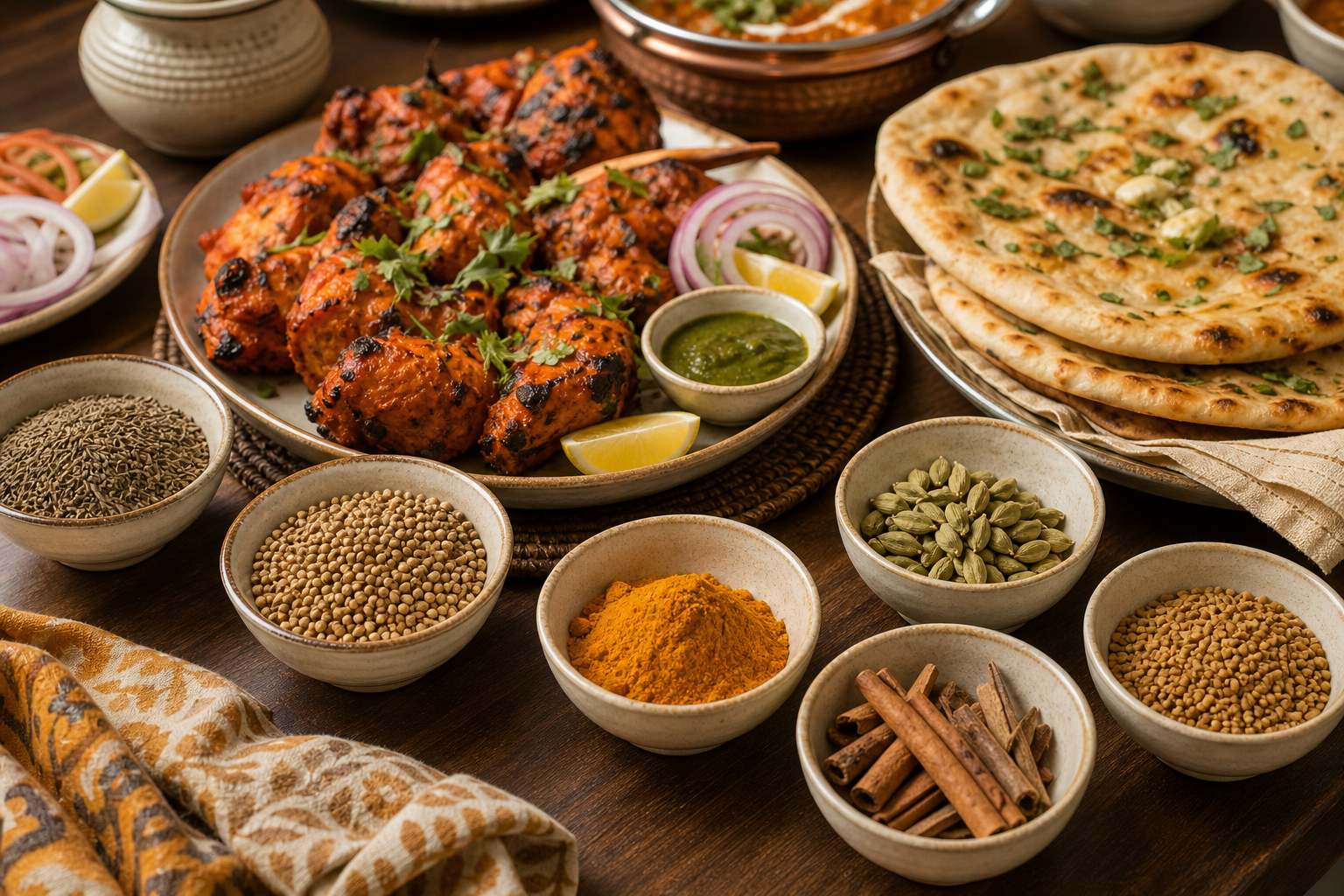
Punjabi spices are the whole spices, ground spices, aromatics, and blends used to build the bold, earthy, warming, tangy, and smoky profiles associated with Punjabi cooking. Common examples include cumin, coriander, turmeric, mustard seeds, black pepper, red chili, cardamom, cloves, cinnamon, fenugreek, bay leaf, and asafoetida. Garam masala is a variable blend, not one single spice.
This guide explains the names, flavours, forms, and cooking roles behind Punjabi spices, then shows how to use those clues when choosing Punjabi and Amritsari food in Brampton.
What Punjabi Spices Mean in Punjabi Cooking
Punjabi cuisine is a broad regional food tradition built around breads, dairy, pulses, vegetables, curries, meat dishes, ghee, aromatics, and layered spice flavours. Regional food traditions in Punjab also reflect historical Central Asian influences alongside local agricultural ingredients, including dairy, flatbreads, pulses, vegetables, and curries. The Government of Punjab describes these regional food foundations in cultural terms.
“Punjabi spices” does not name one official mixture. It is a useful shorthand for the ingredients and seasoning combinations commonly used in Punjabi cooking. Many of these ingredients are also used throughout Indian cuisine, so a spice can be common in Punjabi food without being unique to Punjab or indigenous to India.
Punjabi cooking is often associated with full-bodied masalas, rich dairy, ghee, breads, and hearty preparations. An India Tourism description of Punjab’s cuisine highlights dairy, ghee, breads, agricultural produce, and aromatic spices, while the Punjab Portal describes the food as bold and spice-forward. India Tourism’s overview of Punjabi cuisine provides useful cultural context, and the Punjab Portal’s food overview notes the common association with desi ghee.
The different types of Indian spices include seeds, bark, roots, pods, leaves, fruits, flowers, and prepared blends. In Punjabi food, those forms may provide aroma, earthiness, colour, warmth, tang, or chili heat. The final taste depends on the ingredient, its form, how it is cooked, and what it is combined with.
Punjabi Spice Names at a Glance
The table below gives common Punjabi spice names in English, Punjabi script, and transliteration. These are broad culinary uses, not a claim about the exact recipe for any particular restaurant dish.
| English name | Punjabi script | Transliteration | Flavour | Typical form and role |
|---|---|---|---|---|
| Turmeric | ਹਲਦੀ | Haldi | Earthy, warm, slightly bitter | Ground powder for colour and depth |
| Cumin | ਜੀਰਾ | Jeera | Earthy, nutty, warm | Whole or ground; tempered, toasted, or added to masala |
| Coriander | ਧਨੀਆ | Dhaniya | Warm, citrusy, lightly sweet | Seeds or ground powder for body and brightness |
| Mustard seeds | ਸਰੋਂ | Sarson | Pungent and sharp | Whole seeds tempered in hot fat |
| Black pepper | ਕਾਲੀ ਮਿਰਚ | Kaali mirch | Warming, woody, peppery | Whole or ground for heat and aroma |
| Red chili | ਲਾਲ ਮਿਰਚ | Laal mirch | Heat, fruitiness, colour | Fresh, dried, flaked, or powdered |
| Cardamom | ਇਲਾਇਚੀ | Elaichi | Sweet, floral, mint-like | Green or black pods for aromatic depth |
| Cloves | ਲੌਂਗ | Laung | Warm, sweet, medicinal | Whole or ground in aromatic blends |
| Cinnamon | ਦਾਲਚੀਨੀ | Dalchini | Sweet, woody, warming | Bark used whole or ground |
| Fenugreek | ਮੇਥੀ | Methi | Herbaceous, bitter, maple-like | Seeds or dried leaves used carefully |
| Bay leaf | ਤੇਜ ਪੱਤਾ | Tej patta | Woody, herbal, gently floral | Whole leaf infused into gravies or rice |
| Asafoetida | ਹੀਂਗ | Hing | Savoury, onion-like, pungent | A small amount in lentil and vegetable dishes |
Punjabi names can vary slightly in transliteration because sounds are represented differently in English. These spellings are practical references, not the only acceptable versions.
Whole Spices, Ground Spices, and Blends: What Changes?
A whole spice is used in its original form, such as a cumin seed, cardamom pod, clove, cinnamon stick, or bay leaf. A ground spice has been crushed into powder. A blend combines several spices, and its ingredients and proportions vary by cook, region, recipe, or restaurant.
Whole spices add an aromatic foundation
Whole spices are often tempered in hot oil or ghee at the start of cooking. This brief contact with fat releases aroma and distributes it through the cooking base. Cumin seeds, mustard seeds, bay leaf, cinnamon, cloves, and cardamom are commonly used this way.
Whole spices can also be toasted before grinding. Toasting deepens nutty or warm notes, but excessive heat can make spices bitter.
Ground spices build the cooking base
Powdered turmeric, coriander, cumin, and red chili are commonly stirred into an onion, tomato, yogurt, or other masala base. They need enough moisture and cooking time to lose a raw, dusty edge and integrate with the dish.
Ground spices spread through a dish more evenly than whole spices, but they also lose aroma more quickly in storage because more surface area is exposed to air.
Garam masala is a blend, not a single spice
Punjabi garam masala usually refers to a warming spice blend. It may include cumin, coriander, black pepper, cardamom, cloves, cinnamon, bay leaf, or other aromatics, but there is no single universal formula. It is often added late so its fragrance remains noticeable. Garam masala does not necessarily mean a dish will be chili-hot. Source: Punjabi cuisine is not subtle in its flavor and can be described as the cuisine with domin….
How Punjabi Spices Build Flavour
Spice heat and spice flavour are different things. Cumin can be strongly aromatic without being hot, while red chili can add direct heat. Cardamom, cinnamon, and cloves are fragrant and warming, but they do not create the same sensation as chili.
| Profile | What you may notice | Common menu direction |
|---|---|---|
| Earthy | Deep, roasted, nutty | Cumin, coriander, turmeric, lentils, chickpeas, and hearty gravies |
| Aromatic | Floral, herbal, woody, sweet-spiced | Cardamom, cinnamon, cloves, bay leaf, and finishing blends |
| Warming | Comforting spice without sharp heat | Black pepper, ginger, cinnamon, cloves, and garam masala |
| Tangy | Bright, sour, lively | Chaat, chickpea dishes, yogurt, and acidic finishes |
| Smoky | Charred and roasted | High-heat tandoori cooking and grilled preparations |
| Chili-forward | Direct heat or lingering burn | Red chili, fresh chilies, and dishes described as spicy |
Yogurt or masala marinades carry spices onto ingredients before high-heat cooking. Tandoori heat creates charred edges and smoky aroma while the marinade contributes tang and seasoning. Authentic Punjabi flavours and imported masalas are useful clues when comparing tandoori dishes, but “spiced” alone does not reveal a dish’s heat level.
Where Punjabi Spices Appear on a Restaurant Menu
Punjabi spices appear across a meal, not only in curries. Connect each category with its likely texture, cooking method, and flavour direction.
| Menu category | Flavour clues | Broad expectation |
|---|---|---|
| Kulchas and breads | Earthy fillings, ghee, toasted dough, chutney | Rich, comforting flavours with browned or crisp surfaces |
| Chole and chickpea dishes | Cumin, coriander, chili, tangy masala | Hearty, savoury, and lively with breads |
| Street-style chaat | Chaat masala, chutney, yogurt, herbs, crunch | Tangy, sweet-sour, spicy, and varied in texture |
| Tandoori specials | Yogurt or masala marinade, char, smoke | Roasted, smoky flavours with high-heat edges |
| Signature curries | Creamy, tomato-forward, smoky, or street-style wording | Sauce-led dishes shaped by layered spices |
| Lassis and drinks | Yogurt, sweetness, salt, or aromatics | A cooling contrast to strongly seasoned food |
| Desserts | Dairy, sugar, cardamom, nuts, or warm spices | Sweet, creamy, syrupy, or gently aromatic finishes |
Taste of Amritsar describes its Brampton menu through traditional starters and chaats, tandoor specials, signature curries, breads, lassis, drinks, and desserts. Tandoor specials and Punjabi favourites show how the same broad spice family can move from smoky grilled food to gravies, breads, snacks, and drinks.
The restaurant also describes its use of imported masalas, traditional Punjabi recipes, rich spices, and smoky tandoori flavours. Layered spices in signature curries can help you choose by flavour direction instead of guessing from a dish name.
Choose a Punjabi Dish by the Flavour You Want
If you are trying Punjabi food for the first time, start with the experience you want rather than the hottest-sounding item. A shared order can include one familiar texture, one new flavour, and a drink or side that gives the table contrast.
For fragrant and approachable flavours
Look for aromatic spices, creamy gravies, cardamom, cinnamon, or gentle masala language. Stuffed bread with a curry or yogurt-based accompaniment can introduce Punjabi flavours through toasted dough and earthy seasoning.
For earthy and hearty flavours
Choose a chickpea, lentil, vegetable, or curry direction with cumin and coriander notes. These flavours tend to feel savoury and grounded, although the actual chili level depends on the preparation.
For smoky flavours
Choose a tandoori or grilled category for char, roasted edges, and marinade-led seasoning. Paneer-style tandoori dishes can suit a vegetarian diner seeking a smoky centrepiece, but confirm the preparation and accompaniments.
For tangy, street-food-style flavours
Look for chaat, chickpea, chutney, yogurt, or chaat masala cues. These dishes often combine crisp texture, soft legumes or potatoes, herbs, tang, sweetness, and spice.
For chili-forward food
Ask which dishes have the strongest chili presence instead of assuming every red-coloured curry is hot. Red chili can contribute colour and flavour as well as heat.
For a vegetarian first visit
Scan vegetarian starters, paneer or vegetable tandoori categories, stuffed breads, chickpea dishes, curries, and lassis. A restaurant menu will not necessarily offer every common Punjabi dish, so ask which current item matches your preferred texture and spice level.
Questions to Ask Before Ordering Punjabi Food
If you have an ingredient concern, mention it before ordering Punjabi curries or any other dish. Menu labels alone do not provide every preparation detail, so explain what you need to avoid and ask what the restaurant can confirm about ingredients, cooking fat, and preparation.
- “How much chili heat should I expect?”
- “Is the flavour aromatic and warming, or chili-hot?”
- “Does this contain dairy, yogurt, butter, cream, or ghee?”
- “Does the preparation include garlic or onion?”
- “Are there nuts, seeds, wheat, or other ingredients I need to avoid?”
- “Is this vegetarian preparation cooked separately from meat?”
- “Can the spice level or an ingredient be changed?”
- “Which current menu item suits someone trying Punjabi food for the first time?”
Describe the ingredient concern clearly and ask whether the restaurant can accommodate the request. Ask about the dish’s ingredients and preparation instead of relying on a menu category or a visible topping to answer the question.
Read Punjabi Spices in a Brampton Dining Context
In Brampton, Taste of Amritsar presents itself as a restaurant focused on traditional Amritsari and Punjabi dishes, imported masalas, smoky tandoori flavours, and a warm dining experience. Its stated approach connects spice vocabulary with a broader meal rather than treating each spice as an isolated ingredient.
The restaurant is at 27 Main St N in Brampton. For a shared meal, pair a rich or earthy dish with a fresh, tangy, or cooling element, and ask about heat and ingredients if your group has different preferences. Traditional Punjabi cooking and Amritsari dishes are a useful starting point.
Punjabi Spice Questions Diners Still Ask
Are Punjabi spices different from Indian spices?
Punjabi spices are not a completely separate category from Indian spices. Punjabi cooking uses many ingredients shared across India, while its regional character comes from combinations, cooking methods, breads, dairy, pulses, vegetables, curries, and tandoori preparations.
What is Punjabi garam masala made of?
Punjabi garam masala is a variable blend of warming aromatics, often including some combination of cumin, coriander, black pepper, cardamom, cloves, cinnamon, and bay leaf. The name identifies a style of blend rather than a fixed ingredient list.
Which Punjabi spices are hot, and which are mainly aromatic?
Red chili and fresh chilies are the clearest sources of direct heat. Cumin, coriander, turmeric, cardamom, cinnamon, cloves, bay leaf, and fenugreek are mainly aromatic, earthy, herbal, or warming.
How can I ask a Punjabi restaurant about spice, dairy, garlic, onion, or allergens?
Ask the server to identify the dish’s chili level, cooking fat, dairy, garlic, onion, nuts, seeds, wheat, and preparation method, then ask whether substitutions are possible. Explain your ingredient concern clearly instead of assuming that a traditional category answers every preparation question.
Plan Your Next Punjabi Meal by Flavour
Use the spice vocabulary as a decision tool: choose aromatic ingredients for fragrance, cumin and coriander for earthy depth, chili for direct heat, tandoori cooking for smoke and char, and chaat-style combinations for tang and contrast. Punjabi cuisine is not defined by one spice, but by the way ingredients, cooking forms, and regional dishes work together.
To explore imported masalas, traditional Punjabi recipes, Amritsari dishes, and current dining options in Brampton, browse the Taste of Amritsar menu before choosing your meal.


Leave A Comment