




A Practical Guide to Punjabi Indian Cuisine

A Practical Guide to Punjabi Indian Cuisine
Punjabi Indian cuisine is celebrated for its bold flavors, slow-simmered gravies, vibrant chutneys, and breads cooked on hot griddles or in roaring clay ovens. Whether you are dining out or cooking at home, this guide introduces the cornerstones of Punjabi cooking, the dishes you are most likely to encounter, and step-by-step ways to order, pair, and personalize your meal with confidence.
What defines Punjabi cuisine?
Rooted in the agricultural heartland of North India, Punjabi food balances hearty ingredients with layered spices and time-tested techniques. Meals frequently revolve around bread (kulcha, roti, paratha) and legumes (especially chickpeas), with dairy—such as ghee, yogurt, and paneer—adding richness. Clay-oven (tandoor) cooking infuses smoky depth, while slow bhunao (sautéing and reduction) builds concentrated, savory bases for curries.
- Generous use of aromatics: onions, garlic, and ginger
- Warm, earthy spice blends that emphasize depth over heat
- Signature breads made on a tawa (griddle) or in a tandoor
- Vibrant condiments—pickles, raita, and green or tamarind chutneys
- Refreshing, yogurt-based drinks like sweet or masala lassi
Core spices and techniques
Punjabi masalas (spice mixes) layer whole and ground spices to create complexity. While blends vary by household and dish, a handful of staples show up again and again.
- Cumin and coriander: the backbone of many gravies and marinades
- Turmeric: color and gentle bitterness
- Black cardamom and cloves: smoky, resinous warmth
- Green cardamom and cinnamon: sweet aromatics for richer dishes
- Kashmiri red chili: vibrant color with moderate heat
- Kasuri methi (dried fenugreek leaves): signature bittersweet finish
- Mustard seeds and mustard oil: assertive, nutty bite in certain regional plates
Key techniques include:
- Tadka/tempering: Blooming spices in hot ghee or oil to flavor dals and curries
- Bhunao: Slow sautéing of onions, tomatoes, and spices until reduced and glossy
- Tandoor roasting: High-heat clay-oven cooking for kebabs, tikka, and breads
- Dum: Gentle, sealed-pot finishing that melds flavors
Essential dishes to know
Punjabi food spans street favorites, home-style staples, and celebratory specials. Here are categories you will commonly find on a menu.
- Traditional starters: street-style chaats; paneer tikka; tandoori chaap
- Tandoori specials: marinated proteins or paneer skewered and roasted
- Signature curries: tomato-onion gravies finished with cream or butter; robust chickpea curries
- Breads and kulchas: from griddled parathas to stuffed, tandoor-baked kulchas
- Hearty mains: chole bhature; rich, slow-cooked gravies
- Drinks and desserts: sweet or masala lassi; traditional sweets
Breads and kulchas
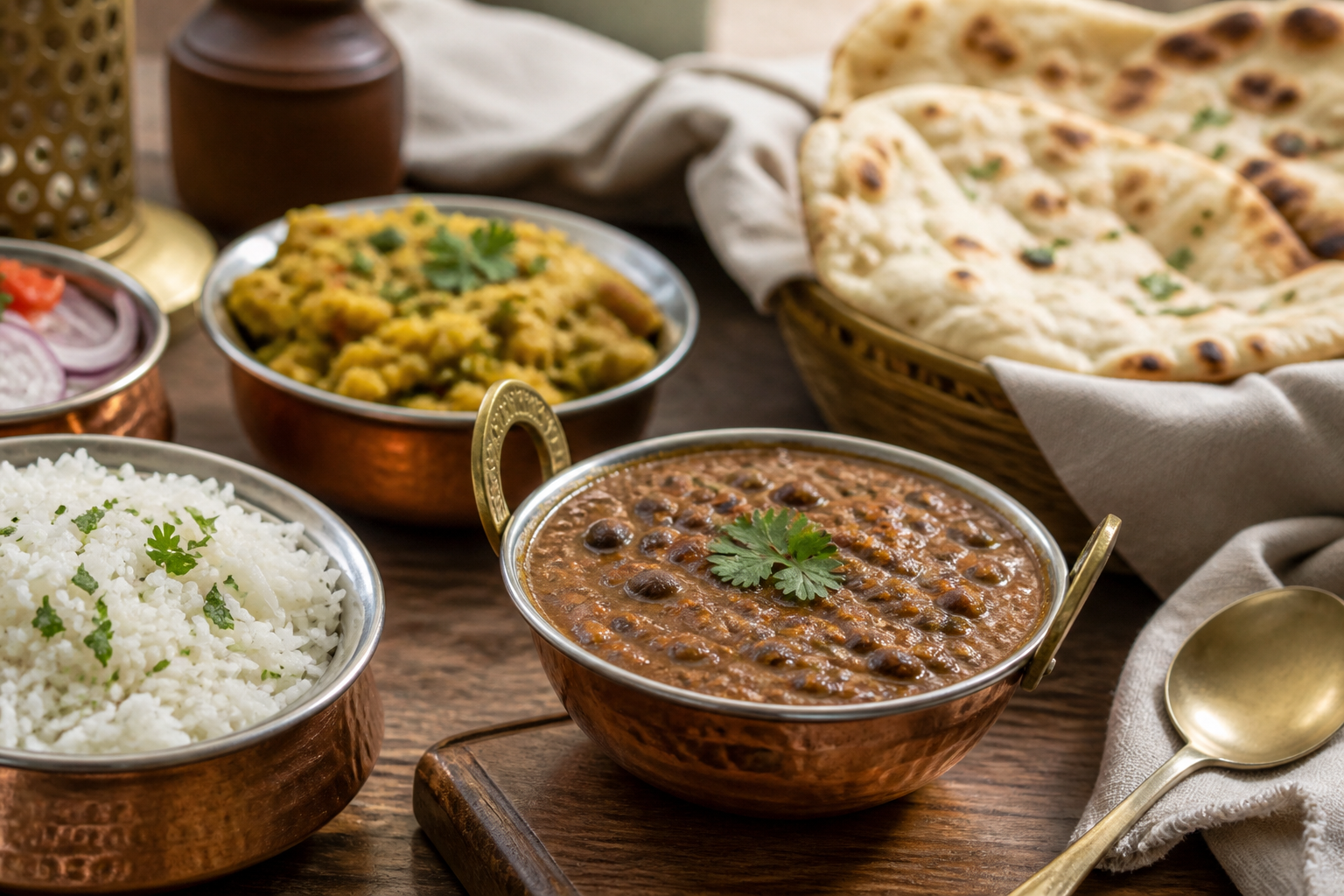
Bread is central to Punjabi dining, serving as both utensil and canvas for flavorful gravies. Kulcha, in particular, is closely associated with the city of Amritsar and is prized for its crispy exterior and soft, layered interior.
- Amritsari kulcha: typically stuffed, then baked in a tandoor for blistered, flaky layers
- Aloo pyaaz kulcha: classic filling of spiced potatoes and onions
- Nutri kulcha: a protein-forward take paired with spiced soy-based “nutri”
- Desi ghee kulcha: enriched with clarified butter for aroma and sheen
- Tandoori roti: whole-wheat, tandoor-baked bread with smoky char
- Paratha: griddled, layered flatbread; can be plain or stuffed
How to choose: pair lighter breads (tandoori roti) with rich, buttery gravies; pick stuffed kulchas when you want the bread to be the star with chutneys and raita alongside.
Tandoori specials
Tandoori cooking locks in marinades while imparting a distinct smokiness. The high heat creates crisp edges and a tender interior.
- Paneer tikka: yogurt-marinated cottage cheese with peppers and onions
- Tandoori paneer tikka: a tandoor-fired variation with charred edges
- Malai tikka: a milder, cream-enriched marinade with a silky finish
- Afghani chaap: creamy, mildly spiced soy-based chaap roasted to a gentle char
- Tandoori chaap: a heartier, spicier version of chaap with robust masala
Ordering tip: combine a tandoori starter for texture and smoke with a saucy curry to round out your meal.
Signature curries
Punjabi gravies often begin with onions and tomatoes, layered with garlic, ginger, and spices that are slowly reduced. Many favorites finish with butter, cream, or a sprinkle of kasuri methi.
- Chole: chickpeas simmered with onions, tomatoes, and warming spices
- Mathi chole: a festive pairing; crisp mathi (savory cracker) with spiced chickpeas
- Rich tomato-onion gravies: versatile bases for paneer, vegetables, or other proteins
- Home-style dals: lentils tempered with cumin, garlic, and chili
Hearty plates to note:
- Chole bhature: puffed, fried bread served with spiced chickpeas and tangy condiments
- Butter-forward curries: velvety textures balanced with mild heat and sweetness
Sides, chutneys, and drinks
Condiments and beverages are not afterthoughts in Punjabi dining—they complete the flavor journey and add contrast.
- Green chutney: cilantro-mint freshness with a citrusy edge
- Tamarind chutney: sweet-sour depth to balance heat
- Raita: cooling yogurt with cucumber, cumin, and herbs
- Pickles (achar): concentrated spice and tang
- Sweet lassi: creamy, lightly sweet yogurt drink
- Masala lassi: savory, spiced yogurt refresher
Pairing suggestion: match tangy chutneys with fried starters or stuffed kulchas; sip lassi alongside spicier dishes for balance.
How to order like a local
Use this simple framework to build a balanced Punjabi meal at a restaurant.
- Start with texture: choose a tandoori starter (paneer tikka or chaap) or a chaat for crunch.
- Add a centerpiece: pick one signature curry (for example, chole or a tomato-onion paneer dish).
- Choose your bread: decide between a stuffed kulcha (like aloo pyaaz) or a lighter tandoori roti.
- Round it out: order a cooling side—raita or a fresh salad—and a chutney duo (green and tamarind).
- Finish with balance: select sweet lassi for a mellow close or masala lassi for a savory note.
Checklist for groups:
- One smoky tandoori item to share
- One gravy per two diners
- A variety of breads: at least one stuffed kulcha and one simple roti
- Two chutneys and a raita
- Both sweet and savory lassi options
Cooking at home: tips for real Punjabi taste
If you are preparing Punjabi dishes in your own kitchen, aim for layered flavor and patience in your base. Small adjustments in technique make a big difference.
- Toast spices lightly: bloom whole spices in oil or ghee until aromatic before adding aromatics.
- Do not rush the bhunao: cook onions and tomatoes down until they darken and release oil; this deepens flavor.
- Salt in stages: season aromatics, then the gravy, then adjust after dairy additions.
- Finish with kasuri methi: crumble it between your palms right before serving.
- Rest grilled items: let tandoori-style skewers sit a moment after cooking so juices redistribute.
- Balance with acidity: add a squeeze of lemon or a spoon of yogurt to brighten heavy gravies.
For breads, practice is key. With kulchas and parathas, a gentle touch during rolling preserves layers. For tandoor-style results at home, use a cast-iron pan preheated until smoking hot, or a pizza stone in a very hot oven.
Dietary and heat adjustments
Punjabi menus are friendly to a range of preferences. Use these pointers to tailor flavors without losing the cuisine’s character.
- Milder palates: request lighter spice levels and opt for malai tikka, paneer gravies, or creamy dals.
- Spice seekers: ask for an extra kick in chutneys and select dishes finished with fresh chilies.
- Vegetarian focus: explore paneer tikka, chole, chaap variations, and stuffed kulchas.
- Dairy-conscious choices: choose tomato-onion gravies without cream and grilled items without butter finishing; confirm preparation details when ordering.
- Gluten considerations: favor rice plates and grilled tandoori items; verify ingredients in breads and coatings.
Pairing ideas for balance
Thoughtful pairings showcase contrast and complement.
- Smoky + Bright: tandoori paneer tikka with citrusy green chutney
- Hearty + Crisp: chole with flaky Amritsari kulcha
- Rich + Cool: buttery, tomato-onion curries with cucumber raita
- Spicy + Sweet: chaap with sweet lassi to soothe the palate
Common mistakes to avoid
- Overloading on similar textures: mix crisp starters, soft breads, and saucy gravies.
- Skipping condiments: chutneys and pickles bring essential acidity and freshness.
- Undercooking the base: a quick sauté leads to flat-tasting gravies; take your time.
- Neglecting bread-to-gravy ratio: plan at least one bread portion per person for scooping.
Frequently asked questions
Is Punjabi cuisine very spicy?
It is known more for warm, layered flavors than extreme heat. Chilies are used, but depth comes from aromatics and spices like cumin, coriander, and cardamom. Most dishes can be adjusted to be milder or hotter when you order.
What is the difference between kulcha, roti, and paratha?
Roti is typically an unleavened whole-wheat flatbread; paratha is griddled and layered (sometimes stuffed); kulcha is often leavened and can be stuffed, then baked in a tandoor for a crisp, flaky finish. Amritsari kulcha is a celebrated, stuffed style.
How do I build a balanced Punjabi meal?
Choose a smoky starter (like paneer tikka), a saucy centerpiece (such as chole or a paneer curry), a bread (for example, aloo pyaaz kulcha or tandoori roti), cool sides (raita, salad), and a lassi to finish. This covers texture, richness, freshness, and refreshment.
Are there good vegetarian options?
Yes. Punjabi cuisine offers a wide range of vegetarian dishes, including chole, paneer tikkas and curries, chaap varieties, dals, stuffed kulchas, and chaats. You can easily compose a satisfying vegetarian meal.
What is lassi, and which kind should I pick?
Lassi is a yogurt-based drink. Sweet lassi is creamy and lightly sweet; masala lassi is savory and spiced. Pick sweet lassi to temper heat, or masala lassi when you want something refreshing and herbaceous.


Leave A Comment