




Naan Varieties Explained: How to Choose the Right Indian Bread for Your Meal
Naan is often the best starting point when you want soft, substantial bread for scooping up curry. However, the right choice depends on whether you prefer a neutral accompaniment, a lighter bread, a stuffed Punjabi option, or something layered and buttery.
For Brampton diners, it is useful to separate general naan terminology from the breads currently available at a particular restaurant. Taste of Amritsar’s supplied menu evidence confirms categories including tandoori paratha, tawa paratha, and kulcha, but specific naan varieties and availability should be confirmed before ordering.
Key Takeaways
- Naan is a versatile bread that pairs well with various curries.
- Amritsari kulcha offers a stuffed, hearty option for a more substantial meal.
- Understanding the differences between naan, tandoori roti, kulcha, and paratha can enhance your dining experience.
- Always confirm current menu offerings and spice levels before ordering.
- Consider the texture and richness of the bread to complement your chosen dish.
Quick summary

- Choose plain naan for a soft, flexible accompaniment to creamy or tomato-based curries.
- Choose tandoori roti when you want a simpler, lighter bread.
- Choose Amritsari kulcha for a stuffed, more substantial Punjabi-style meal.
- Choose paratha when you prefer layered texture and richer flavour.
- Ask about current varieties, fillings, dairy, accompaniments, and spice level before ordering.
Common naan varieties and how they differ
“Naan varieties” is a broad menu term rather than one fixed list. Restaurants may use it for breads that differ in toppings, richness, fillings, or seasoning. Names can vary, so the current menu description matters more than the name alone.
Plain naan
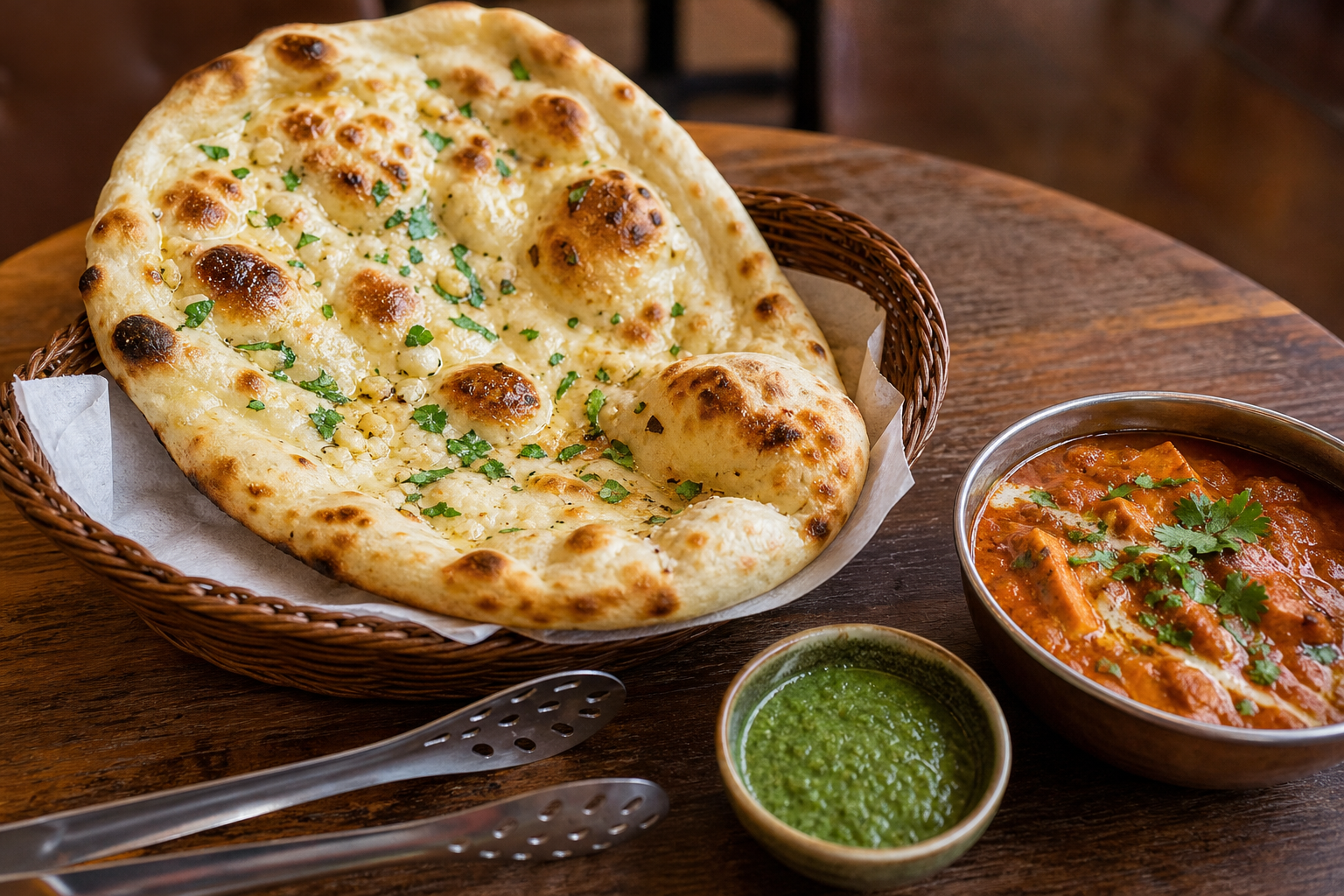
Plain naan is the neutral reference point. Its soft texture works well with creamy, tomato-based, or moderately spicy gravies without adding a strong topping of its own. It is also practical for sharing when everyone at the table orders different dishes.
Butter or ghee-style naan
Butter or ghee adds richness and a more indulgent finish. This can complement assertively spiced curry, but it may feel heavy beside other rich dishes. A plain naan or lighter bread can create better balance when the rest of the meal is already buttery.
Garlic or herb-topped naan
Garlic and herb versions bring extra aroma and a more noticeable flavour. They suit diners who want the bread to stand out, although strong toppings can compete with delicate gravies. Consider whether you want the curry or the bread to lead each bite.
Stuffed or cheese-style naan
Some Indian menus offer naan with cheese or other savoury fillings. These versions are more substantial and can make bread part of the main meal. They are general examples, not confirmed current offerings at Taste of Amritsar, because the supplied evidence does not verify specific naan varieties there.
Naan compared with kulcha, tandoori roti, and paratha

Naan is only one of several Indian breads you may find on a Brampton menu. Texture and richness are often more useful decision factors than the name alone.
| Bread | Typical texture | Richness | Best use |
|---|---|---|---|
| Naan | Soft and tender | Low to moderate, depending on toppings | Scooping creamy, tomato-based, or smoky curries |
| Tandoori roti | Simple and firmer | Usually lighter | Letting the curry remain the focus |
| Amritsari kulcha | Stuffed and substantial | Moderate to rich | A filling Punjabi-style meal with chutney or chole |
| Paratha | Layered, flaky, or crisp-edged | Moderate to high | When you want texture and a richer bite |
The supplied Taste of Amritsar menu evidence includes tandoori paratha, tawa paratha, and kulcha categories. Diners interested in regional stuffed breads can compare naan with Amritsari kulcha and other kulcha varieties, including their traditional chutney and chole accompaniments.
Choose the bread by curry and dish
With creamy curries
Plain naan is a dependable match for creamy curry because its soft texture holds sauce without introducing a competing flavour. A lightly enriched naan can also work if the rest of the meal is not already rich.
With smoky tandoori dishes
With grilled or tandoori flavours, choose bread that supports rather than masks the char. Plain naan or tandoori roti keeps the meal focused, while garlic or herbs add another aromatic layer if that is what you prefer.
With tomato-forward or spicy gravies
Naan can soften the experience of strongly seasoned gravy, but rice may provide a cleaner, less rich base. If you prefer bread, choose a simple variety and avoid pairing an intensely spicy curry with heavily seasoned toppings unless you want maximum flavour.
With chole-style meals
Chole pairs naturally with breads that can carry a thick, spiced accompaniment. Stuffed kulcha makes the meal more substantial, while plain naan or roti offers a less filling alternative. Chole bhature is already a richer combination, so consider portion size before adding another buttery or layered bread.
For more pairing guidance, consider whether tandoori roti or naan suits creamy and smoky tandoori curries. This can help you decide whether rice or a simpler bread would better balance the order.
Choose by texture, richness, and spice preference
- Soft and neutral: choose plain naan or a simple roti-style bread.
- Aromatic: consider garlic or herb naan if available.
- Stuffed and filling: ask about kulcha fillings.
- Layered and rich: choose paratha.
- Less richness: ask whether plain tandoori roti is available.
Taste of Amritsar’s supplied menu evidence states that food prepared in the kitchen is medium spice and advises guests to request mild or extra-spicy preparation when ordering. This is an important checkpoint because the curry, filling, or topping may determine the meal’s overall heat even when the bread itself is not spicy.
Naan or Amritsari kulcha: which is better?
Choose naan when you want the bread to play a supporting role. Its soft, generally neutral profile is flexible across several curries and easy to share when diners are ordering different dishes.
Choose Amritsari kulcha when you want a regional Punjabi bread with more character and substance. Supplied first-party guidance identifies desi ghee and aloo kulcha among documented examples, along with chutneys and chole-style accompaniments. These examples are not a complete, permanently current menu list, so confirm the available variety before ordering.
A simple rule works well: order naan for sauce, kulcha for substance, tandoori roti for a lighter base, and paratha for layers and richness. For a group, combining one neutral bread with one stuffed or layered bread creates useful contrast.
A practical checklist before you order
- Which breads are available today? Confirm current naan varieties rather than relying on a general list.
- Is the bread plain, topped, layered, or stuffed? This shows how strongly it will affect the meal.
- Does it contain dairy, ghee, butter, cheese, or a filling you need to avoid? Ask about ingredients and preparation.
- What spice level should you request? Confirm whether mild, medium, or extra-spicy preparation is possible.
- What comes with the bread? Ask whether chutney, chole, or another accompaniment is included.
- Would another bread balance the curry better? A simpler bread may suit an especially rich dish.
- Is a substitution possible? Ask whether naan, roti, kulcha, or paratha can be exchanged if needed.
Review the current Breads and Kulcha menu categories before visiting, then confirm the exact selection with the restaurant. Menus and availability can change, especially when you need a particular filling or dietary accommodation.
Frequently asked questions about naan varieties
What is the difference between naan and tandoori roti?
Naan is generally softer and may be richer or more heavily topped. Tandoori roti is typically simpler and lighter. Choose based on whether you want the bread to add richness or let the curry remain the focus.
Is naan a good choice with spicy Indian curry?
Yes. Naan’s soft texture works well for scooping sauce. Choose a plain variety to limit competing flavours, and ask about a milder curry preparation if needed.
How is Amritsari kulcha different from naan?
Amritsari kulcha is generally a more substantial stuffed Punjabi bread, often chosen with chutney or chole. Naan is usually more neutral and flexible. The exact filling and serving style should be confirmed on the current menu.
What should I ask about naan ingredients?
Ask whether the bread contains butter, ghee, dairy, cheese, herbs, garlic, or a specific filling. If you have an allergy or dietary restriction, explain it clearly and ask whether the kitchen can safely accommodate it.
Conclusion: choose the bread that balances your meal
Start with naan when you want soft, versatile bread for creamy, tomato-based, or smoky curries. Choose tandoori roti for a lighter accompaniment, Amritsari kulcha for a stuffed Punjabi-style meal, and paratha when layered richness is the main attraction.
For a Brampton visit, use the current menu as the final authority on availability, then ask about ingredients, accompaniments, and spice level. Taste of Amritsar serves Amritsari and Punjabi cuisine at 27 Main St N in Brampton, with supplied menu evidence highlighting kulcha, paratha, tandoori flavours, and imported masalas. Check the current offering at tasteofamritsar.com.


Leave A Comment