



Indian Traditional Dishes by Region and Meal Style
Indian traditional dishes are best understood by region and meal role. Punjabi kulcha, South Indian dosa, Bengali fish curry, and Goan seafood offer different flavours, textures, and ways of eating. For a Brampton diner, begin by identifying the regional tradition, cooking method, and meal format that interest you.
What counts as an Indian traditional dish?
A traditional Indian dish is rooted in a region, community, ingredient, cooking method, or serving custom. Its identity may come from a clay tandoor, fermented batter, regional spice blend, local grain, festival tradition, or place in a larger meal.
Indian cuisine is not one uniform style. Punjabi cooking is known for hearty breads, chickpeas, dairy-rich dishes, and tandoori methods. South Indian menus often feature fermented rice-and-lentil batters, coconut, curry leaves, and tamarind. Bengali cooking commonly highlights fish, mustard, and delicate spice layering, while Goan food often combines coastal ingredients with tangy, aromatic sauces.
A useful menu guide therefore needs regional labels. The selection below is curated for discovery and ordering, not a claim to list every Indian dish.
Indian traditional dishes by region

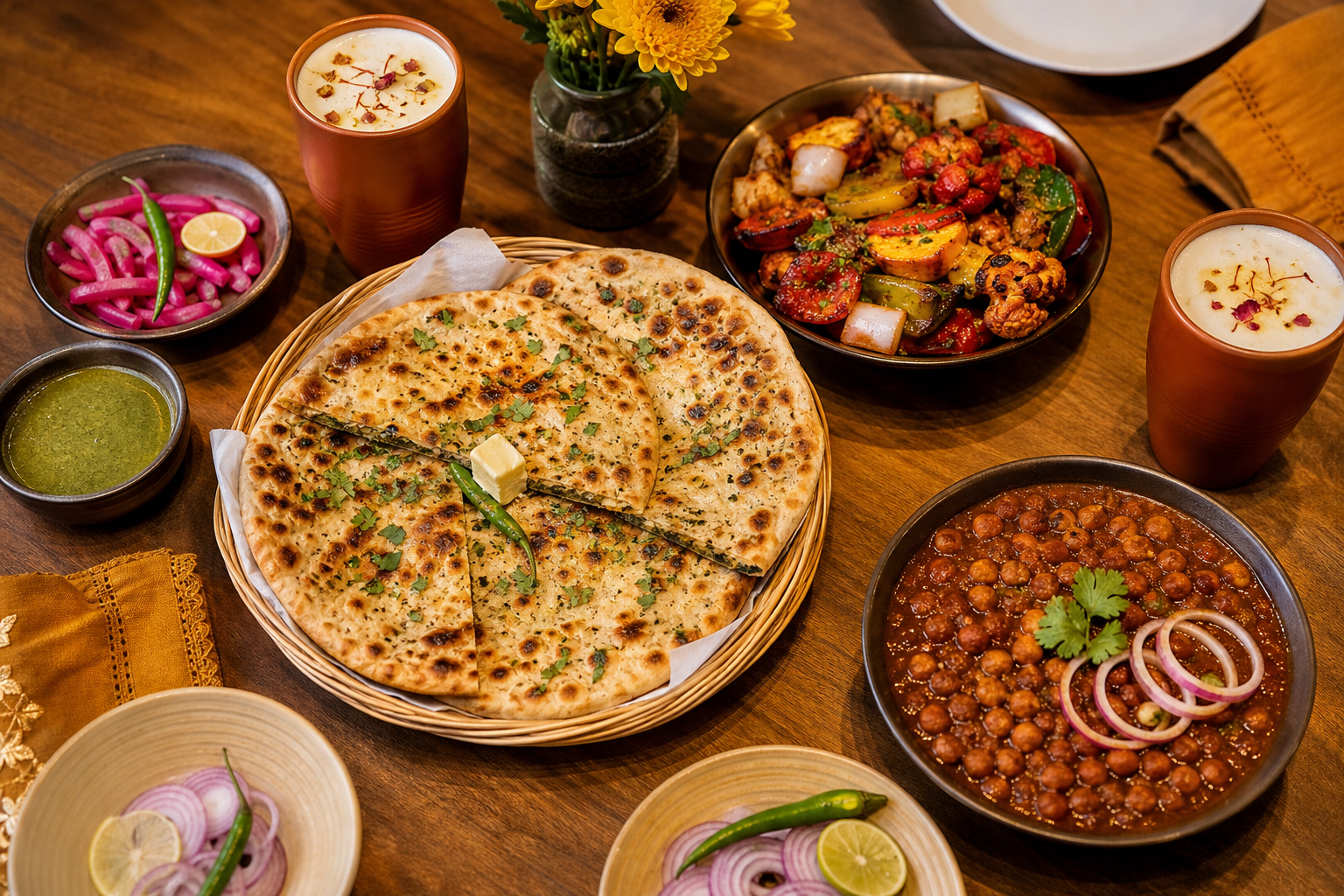
The most useful way to explore traditional Indian dishes is to connect each dish with its region, cooking method, and usual meal role. Punjabi and Amritsari food centres on breads, chickpeas, lentils, tandoori cooking, and lassi, while South Indian menus often feature fermented batters and tangy accompaniments. Bengali and Goan choices commonly highlight fish, mustard, coconut, or coastal spices.
| Region | Representative dishes | Typical flavour and texture | Meal direction |
|---|---|---|---|
| Punjabi and Amritsari | Amritsari kulcha, chole bhature, dal makhani, tandoori dishes, lassi | Hearty, smoky, buttery, tangy, crisp, or creamy | Comfort meals and sharing |
| North Indian | Paneer tikka, naan, paratha, butter chicken, rogan josh | Charred, savoury, aromatic, creamy, or richly spiced | Starters, breads, and curries |
| South Indian | Dosa, idli, vada, uttapam, sambar, rasam | Crisp, fermented, sour, light, and savoury | Breakfast, snacks, or vegetarian meals |
| Bengali | Fish curry, mustard preparations, kosha-style meat, mishti doi | Mustardy, delicate, savoury, gently sweet, or braised | Rice-based meals |
| Goan and coastal | Fish curry, coconut curries, vindaloo-style dishes | Tangy, spicy, aromatic, and coconut-rich | Seafood and rice pairings |
| Western and central India | Gujarati thali dishes, pav bhaji, poha, lentil and vegetable dishes | Sweet-savoury, spiced, soft, crisp, or vegetable-forward | Street food and platter meals |
Taste of Amritsar focuses on traditional Punjabi and Amritsari cooking, including rich spices, smoky tandoori flavours, and signature spices imported directly from India. For more regional context, browse this guide to Punjabi dishes.
Identify a dish by region and cooking method
Dish names become easier to understand when you look for regional markers and preparation terms. A kulcha points toward Punjabi and Amritsari bread traditions, a dosa toward South Indian fermented-batter cooking, and a tandoori item toward high-heat roasting.
| Clue on the menu | What it usually indicates | What to expect |
|---|---|---|
| Kulcha, chole, or lassi | Punjabi or Amritsari influence | Stuffed bread, chickpeas, lentils, rich gravies, or yogurt-based drinks |
| Tandoori or tikka | Dry-heat cooking in a tandoor or similar high-heat method | Marinated ingredients, roasted edges, and smoky aroma |
| Dosa, idli, vada, or sambar | South Indian menu tradition | Fermented batter, crisp or steamed textures, and tangy accompaniments |
| Mustard, fish curry, or mishti doi | Bengali culinary direction | Mustardy savoury flavours, rice-based meals, or gently sweet yogurt |
| Coconut, vindaloo, or coastal fish | Goan or coastal influence | Tangy sauces, aromatic spice, seafood, or coconut richness |
Regional language is a starting point, not a complete description. Restaurants may adapt recipes, combine traditions, or use the same dish name for different preparations, so ask what the menu term means if the distinction matters.
Regional starters can be crisp snacks, stuffed breads, tandoor-grilled bites, or chaat. Compare traditional starter options before deciding which regional preparation you want to explore.
Punjabi and Amritsari clues
Look for stuffed kulcha, chole, dal, tandoori cooking, paneer, chaap, lassi, and robust masala. These terms point toward hearty North Indian meals with breads, chickpeas, lentils, grilled items, and cooling drinks.
South Indian clues
Dosa, idli, vada, uttapam, sambar, and rasam identify a different menu tradition built around fermented batters, lentils, tamarind, curry leaves, and crisp, steamed, or pourable textures.
Regional dishes outside the restaurant’s focus
Bengali fish preparations, Goan coconut curries, and Gujarati platter dishes are useful examples of India’s wider culinary range. They should not be presented as Punjabi dishes simply because they appear on a broad Indian menu.
How traditional Indian dishes fit into a meal

A typical restaurant meal may include starters or chaat, tandoor dishes, curries, breads or rice, drinks, and dessert. You do not need every category. The meal structure helps you understand whether a dish is meant to open the meal, carry the main course, accompany sauce, or provide a finish.
This Indian restaurant menu guide explains how common categories work together.
- Starters and chaat: Crisp, tangy, or shareable preparations that begin the meal.
- Tandoor dishes: Marinated ingredients cooked with dry heat, usually served as a starter or substantial shared item.
- Curries, dal, and chickpeas: Saucy or spoonable dishes that form the centre of many meals.
- Breads and rice: Different vehicles for accompanying gravies, with distinct textures and levels of richness.
- Drinks and desserts: Lassi, other traditional drinks, and sweets that complete the meal.
For two people, one starter, one curry or dal, one bread, and rice may be enough depending on appetite. For a family, vary regional styles and textures instead of ordering several dishes with nearly identical gravies.
Common Indian menu choices compared
| Choice | What distinguishes it | Best understood as |
|---|---|---|
| Naan | Soft leavened bread commonly cooked in a tandoor | A tender bread for scooping curry |
| Kulcha | Stuffed or flavoured bread associated with Punjabi and Amritsari food | A substantial regional bread |
| Paratha | Layered or flaky griddled bread, plain or stuffed | A rich, layered bite |
| Tandoori roti | Lean, rustic bread cooked in a tandoor | A less-rich partner for curry |
| Tandoori dish | Marinated food cooked with high dry heat | A preparation style defined by smoke and char |
| Curry | A saucy preparation based on gravy, lentils, vegetables, meat, or paneer | A spoonable dish served with bread or rice |
Chole bhature versus kulcha with chole
Both feature spiced chickpeas, but the bread changes the meal. Bhature is a large, puffy fried bread. Kulcha is a stuffed or seasoned Punjabi bread with a denser bite. Chole bhature represents a bread-forward combination, while kulcha with chole highlights an Amritsari-style stuffed-bread tradition.
Tandoori dishes versus curries
Tandoori dishes use dry heat and emphasize marinade, char, and roasted texture. Curries are defined by gravy or lentils and pair naturally with bread or rice. Combining both shows the contrast between roasted and saucy cooking.
Biryani versus other rice dishes
Biryani is a layered, highly seasoned rice preparation with regional variations. Other rice dishes may be simpler or designed mainly as a base for curry. Ask whether the rice is a complete seasoned dish or an accompaniment.
A short list of traditional dishes worth knowing
There is no objective top five or top ten. “Best” depends on region, dietary preference, familiarity, and whether you want a snack, main course, or festive dish.
- Amritsari kulcha: Stuffed Punjabi bread with a crisp or toasted exterior, often paired with chickpeas.
- Chole bhature: Spiced chickpeas with a large, puffy fried bread.
- Dal makhani: Rich Punjabi lentils with a creamy texture and deep flavour.
- Tandoori dishes: Marinated ingredients cooked at high heat for char and smoky aroma.
- Butter chicken: Creamy, tomato-led North Indian curry with a mellow, rich profile.
- Paneer tikka: Marinated paneer and vegetables cooked with dry heat.
- Samosa: Crisp savoury pastry, often filled with potato and served with chutney.
- Dosa: Thin South Indian crepe made from fermented rice-and-lentil batter.
- Biryani: Fragrant seasoned rice with regional variations.
- Rogan josh: Aromatic curry associated with Kashmiri cooking.
- Pakora: Seasoned fritter made with vegetables or other ingredients.
- Lassi: Yogurt-based drink that may be sweet, savoury, or spiced.
- Indian desserts: Warm, syrupy, milk-simmered, chilled, yogurt-based, or gently spiced sweets.
A list of 50 or 100 dishes is possible, but counting varieties separately produces a very different result from counting broad dish families. For ordering, a regional and meal-based list is more useful than an unranked catalogue.
Use regional clues to plan a traditional meal
Once you identify the regional tradition, build the meal around its defining preparation instead of treating every Indian dish as interchangeable.
Punjabi or Amritsari meal
Start with a stuffed kulcha, chickpeas, dal, or a tandoori preparation. Add a bread or rice that supports the main dish, then consider lassi or a traditional dessert as the final course.
South Indian meal
Look for the relationship between fermented batter dishes, lentil-based accompaniments, chutneys, and sambar. Dosa, idli, vada, and uttapam have different textures even when they appear in the same broad menu category.
Broad Indian menu
Use the regional label to separate dishes before comparing them. A Punjabi kulcha, Bengali fish curry, Goan coconut curry, and South Indian dosa are not substitutes for one another, even though all may appear under an Indian restaurant heading.
Shared table
Choose dishes from contrasting categories, such as a starter, a tandoori item, a curry or dal, and a bread or rice. Ask about portions and timing when several diners are sharing.
Vegetarian, vegan, gluten-conscious, and dairy questions
Dietary choices depend on the ingredients and preparation of the individual dish. Menu labels can help you narrow the options, but a direct ingredient question is the clearest way to understand what a dish contains.
- Vegetarian: Ask which ingredients and cooking method are used in the dish.
- Vegan: Ask whether paneer, yogurt, cream, butter, ghee, or another animal-derived ingredient is included.
- Gluten-conscious: Ask about the ingredients in breads, breading, sauces, and other components of the dish.
- Dairy-conscious: Ask which dairy ingredients are used in paneer dishes, yogurt marinades, cream sauces, butter, ghee, and lassi.
- Allergies: Tell the restaurant which ingredients you need to avoid and ask what the dish contains.
For broader plant-forward guidance, read this Indian vegetarian restaurant guide.
Diabetes-conscious ordering: what to check
If you are comparing dishes for a personal dietary plan, focus on the menu information that varies from one preparation to another. Ask about added sugar, cooking method, sauces, breads, rice, and portion format instead of assuming that a dish name tells you everything.
- Drinks and desserts: Ask whether sugar is added to lassi or other drinks.
- Fried preparations: Ask how a samosa, pakora, or fried bread is prepared and what the serving includes.
- Breads and rice: Ask which bread or rice accompanies the dish and how much is included.
- Sauces: Ask whether a curry or sauce contains cream, butter, ghee, or added sugar.
- Portions: Ask whether the dish is intended for one diner or sharing.
Which Indian starters can you make ahead?
At home, prepare chutneys, fillings, chopped vegetables, and some marinades ahead. Finish fried, griddled, and crisp components close to serving for better texture.
- Prepare chutneys, spice mixtures, and chickpea accompaniments.
- Season and portion potato, paneer, vegetable, or lentil fillings.
- Marinate paneer or vegetables, then cook them near serving.
- Shape samosas or similar items without holding the fried finish too long.
- Assemble chaat near serving so yogurt, chutney, and toppings do not soften the base.
Restaurant ordering is different from home preparation. Ask whether a starter is assembled fresh and whether crisp toppings are added at the end.
Finish with a traditional drink or dessert
Choose a final course that adds a different texture or flavour direction. Sweet lassi offers a creamy, lightly sweet drink, while masala lassi brings savoury aromatic notes. Chilled, yogurt-based, warm, syrupy, and gently spiced desserts each create a different ending.
Indian desserts may be warm, syrupy, milk-simmered, chilled, yogurt-based, or gently spiced. This guide to traditional Indian desserts explains how texture and serving style affect the choice. Confirm specific dessert availability before visiting.
Choosing Indian traditional dishes in Brampton
Taste of Amritsar is at 27 Main St N, Brampton, and focuses on traditional Amritsari and Punjabi dishes. Its published description highlights imported signature spices, recipes inspired by Punjab, smoky tandoori flavours, traditional starters, signature curries, lassis, refreshing drinks, and desserts.
For Punjabi and Amritsari flavours, identify the regional tradition and cooking method first. Then ask about the specific dish, ingredients, portion, spice level, and current availability.
Questions to ask before ordering
Which traditional Indian dish is easiest for a first-time diner?
Start with a dish whose region and preparation are easy to identify, such as a stuffed Punjabi bread, a mild curry, a paneer preparation, or a South Indian dosa. Ask about the texture and main ingredients before ordering.
Can traditional Indian dishes suit someone managing diabetes?
Compare the specific ingredients, preparation method, sauces, breads, rice, drinks, and portion format. A dish name alone does not provide enough information for an individual dietary decision.
Which Indian starters can be made ahead at home?
Chutneys, fillings, marinades, and some doughs can be prepared early. Finish fried, griddled, and wet-topped items close to serving.
How can I identify a dish’s region?
Look at ingredients, cooking method, bread or rice format, and regional name. Kulcha, chole, tandoori cooking, and lassi suggest Punjabi or North Indian traditions, while dosa, idli, and sambar suggest South Indian cooking.
Indian traditional dishes become easier to understand when you start with region, cooking method, texture, and meal role. Explore the current Taste of Amritsar menu to examine Punjabi and Amritsari options for your table.


Leave A Comment