








Spiced Lentil Dishes Compared: Dal, Curry, or Soup?
Spiced lentil dishes include dal, lentil curry, soup-style preparations, and drier seasoned lentils. Choose red or split lentils for a soft, quick curry, brown lentils for a fuller-bodied dal, and green lentils when you want the grains to stay distinct. Build flavour with aromatics and a final tempering of spices, then pair the dish with rice, roti, yogurt, or a cooling drink.
What Counts as a Spiced Lentil Dish?
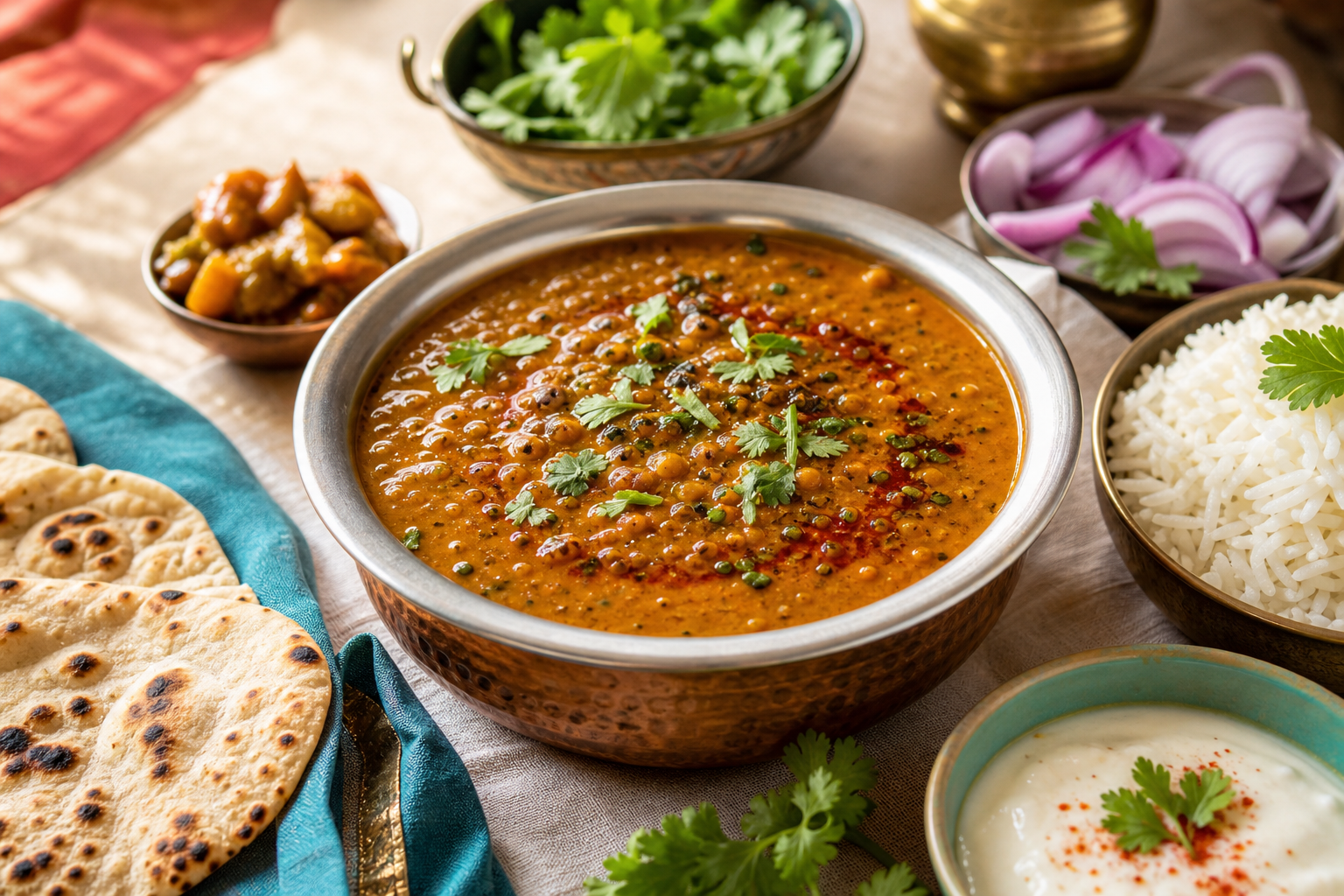
“Spiced lentil dishes” is a broad description, not one fixed recipe. The same cooked lentils can become a pourable dal, a thick curry, a spoonable soup, or a drier preparation depending on the lentil, liquid, cooking time, and finishing spices.
| Style | Texture and liquid | Best for |
|---|---|---|
| Dry seasoned lentils | Separate or lightly coated grains with little liquid | A side dish with rice, flatbread, or vegetables |
| Dal | Soft lentils loosened with water or stock, usually spoonable or pourable | A staple main or accompaniment with rice and roti |
| Lentil curry | Thicker lentils suspended in a seasoned onion, tomato, or creamy gravy | A substantial meal with bread or rice |
| Soup-style lentils | More liquid, often with a smooth or partly blended body | A bowl meal with a lighter, spoonable format |
In Indian cooking, dal can refer to the lentil itself, a cooked lentil preparation, or the broader family of dishes made from split pulses. “Curry” usually tells you more about the sauce and seasoning structure, while “soup” emphasizes the amount of liquid and the way the dish is served.
Legume curries and spinach- or legume-forward gravies are common categories on Indian menus, alongside breads, rice, lassis, and other vegetarian dishes. If you are reading a restaurant menu, ask whether the preparation is creamy, tomato-forward, tangy, smoky, thick, or broth-like. The legume curries section offers useful context for how these dishes fit into an Indian meal.
Choose the Lentil for the Texture You Want

Lentil variety determines how quickly a dish cooks and whether the finished grains stay distinct or dissolve into the sauce. Rinse lentils in a fine sieve until the water runs mostly clear, then remove any small stones or discoloured pieces.
| Lentil | Approximate stovetop time | Expected texture | Best use | Substitution effect |
|---|---|---|---|---|
| Red lentils | 15 to 25 minutes | Soft and creamy | Quick curry or spicy lentil soup | Green lentils take longer and stay more intact |
| Brown lentils | 25 to 35 minutes | Soft but full-bodied | Everyday dal or thick lentil curry | They give more texture than red lentils |
| Green lentils | 30 to 45 minutes | Firm, earthy, and relatively separate | Dry seasoned lentils or textured curries | They do not naturally create a smooth body |
| Split lentils | 20 to 35 minutes | Tender and easy to soften | Dal and blended soup-style dishes | Timing varies by type, so check early |
These ranges suit rinsed lentils simmered on the stovetop. Older lentils, hard water, high altitude, and acidic ingredients added too early can extend cooking time.
Most lentils do not need overnight soaking. A short soak can reduce cooking time for some whole or larger lentils, but red and many split lentils soften readily without it. If you soak, drain them and use fresh cooking liquid.
Build Indian and Punjabi Flavour in Layers
Good spiced lentils taste layered, not simply hot. Start with aromatics, build a seasoned base, cook the lentils until tender, and finish with a brief tempering that carries aroma across the surface.
Start with the aromatic base
Onion, ginger, garlic, and tomato create a savoury foundation. Cumin adds warmth, turmeric contributes earthy colour and aroma, and coriander adds a rounded citrus-like spice note. Tomato brings brightness and tang, but adding a large amount before the lentils soften can slow tenderizing.
Choose a heat level
- Mild: Use cumin, coriander, turmeric, ginger, and a small amount of mild chili or black pepper.
- Medium: Add measured fresh green chili or red chili flakes to the base, then taste before adding more.
- Hot: Use stronger chili at the tempering or finishing stage so the heat remains distinct.
Salt, acidity, toasted spices, and fresh garnish can make a dish lively without increasing chili. For more heat after cooking, add chili to a ladleful first, taste it, then mix it into the pot.
Finish with tempering
A tempering, often called tadka, is hot fat infused with spices and poured over cooked lentils. Cumin seeds, mustard seeds, dried chili, garlic, curry leaves, or asafoetida may be used depending on the regional style. The spices should sizzle and become fragrant, not bitter.
Taste of Amritsar describes its cooking as traditional Amritsari and Punjabi food made with rich spices, recipes inspired by Punjab, and signature spices imported from India. That supports a Punjabi flavour direction, but it does not establish a particular lentil recipe.
A Reliable Stovetop Method for Spiced Lentils

This general home-cooking method makes four modest servings. It is a flexible framework, not a reproduction of Taste of Amritsar’s preparation.
Ingredient framework
- 1 cup rinsed red, brown, or split lentils
- 3 to 4 cups water or unsalted stock
- 1 small onion, finely chopped
- 1 tablespoon grated ginger, with garlic if desired
- 1 medium tomato, chopped, or a small amount of tomato puree
- 1 teaspoon cumin seeds or ground cumin
- 1/2 teaspoon turmeric
- 1/2 to 1 teaspoon ground coriander
- Chili to taste, plus salt
- 1 to 2 tablespoons oil or ghee
Cooking stages
- Rinse and combine: Put lentils and liquid in a heavy saucepan. Bring to a boil, then reduce to a steady simmer.
- Cook until tender: Stir occasionally. Red lentils may soften in about 20 minutes; brown, green, or larger split lentils need longer. The centre should not feel chalky.
- Build the base: Warm oil separately. Add cumin, then onion. Cook until softened before adding ginger, garlic, tomato, turmeric, coriander, and chili.
- Cook out the rawness: Stir over medium heat until the tomato thickens and the raw smell fades. Do not scorch the mixture.
- Combine: Stir the base into the lentils. Add water gradually if too thick, or simmer uncovered if too loose.
- Temper and finish: Sizzle whole spices briefly in oil or ghee and pour them over the pot. Taste for salt, chili, and acidity.
Lightly season the cooking liquid so the lentils taste seasoned throughout. Add lemon juice, amchur, or another acidic ingredient after the lentils are tender, then taste again.
Soup, Curry, or Dal? Adjust the Liquid and Finish
To make spicy lentil soup, begin with tender lentils and add hot water or unsalted stock until clearly spoonable. Blend all or part of the pot for a smoother body, then finish with cumin, chili, ginger, or tempering. Keep the spice moderate until the liquid level is final.
For pourable dal, aim for a steady stream from the spoon. For thick curry, simmer uncovered and stir more often. For dry seasoned lentils, drain excess liquid after tenderizing and fold the grains through the spice base.
If the result is watery, simmer uncovered in a wide pan. If it is pasty, loosen it with hot water one-quarter cup at a time. A short rest also thickens lentils, so allow for that change before adding more liquid.
Fix the Most Common Spiced Lentil Problems
Most problems come from a mismatch between variety, liquid, heat, and timing. Correct texture first, then adjust salt, acidity, and chili.
| Symptom | Likely cause | Practical fix |
|---|---|---|
| Lentils stay hard | Old lentils, insufficient liquid, low simmer, or early acidity | Add hot water and continue simmering; add tomato or lemon later next time |
| Lentils become mushy | Soft variety cooked too long or stirred heavily | Serve as smooth dal or soup and add a fresh tempering |
| The dish is watery | Too much liquid or trapped steam | Simmer uncovered until the sauce coats a spoon |
| The dish is too thick | Evaporation or absorption during resting | Add hot water or stock gradually and retaste |
| The flavour is bland | Insufficient salt, aromatics, acidity, or finishing spice | Adjust salt first, then add lemon, toasted cumin, or fresh chili |
| The tempering tastes bitter | Spices or garlic cooked too dark | Make a fresh tempering at lower heat |
| Ground spices taste raw | The spice base was not cooked long enough | Cook onion and tomato until thick and fragrant |
| The dish is too hot | Too much chili before balancing | Dilute with plain lentils or unsalted liquid, then correct salt and acidity |
Lentils should be fully tender before serving. Take care with hot oil during tempering because moisture can cause splattering.
Pair Spiced Lentils With a Complete Meal

A thin, tangy dal benefits from a neutral starch, while a thick, creamy preparation can handle substantial bread.
A practical weeknight bowl
Serve brown or red lentil dal with plain rice, one roasted or sautéed vegetable, and a little pickle. Rice absorbs the sauce, vegetables add texture, and pickle supplies sharp contrast.
A Punjabi-style vegetarian plate
Pair thick lentil curry with roti, naan, or stuffed kulcha, then add plain yogurt and crisp salad. If the bread is rich, keep the lentils less creamy and add a sharper vegetable or pickle.
A cooling shared meal
For strongly spiced lentils, add yogurt, cucumber, fresh herbs, and cold lassi. A masala lassi gives savoury spice notes, while sweet lassi creates a softer contrast. These masala lassi pairing ideas offer more guidance.
Tomato-forward lentils work with plain or cumin-scented rice. Creamier versions suit kulcha or naan, while street-style or chole-like profiles support fried or stuffed breads. Compare the street-style or chole profiles for a broader pairing framework.
Make-Ahead, Refrigerate, Freeze, and Reheat
Lentils suit batch cooking because they thicken as they cool. Prepare the dish slightly looser than you plan to serve it.
- Cool efficiently: Divide a large batch into shallow containers.
- Refrigerate: Keep covered portions chilled and use within three to four days.
- Freeze: Freeze cooled lentils in meal-sized containers, leaving room for expansion.
- Thaw: Thaw in the refrigerator when possible, or reheat frozen portions over low to medium heat with water.
- Restore texture: Stir as the mixture warms and add hot water gradually.
- Refresh flavour: Add fresh tempering, lemon juice, cilantro, or toasted cumin.
Reheat only the portion you plan to eat. Repeated heating makes soft lentils break down further.
Where Dal Fits Into South Asian and Punjabi Food
Lentils are eaten across South Asia, but “dal” does not describe one universal dish. Regions use different pulses, spice bases, cooking vessels, finishing fats, and levels of liquid. Some preparations are smooth, others retain visible grains, and some pair with rice while others accompany breads.
Punjabi cooking is known for hearty meals that may include legumes, breads, vegetables, dairy, and robust spice blends. Punjabi dal can be simple and everyday or enriched with a special tempering. It should not be treated as interchangeable with every South Asian lentil preparation.
Taste of Amritsar connects its menu with Punjab, Amritsari traditions, real Indian masalas, and warm, homely dining. That makes Punjabi-style lentils a natural direction to explore, while the exact dish depends on the current menu.
Choosing Spiced Lentils at a Brampton Indian Restaurant
If you want a lentil-based meal at a restaurant, ask which current vegetarian curries or legume-forward gravies have the texture you prefer. Ask whether the preparation is tomato-forward, creamy, smoky, tangy, mild, medium, or hot, and whether it contains dairy or ghee.
For a lighter order, choose a pourable lentil or legume gravy with rice and a vegetable. For a fuller Punjabi plate, ask which vegetarian curry pairs best with roti, naan, or kulcha. If sharing, combine one soft dish with a smoky or crisp item.
Taste of Amritsar is a full-service casual dining restaurant in Brampton offering Amritsari and Punjabi cuisine, including vegetarian-friendly selections and signature curry categories. Its menu guidance supports asking about current availability rather than assuming a named lentil style is always offered.
Spiced Lentil Dishes FAQ
What is the difference between dal and lentil curry?
Dal emphasizes cooked lentils as the main body, while lentil curry highlights a seasoned gravy around them. The terms overlap, so texture and menu description matter more than the label alone.
Which lentils cook fastest for a spiced dish?
Red lentils and many split lentils cook faster than brown or green lentils. They soften into a creamy consistency, making them useful for quick dal and spicy lentil soup.
How do you make spicy lentil soup without making it bitter?
Cook aromatics and ground spices over moderate heat, and remove the pan from heat if garlic or chili darkens too quickly. Add heat gradually, finish with fresh tempering, and balance with salt and a little acidity.
Do lentils need to be soaked before cooking?
Most red and split lentils do not need soaking. A short soak can help some whole or larger lentils, but rinsing and simmering are usually enough for red lentils.
What should you order if you want a Punjabi lentil-based vegetarian meal in Brampton?
Ask about the current vegetarian curry or legume-forward gravy, then specify your preferred consistency and heat. Pair it with rice, roti, naan, or kulcha, adding yogurt or lassi for a cooling contrast.
Whether you cook at home or dine out, start with the texture you want, choose the lentil that supports it, and layer flavour instead of relying only on chili. To compare current vegetarian curries and Punjabi accompaniments, review the Taste of Amritsar menu before planning your Brampton meal.


Leave A Comment