









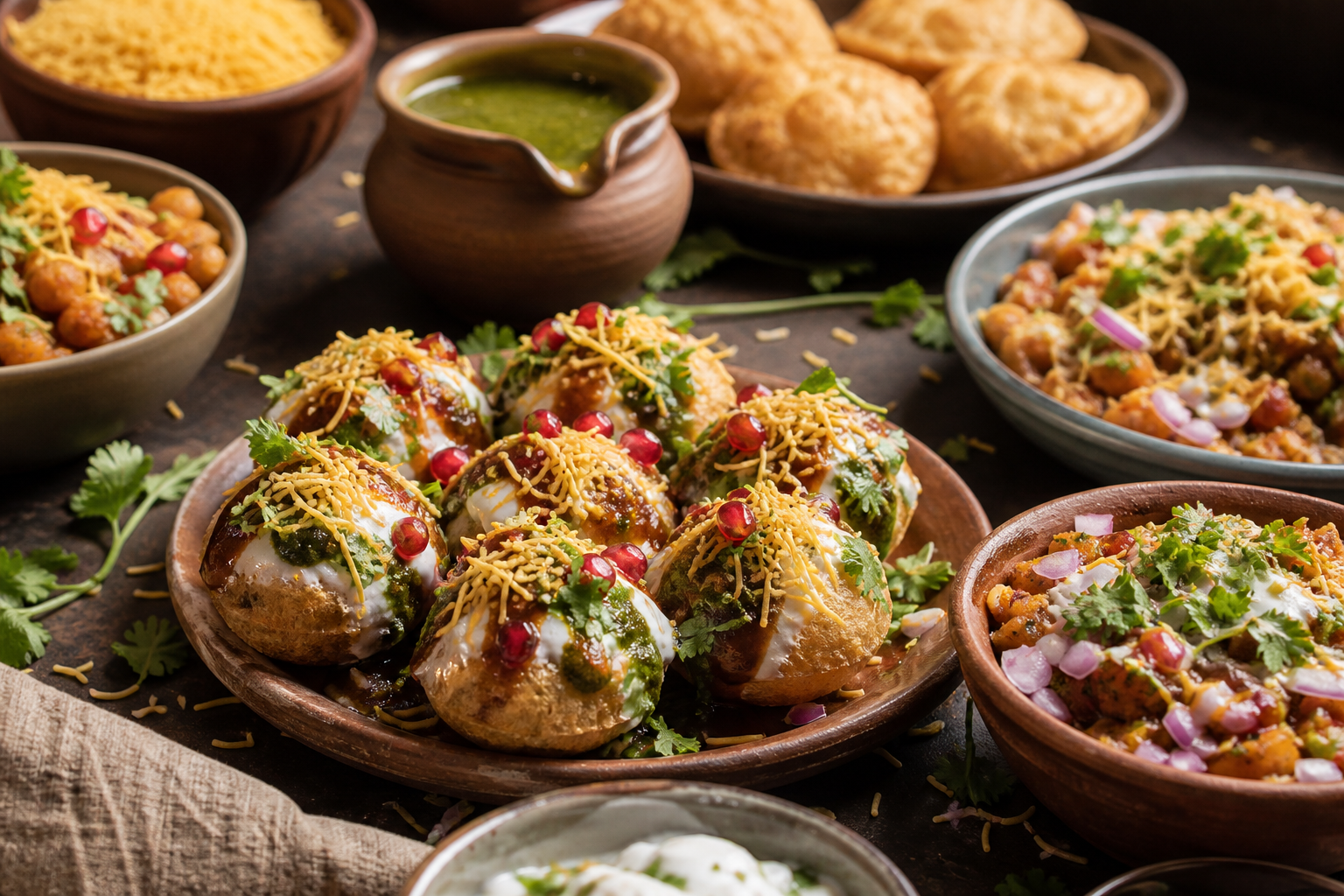
A Practical Guide to Indian Chaat
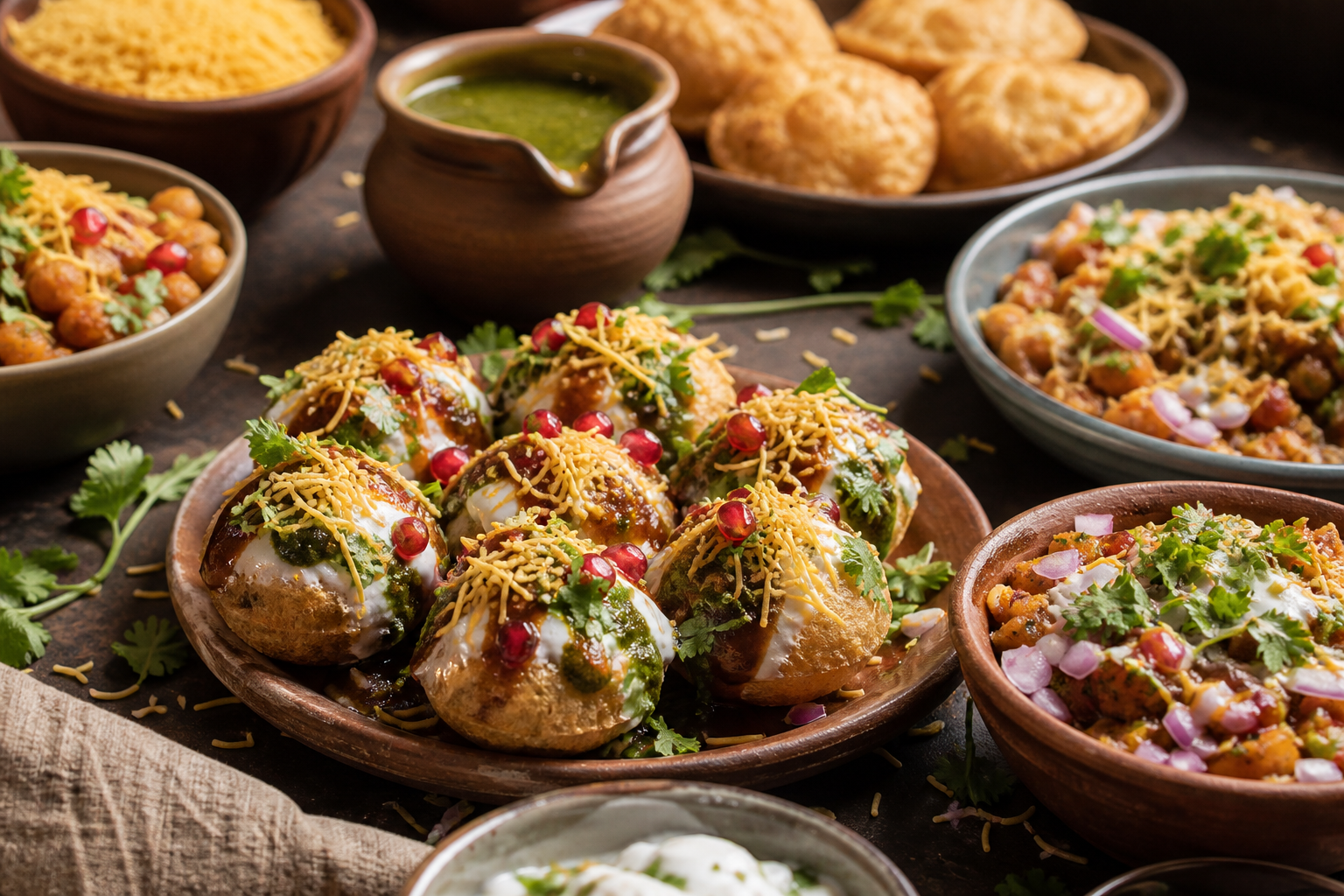
A Practical Guide to Indian Chaat
Indian chaat is a vibrant family of savory snacks known for lively contrasts: hot and cold, crunchy and soft, tangy and sweet, spicy and cooling. Whether you are exploring it for the first time or looking to refine your choices, this guide breaks down the building blocks, most-loved varieties, and practical tips so you can order, customize, and enjoy chaat with confidence.
Key Takeaways
- Chaat is a diverse category of Indian snacks that balance crunch, softness, tang, and heat.
- Popular varieties include Bhel Puri, Pani Puri, and Aloo Tikki Chaat, each offering unique textures and flavors.
- Customization is key—adjust toppings, heat levels, and textures to suit your palate.
- Pair chaat with refreshing drinks like Lassi or Masala Soda for an enhanced experience.
- Chaat is best enjoyed fresh; consider smart sequencing to maintain crispness.
What is chaat?
Chaat refers to a broad category of snack-style dishes originating from Indian culinary traditions. The word loosely relates to tasting and savoring—apt for foods that wake up the palate through layered flavors and textures. While there are countless regional interpretations, most chaats balance four core elements:
- Crunch: fried wafers, puffed crisps, papdi, or hollow puri shells
- Softness: boiled potatoes, chickpeas, curd (yogurt), or soft breads
- Tang and sweetness: tamarind, green (cilantro-mint) chutney, and sometimes date or jaggery-based chutneys
- Heat and aroma: chaat masala, roasted cumin, red chili, black salt, and fresh herbs
Think of chaat as a playful composition: a base for crunch, a hearty topper for body, chutneys for brightness and sweetness, yogurt or fresh garnishes for cooling contrast, and a finishing sprinkle of spices for zing.
The building blocks of great chaat
Even if the names vary, most chaats are built from a familiar toolkit. Understanding these pieces makes it easy to decode any menu and tailor your plate.
Crunchy bases
- Papdi: Small, crisp wafers that stay snappy under chutneys
- Puri: Hollow shells used whole (as in pani puri) or crushed for added texture
- Sev: Fine, crunchy chickpea-flour noodles sprinkled on top
- Mathi/Mathri: Sturdier, flaky crackers great for scooping
Hearty add-ins
- Potatoes: Diced or mashed for body
- Chickpeas: Whole or lightly mashed for protein and texture
- Sprouts or black gram: Earthy contrast in some regional styles
Chutneys and coolants
- Green chutney: Fresh, herby, and often mildly spicy
- Tamarind chutney: Tangy-sweet depth; a signature chaat note
- Yogurt (curd/dahi): Adds coolness, creaminess, and balance
Signature seasonings
- Chaat masala: A zesty blend often with black salt for a characteristic twang
- Roasted cumin powder: Warm, toasty aroma
- Red chili powder: Adjustable heat
- Black salt (kala namak): Sulfurous tang that defines classic chaat flavor
Finishing touches—like chopped onions, tomatoes, cilantro, pomegranate arils, or a squeeze of lemon—bring freshness and visual appeal.
Popular chaat varieties to know
Here are widely loved styles you are likely to encounter. Use the notes to decide what suits your preferences for texture and tang.
- Bhel puri: Puffed rice tossed with sev, onions, chutneys, and fresh herbs. Light, crunchy, and tang-forward; often served at room temperature.
- Sev puri: Flat puris topped with potatoes, chutneys, onions, and a generous layer of sev. Crisp and layered; easy to share.
- Papdi chaat: Papdi wafers with potatoes or chana, yogurt, tamarind, and green chutneys. Creamy-crunchy with a balanced sweet-sour profile.
- Pani puri (golgappa/puchka): Hollow puris filled with spiced potatoes or sprouts, dipped into tangy, spiced water (pani). Interactive and refreshing; heat and sourness vary by the pani.
- Raj kachori: A large, airy kachori shell filled with a medley of potatoes, sprouts, yogurt, chutneys, and sev. A festive, all-in-one chaat.
- Aloo tikki chaat: Pan-seared potato patties topped with chickpeas, chutneys, and yogurt. Heartier and often served warm.
- Dahi puri: Puri shells filled and finished with yogurt and chutneys. Creamier and milder heat owing to generous dahi.
- Samosa chaat: Crushed samosa under a blanket of chana, chutneys, yogurt, and spices. Comforting and substantial; great for sharing.
How to order chaat like a pro
Use this rapid framework to hone in on the right pick, then fine-tune toppings and heat.
- Choose your texture center of gravity:
- Mostly crunchy and light: bhel puri, sev puri
- Crunchy plus creamy: papdi chaat, dahi puri
- Warm and hearty: aloo tikki chaat, samosa chaat
- Interactive and tangy: pani puri
- Set your tang and sweetness:
- Ask for extra tamarind chutney for a sweeter-sour finish
- Dial up green chutney for herby brightness and mild heat
- Pick your heat level:
- Mild: light chili and more yogurt
- Medium: standard spice blend
- Hot: extra chili and bold chaat masala
- Customize the crunch:
- More sev for extra crispness
- More papdi if you like sturdier bites
- For pani puri, sample the pani first to gauge spice and sourness
- Consider shareability and pace:
- Order share-ready plates (sev puri, papdi chaat) for groups
- Keep pani puri separate so shells stay crisp as you go
Pairing drinks and sides
Chaat’s bright flavors shine with simple, refreshing pairings. Balance heat and tang with cooling sips and complementary nibbles.
- Lassi: A yogurt-based drink—sweet or lightly spiced—that cools the palate and rounds off spicy notes.
- Masala soda or lemon-based coolers: Bubbly and tangy to echo chaat’s zest.
- Roasted papad or light breads: Additional crunch without overcomplicating flavors.
Dietary and heat guide
Many chaats can be adjusted to dietary needs with simple swaps. When in doubt, ask which components are prepared to order.
- Vegetarian: Most classic chaats are naturally vegetarian; confirm toppings and frying mediums if required.
- Vegan-friendly ideas: Request no yogurt and verify chutneys and sev are free of dairy; add freshness with extra onions, tomatoes, and cilantro.
- Heat management: Counter spice with extra yogurt, a sweeter tamarind drizzle, or a squeeze of lemon; skip added red chili powder if sensitive.
Smart sequencing for maximum crispness
Chaat is time-sensitive. To preserve crunch and contrast, use these sequencing tactics:
- Eat pani puri and sev puri promptly; moisture softens shells fast.
- Keep chutneys and yogurt moderate; you can always add more after the first few bites.
- If sharing, split into smaller portions or assemble in batches so everyone gets crisp textures.
Leftovers and takeaway pointers
Chaat’s magic lies in just-assembled textures. If you do plan ahead for travel or later snacking:
- Request components separately: dry bases (papdi, sev, puri), hearty fillers (potatoes/chana), and wet toppings (chutneys, yogurt) in individual containers.
Sources & References
For further reading and authoritative insights on Indian cuisine, consider these resources:
- Indian Food Forever – A comprehensive guide to Indian recipes and culinary traditions.
- Cook with Manali – Offers a variety of authentic Indian recipes and cooking tips.
- The Kitchn – Features articles on Indian cooking techniques and ingredient insights.



Leave A Comment