







What should you ask before choosing Imported masalas?
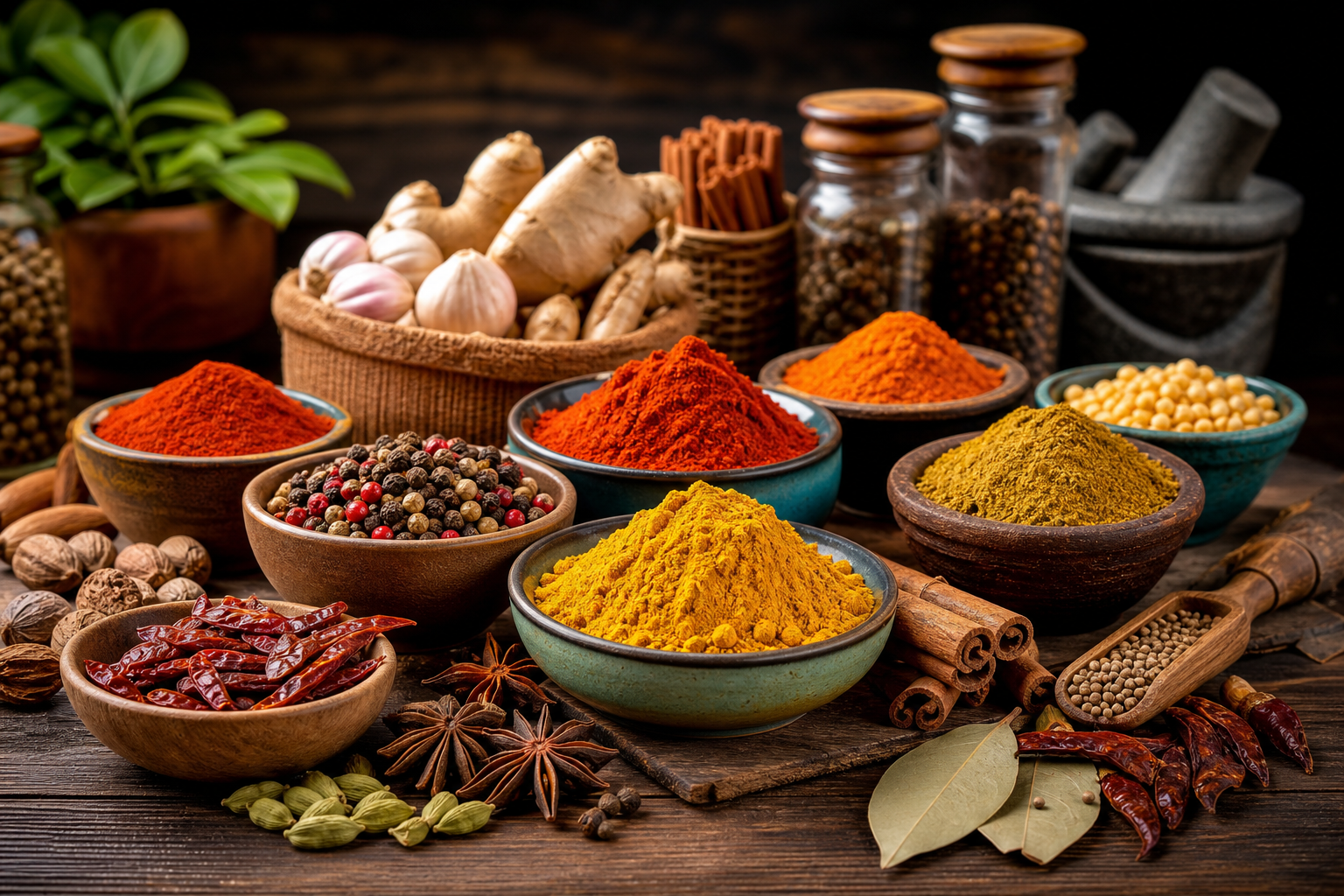
Imported masalas can transform a home curry or a tandoori plate, but not every imported packet delivers authentic flavour or safe quality. Below are targeted questions, label checkpoints, quick at-home checks, and sourcing tips you can use immediately when talking with brands, market sellers, or online shops. The goal is simple: verify provenance, purity, and freshness without needing lab work.
Eight questions to ask any seller before buying Imported masalas
Ask these exact questions out loud or in a message. Reputable suppliers will answer directly and provide documentation or clear label photos.
- Where exactly were the spices sourced and processed? Ask for the country and region of origin and whether the final grinding happened in that same country. Expect a clear country-of-origin statement rather than vague wording.
- Do you test every batch for purity, and can you share test reports? Some brands publish third-party or in-house batch tests. It is reasonable to ask whether batches are lab-tested for contaminants and adulterants.
- What is the manufacturing and best-before date for this lot? Freshness is critical for aroma. Ask for a batch or lot number linked to a manufacturing date so you can confirm how recently it was packed.
- Is there a full ingredient list and any additives or fillers? Request a complete ingredient declaration, including anti-caking agents or permitted preservatives if used. Transparent brands list everything.
- Do you hold any food safety or regulatory certifications? For Indian-origin spices, an FSSAI number or similar marking is common. Ask sellers to point to visible certification numbers on the package or product images.
- Can you show actual photos of the label and batch code? For online listings, ask for high-resolution label photos that show net weight, batch number, and nutritional or ingredient panels.
- What is your return policy if the masala smells off or shows separation? A clear, customer-friendly return or refund policy signals seller confidence and accountability.
- Who is the importer or local distributor? For imported goods, know the importer’s name and contact. That helps if you need to confirm authenticity or trace a problem.
Many of these supplier questions align with industry recommendations for identifying pure masalas and avoiding adulteration. Seeing direct answers shows transparency and reduces risk.
Label checkpoints: what to verify on the pack or product page
Before you hand over money, confirm these items on the physical pack or the product page. Missing details are a practical warning sign.
- Country of origin and producer name — explicit, not implied.
- Full ingredient list — every component including stabilisers or additives.
- Net weight and unit size — confirm the quantity matches the price and your needs.
- Batch number or lot code — essential for traceability and recalls.
- Manufacturing and best-before or expiry dates — freshness matters for aroma and potency.
- Visible regulatory identifiers — for Indian-origin spices look for FSSAI numbers on packs or QR codes linking to supply details; for other origin countries expect their local marks. If a pack lacks any regulatory or batch information, be cautious.
For imported foods, clear labelling of identity, quantity, ingredients, and country of origin is standard practice and helps you hold sellers accountable if information is missing or inconsistent.
Quick at-home checks and visual signs that suggest caution
You do not need a lab to spot obvious issues. Use these sensory and simple kitchen checks after opening a jar or examining a sample.
- Smell test — fresh masala gives an immediate, robust aroma. If it smells flat, musty, or chemical-like, that is a sign of staleness or contamination.
- Colour and texture — very bright, unnaturally uniform colour or powdery smoothness can sometimes indicate added colourants or fillers. Genuine spices show slight variation in hue and texture.
- Clumping and moisture — lumps or dampness suggest poor storage or humidity exposure, which reduces shelf life and can allow mould growth.
- Simple kitchen test — toast a pinch in a dry pan briefly and smell the released aroma. A rich, complex fragrance signals freshness; a dull scent suggests old or diluted spice mix.
Which documents and certifications to request from brands or importers

Not every seller will have every document, but reputable importers or premium brands often maintain traceability paperwork. Ask to see or verify these items when possible.
- Certificate of origin — confirms where the raw spices were grown and processed.
- Batch production record or specification sheet — links a visible batch number to a manufacturing date and ingredient breakdown.
- Third-party lab reports — if available, these show tests for common adulterants or contaminants; smaller producers may not publish them, but a willingness to share results is a positive sign.
- Regulatory marking — for Indian spices an FSSAI number or equivalent should be visible; ask the seller where to find it on the pack and verify the code is real.
If a seller refuses to provide basic paperwork or consistent label photos, consider it a risk to avoid.
Where to buy Imported masalas in Brampton and why provenance matters for Amritsari flavour
If you are in Brampton or the GTA, start with specialist South Asian grocers that carry branded imports and allow you to inspect packs on the shelf. Reputable online retailers that list high-resolution label images and publish batch details are a second option. In both channels, use the supplier questions above before checkout.
Local restaurants that emphasise authentic Amritsari and Punjabi flavours often source imported masalas to replicate regional profiles. Taste of Amritsar highlights imported masalas as part of its promise to deliver authentic Amritsari and Punjabi cuisine; you can read about the restaurant’s menu approach and flavour notes in indian curry explained: styles, gravies, and pairings that actually make sense. While that explains why provenance matters for Amritsari flavour, it does not substitute for the supplier checks you should run when buying your own spices.
Common mistakes shoppers make and how to weigh price against value
Buyers often fall for these traps. Avoid them by using the checklist below.
- Buying solely on price — the cheapest option may be heavily diluted or old. A higher price can be justified if the brand provides traceability, clear batch dates, and visible quality marks.
- Assuming a familiar brand is always safe — some established-looking packs lack batch codes or clear origin statements. Verify, do not assume.
- Trusting only colour or packaging design — pretty packaging does not guarantee purity. Use label and sensory checks instead.
- Neglecting storage after purchase — even good masalas go flat if stored in light, heat, or humidity. Store in airtight containers in a cool, dark place to preserve aroma.
Consider paying a premium when a seller provides strong traceability and freshness indicators. The extra cost often reflects better sourcing and more careful processing rather than arbitrary markup.
How to vet online sellers and what to request before checkout

Online shopping is convenient but requires extra caution. Before buying, confirm:
- High-resolution photos of the full label and the back panel showing batch and date.
- A clear return policy that covers quality complaints.
- Verified customer reviews that include photos of the opened product.
- Contact details for the importer or distributor so you can follow up if something seems off.
Ask sellers for label photos and batch details before purchase. If a seller cannot or will not provide these, choose a different supplier.
Final printable checklist to bring to the market or save for online shopping
Save or screenshot this six-point checklist and use it as a quick filter.
- Ask: Where were the spices sourced and processed?
- Check: Is there a visible batch/lot number and manufacture date?
- Confirm: Full ingredient list and any additives on the label.
- Request: Photos of labels or third-party lab results if buying online.
- Inspect: Aroma, colour uniformity, and presence of clumps after opening.
- Verify: Seller return policy and importer contact details for traceability.
Frequently asked questions
What certifications should I ask for when buying Imported masalas?
Ask for visible regulatory identifiers such as the FSSAI number for Indian-origin spices, a certificate of origin, and batch traceability. Requesting third-party lab reports is reasonable if the seller has them. Brands that provide clear batch codes and manufacturing dates show better traceability.
Can I trust loose masalas at Indian grocery stores or are packaged imports safer?
Loose masalas let you assess aroma, but they carry greater risk for cross-contamination and variable freshness. Packaged imports with clear labels, batch numbers, and dates provide better traceability. Use your nose and ask vendors about turnover and storage practices before buying loose spices.
How long do imported masalas stay fresh and how should they be stored?
Masalas remain most aromatic for months after grinding. Store them in airtight containers away from light, heat, and humidity to preserve flavour. Always check manufacturing and best-before dates on the pack to estimate remaining freshness.
Are bright or uniform-colour masalas a sign of adulteration?
Very bright or perfectly uniform colour can be a warning sign because natural spices show some variation. It is not definitive proof of adulteration, but combined with a flat aroma or missing label information it merits further questioning.
Do I need lab tests to be confident a spice blend is pure?
No, not always. Clear labelling, visible batch codes, transparent supplier answers, and basic sensory checks often suffice for everyday cooking. Third-party lab tests increase certainty and are more common for commercial buyers or premium brands; request them if you need higher assurance.
If you want more context on regional curry styles and why provenance matters for flavour, see indian curry explained: styles, gravies, and pairings that actually make sense.
Ready to taste authentic Amritsari flavours and see how imported masalas are used on the menu? Visit the official website.


Leave A Comment