






Housemade Desserts After an Indian Meal: How to Choose Well in Brampton
Housemade desserts are best chosen by looking beyond the label. The term usually describes desserts prepared by or for a restaurant, but it does not automatically confirm that every component was made from scratch, prepared that day, or available on every visit.
For a Brampton diner, the most useful checks are freshness, aroma, texture, sweetness, serving temperature, storage, ingredients, and current availability. The right dessert also depends on what you have eaten: a rich curry may call for something cool or gently spiced, while a smoky tandoori meal can pair well with a warm, creamy, or syrupy finish.
What “Housemade Desserts” Means
In restaurant language, housemade usually means a dessert is prepared by the restaurant team or specifically for that restaurant rather than served only as a prepackaged, fully finished product. “House-made” and “homemade” are common variations, although restaurants may use them differently.
The phrase is not a complete quality guarantee. It does not necessarily mean every ingredient was produced in the kitchen, that the dessert was made from scratch, or that it was prepared on the same day. A restaurant may use purchased ingredients while assembling, cooking, finishing, or serving the dessert in-house.
Ask what was prepared in the kitchen, when it was made, how it has been stored, and whether the item is available now. These details tell you more than the label alone.
How to Judge a Housemade Dessert Before Ordering

A dessert should look appealing, but presentation is only one quality signal. Use your senses and ask a short question or two when the menu description does not provide enough detail.
Freshness and storage
Freshness matters particularly for dairy, cream, yogurt, or milk-based sweets. Look for a clean, natural aroma rather than a flat, sour, chemical, or stale smell. If a dessert requires refrigeration, ask how it has been stored and when it was prepared.
For a practical reference when evaluating dessert freshness, consider preparation timing, refrigeration, ingredient information, aroma, texture, and visible signs of overholding.
Aroma and flavour
Indian desserts often use gentle flavour notes such as cardamom, saffron, rose, ghee, or toasted nuts, but the exact profile varies. The aroma should support the dessert rather than smell strongly artificial or dominated by old oil.
Sweetness is also a matter of balance. A very sweet dessert may feel heavy after a rich meal, while a gently sweet or lightly spiced option can provide a more comfortable finish. If you prefer less sweetness, ask whether the available dessert is lightly sweet or heavily syruped.
Texture and temperature
Texture can reveal whether a dessert suits your preferences. Look for the experience you want: crisp edges, a soft centre, a creamy spoonable consistency, a syrup-soaked bite, or a chilled and refreshing finish.
Be cautious of textures that seem unexpectedly soggy, dry, grainy, greasy, or hard unless that texture is characteristic of the style. When you are unfamiliar with the dessert, ask the server to describe its consistency before ordering.
Compare Dessert Textures and Serving Styles
Indian desserts can be warm, syrupy, milk-simmered, creamy, chilled, or gently spiced. Understanding these broad styles makes it easier to choose even when the name is unfamiliar. You can explore Indian desserts by their texture and serving style instead of choosing only by appearance.
| Style | What to expect | Best for diners who want |
|---|---|---|
| Warm | A comforting temperature and soft or tender texture | A cosy finish after a full meal |
| Syrupy | Moisture and pronounced sweetness, sometimes with a soft bite | A traditional, celebratory dessert experience |
| Milk-simmered | Rich dairy notes and a creamy or softly set texture | A mellow, comforting dessert |
| Chilled or yogurt-based | A cool, refreshing contrast to spice and heat | Relief after a hot or strongly seasoned meal |
| Gently spiced | Subtle aromatic notes rather than sharp heat | Flavour complexity without another spicy course |
These categories can overlap. A dessert may be warm and syrupy, creamy and gently spiced, or chilled with a pronounced dairy flavour. Ask about the combination if temperature or richness is important to you.
Choose a Dessert That Complements Your Indian Meal
The best pairing is usually about contrast. Decide whether you want to refresh your palate, continue the meal’s richness, or finish with a stronger sweet note.
| Your meal | Qualities to look for | Why it works |
|---|---|---|
| Rich or creamy curry | Chilled, lightly sweet, or gently spiced | It can make the overall meal feel less heavy. |
| Smoky tandoori dishes | Creamy, warm, or mildly aromatic | It follows roasted flavours without competing with them. |
| Very spicy food | Cool, dairy-based, or softly sweet | It provides a soothing contrast to heat. |
| Chaat-heavy meal | Mellow, creamy, or less tangy | It avoids adding another sharp or sour flavour. |
| Lighter meal | Warm, syrupy, or more indulgent | It provides a satisfying final course. |
For a family or group, consider ordering different textures rather than several desserts with the same sweetness. Sharing a warm option and a chilled option lets diners compare experiences, provided both are available and suitable for sharing.
How to Check Dessert Availability in Brampton
A restaurant listing desserts as a menu category does not mean every dessert is available at every service. Items can change with preparation, ingredients, demand, season, or the current menu. Check the listing before travelling if dessert is an important part of your plan.
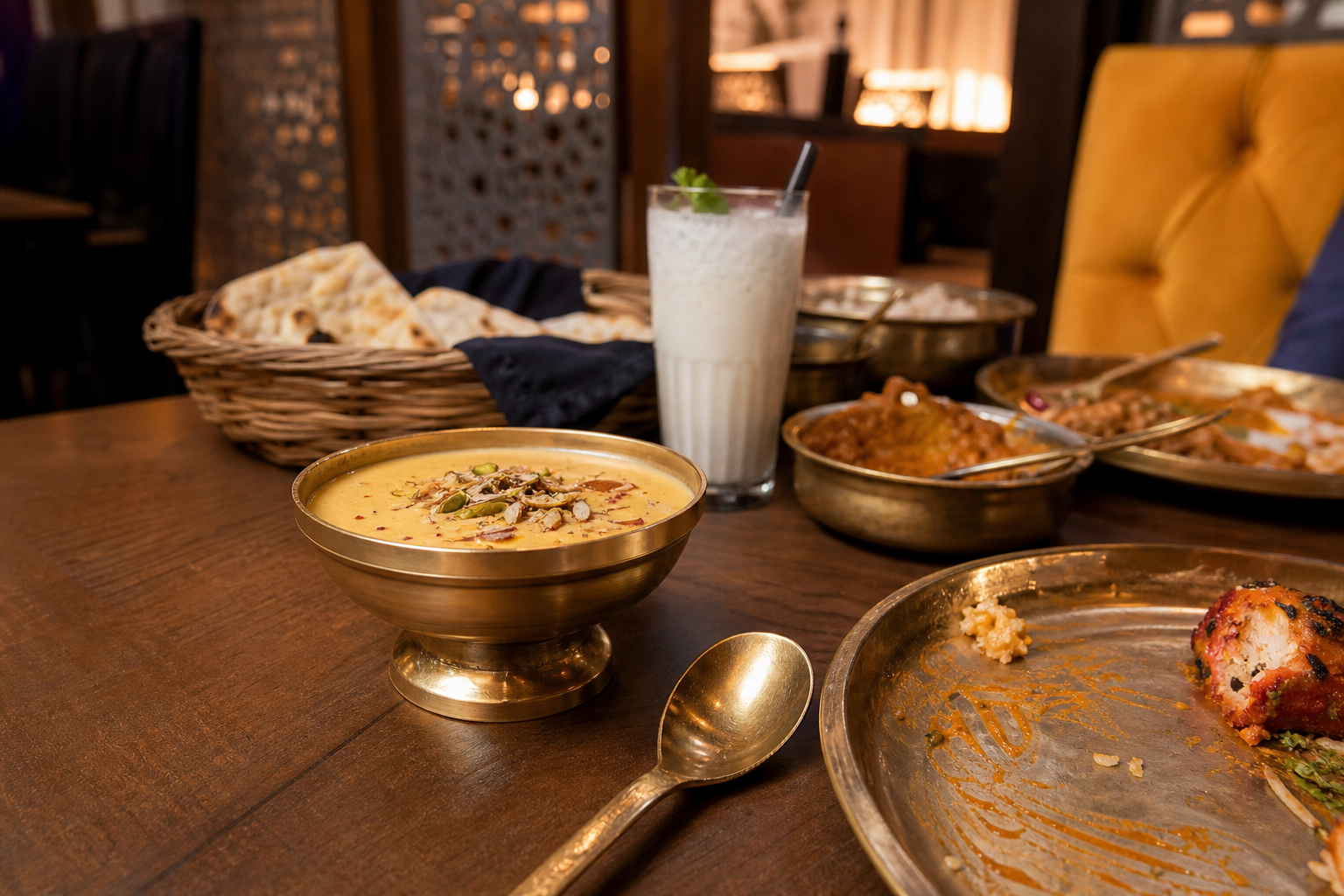
Taste of Amritsar is an Indian restaurant at 27 Main St N in Brampton focused on Amritsari and Punjabi cuisine. Its first-party information describes traditional dishes, rich spices, smoky tandoori flavours, lassis, refreshing drinks, and classic desserts, while its menu page includes desserts as a category.
For available housemade desserts, check the restaurant’s current dessert menu before ordering. Treat it as the best starting point for what is listed, then ask the restaurant to confirm the specific item, preparation timing, ingredients, and serving style you need.
Housemade Dessert Ordering Checklist
- Availability: Is the specific dessert available today?
- Preparation: What part is prepared in-house, and when was it made?
- Ingredients: Does it contain dairy, nuts, eggs, wheat, gelatin, alcohol, or other relevant ingredients?
- Allergen handling: Can staff explain possible cross-contact?
- Storage: Does it require refrigeration, and has it been kept chilled?
- Temperature: Is it served warm, chilled, or at room temperature?
- Sweetness: Is it lightly sweet, strongly syrupy, creamy, or balanced with spice?
- Portion: Is it intended for one diner or suitable for sharing?
- Timing: Will it be ready with the meal, or need additional preparation time?
If you are booking for a group, mention dessert and dietary requirements when making the reservation. Confirming menu suitability and special requirements in advance can prevent avoidable surprises.
Frequently Asked Questions About Housemade Desserts
Does housemade mean a dessert was made completely from scratch?
No. Housemade generally indicates that a restaurant prepares or finishes the dessert itself, but it does not prove that every component was made from raw ingredients in the kitchen.
What should I ask about ingredients and allergens?
Ask about dairy, nuts, eggs, wheat, gelatin, alcohol, and possible cross-contact. Do not rely on “homemade” as proof that a dessert is allergen-free.
How can I tell whether a dessert is fresh?
Look for a clean aroma, an appropriate texture, and proper serving temperature. Ask when it was prepared and how it has been stored, especially if it contains dairy or cream.
Should I confirm dessert availability before visiting a Brampton restaurant?
Yes, if a particular dessert is central to your plans. A category listing does not guarantee that a specific item is ready that day.
How do I choose a dessert after a spicy or tandoori meal?
After spicy food, look for a cool, creamy, gently sweet, or yogurt-based option. After smoky tandoori dishes, a warm, creamy, or mildly aromatic dessert may complement the roasted flavours.
Make Your Dessert Choice With Confidence
Choosing housemade desserts is less about trusting a label and more about asking useful questions. Prioritize freshness, aroma, texture, temperature, storage, and ingredient transparency, then choose a style that balances the meal you have just eaten.
Taste of Amritsar provides a Brampton setting for Amritsari and Punjabi food and lists desserts among its menu categories. Check the current selection and confirm the details that matter to you before ordering. For menu information and current offerings, visit tasteofamritsar.com.


Leave A Comment