




How to Verify Halal Indian Cuisine in Brampton
Halal Indian cuisine should be verified through a restaurant’s current answers about meat sourcing, certification, ingredients, preparation, shared equipment, and cross-contact. Taste of Amritsar’s available information confirms a Brampton focus on Amritsari and Punjabi dishes, but it does not confirm halal certification or halal status for individual dishes.
What You Need to Verify Before Calling a Restaurant Halal
The word “halal” can refer to different levels of assurance. Some diners require halal-certified meat and a stated preparation standard. Others also require an entirely halal kitchen, separate utensils, separate fryers, or no shared contact with non-halal ingredients.
- Certification: Is the restaurant halal-certified, or does it follow a stated halal standard without certification?
- Meat sourcing: Which meats are halal, and does that apply to every meat dish or only selected items?
- Preparation: Are halal ingredients prepared separately from other meats or ingredients?
- Cooking fats: Do fried foods, breads, sauces, or desserts use vegetable oil, butter, ghee, or another fat?
- Sauces and marinades: Do any sauces, stocks, flavourings, or marinades contain alcohol or an ingredient you avoid?
- Shared equipment: Are fryers, grills, tandoors, pans, knives, cutting boards, and serving utensils shared?
- Cross-contact: Can food touch an ingredient or surface that does not meet your requirements?
Vegetarian food can simplify the meat-sourcing question, but it does not automatically answer every halal question. Cooking fat, sauces, dairy ingredients, alcohol-containing flavourings, shared fryers, and cross-contact still need clarification if your requirements are strict.
Before dining, group your dietary needs with your party size, arrival time, and menu expectations so the restaurant can give you a useful answer before you travel.
How to Read an Indian Menu Without Treating Categories as Halal Proof

An Indian menu category tells you what a dish is like, not whether it meets your halal standard. Use the category to narrow your preferences, then ask about ingredients and preparation for the specific dish.
| Menu category | What it usually offers | What to verify |
|---|---|---|
| Starters and chaats | Crisp, tangy, spicy, or shareable dishes with chutneys, yogurt, legumes, or fried components. | Cooking oil, shared fryer use, sauces, dairy, nuts, and shared surfaces. |
| Tandoori specials | Grilled or roasted items with smoky flavour, marinades, and high-heat char. | Meat sourcing, marinade ingredients, shared grill or tandoor practices, and preparation timing. |
| Signature curries | Saucy dishes ranging from creamy and mild to bold, tomato-based, or heavily spiced. | Protein, stock, cream, butter, ghee, nuts, sauces, and shared pans. |
| Breads and rice | Naan, kulcha, roti, rice, and other accompaniments for curry. | Dough ingredients, dairy, ghee or butter, shared surfaces, and gluten if relevant. |
| Lassis and drinks | Sweet, salted, or spiced yogurt drinks that balance rich food. | Yogurt ingredients, flavourings, toppings, equipment, and anything you avoid. |
| Desserts | Warm, chilled, creamy, syrupy, or gently spiced finishes. | Dairy, nuts, ghee, storage, preparation, freshness, and availability. |
Reviewing an Indian restaurant menu can help you prepare precise questions. Menu labels remain descriptions, not halal certification.
Choose Your Meal by Preference, Then Confirm the Ingredients
If you want mild or cooling food
Look toward a mild curry, bread or rice, and a yogurt-based drink if those ingredients fit your requirements. Ask about chilli, dairy, nuts, and whether an adjustment changes preparation.
If you want smoke and char
Tandoori dishes are the natural category to explore. Confirm the protein or paneer, marinade, cooking surface, and preparation practices. Smoky flavour does not establish halal status.
If you want a curry-based meal
Ask what protein, stock, cooking fat, and finishing ingredients go into the curry. Creamy sauces may contain dairy or nuts, while tomato sauces can still involve shared pans or stock.
If you prefer vegetarian food
Vegetarian choices can include paneer, legumes, breads, rice, vegetables, chaat, and dairy-based drinks. Ask about ghee, butter, cheese, yogurt, sauces, shared fryers, and cross-contact.
If you want dessert
Ask about the exact dessert, ingredients, preparation timing, storage, and availability. Dairy-based sweets deserve particular attention because freshness and refrigeration affect quality and suitability.
Build a Halal-Conscious Order for One, Two, or a Family

These are hypothetical planning formats, not claims that any Taste of Amritsar dish is halal. Confirm every item and preparation detail before ordering.
For one diner
Choose one direction: curry with bread or rice, a tandoori-style main with an accompaniment, or a vegetarian combination. Confirm the core ingredient, cooking fat, sauce, shared equipment, and spice level.
For two diners
Contrast textures and intensity. One diner might choose a grilled category while the other chooses curry, with bread or rice to share. Confirm shared serving utensils and different spice preferences.
For a family
Start with the strictest dietary requirement. Build around one confirmed main, one vegetarian option, one mild option for children or sensitive palates, an accompaniment, and suitable drinks.
For a mixed-preference group
Separate the order by preference instead of choosing one oversized platter. Confirm meat, dairy, nuts, gluten, chilli, shared starters, and fryer practices. If answers are unclear, choose a venue with the assurance your group requires.
The Questions to Ask Before You Order or Book
A specific message usually produces a better answer than asking only whether everything is halal. Adapt this script for a call or table request:
“I’m looking for halal Indian food and need to understand your preparation standard. Are you halal-certified, or do you follow a stated halal standard? Which meat and poultry items meet it? Are the cooking surfaces, fryers, pans, utensils, and tandoor shared? Do sauces, marinades, breads, or desserts contain alcohol, non-halal ingredients, dairy, ghee, or nuts? Can you accommodate this requirement for my party of [number] on 2026?”
If you have a serious allergy or strict cross-contact requirement, say that plainly. Ask whether the kitchen can accommodate the request, not merely whether an ingredient appears in the recipe.
Also confirm current availability, inclusions, advance notice, and whether the request can be noted with a reservation. These details matter especially for groups.
What Taste of Amritsar Confirms in Brampton
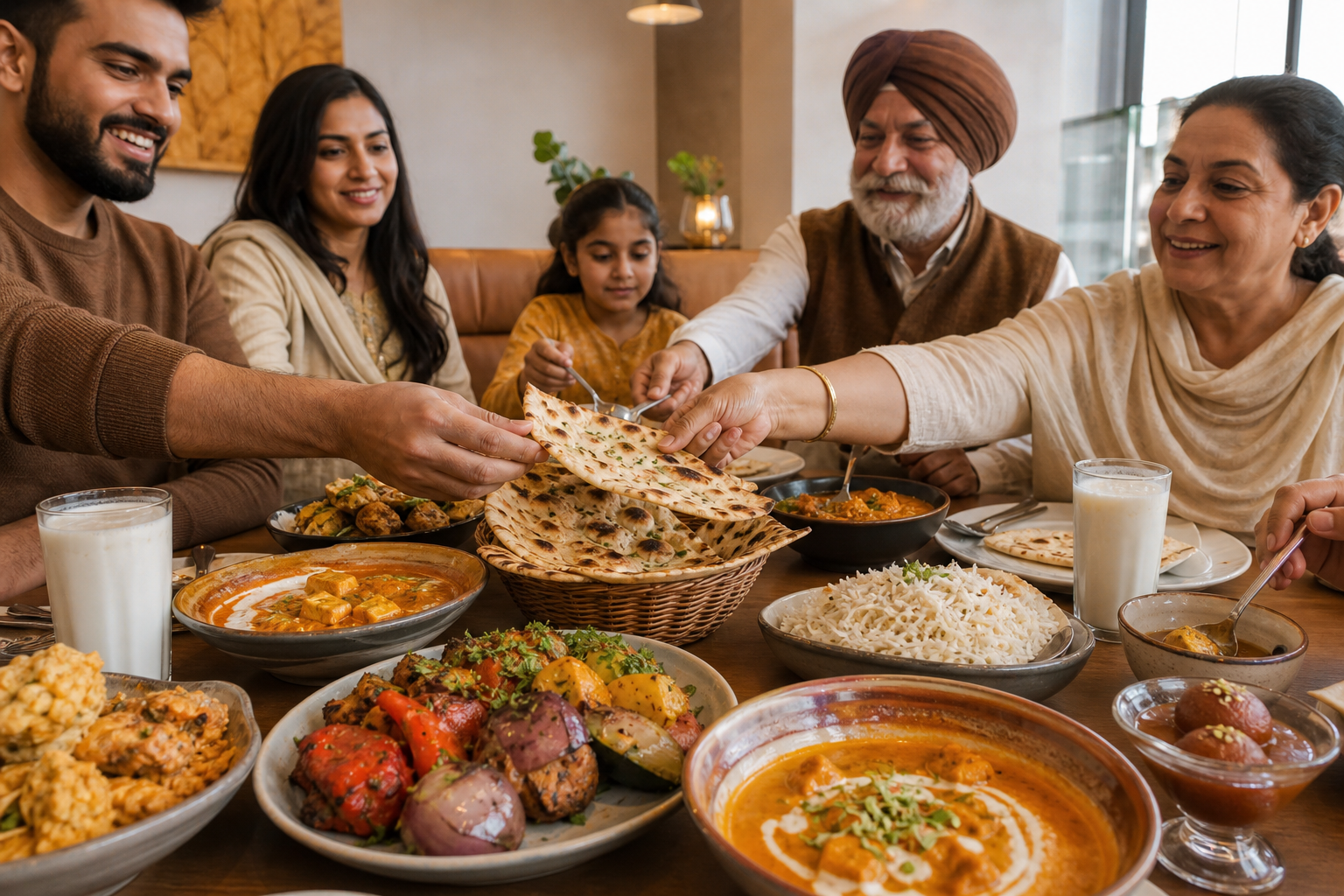
Taste of Amritsar is presented as a Brampton restaurant focused on Amritsari and Punjabi cuisine. Its available information highlights rich spices, smoky tandoori flavours, traditional recipes, imported signature spices, handcrafted dishes, and shared dining.
The available information discusses traditional Amritsari dishes, tandoori flavours, rich spices, lassis, drinks, and desserts. It does not establish that every current menu category or vegetarian selection is available at all times.
The available evidence does not confirm halal certification, halal meat sourcing, a fully halal kitchen, separate equipment or fryers, or halal status for any individual dish. Authentic Amritsari cuisine, imported spices, and vegetarian options should not be treated as proof of halal suitability.
A Final Decision Before Your Brampton Visit
Proceed when the restaurant’s answers match the standard you require. If you need certification, separate equipment, or restaurant-wide halal preparation and the restaurant cannot confirm those points, do not fill the gaps with assumptions. Ask for clarification or continue looking for a venue with the assurance you need.
For Taste of Amritsar, Brampton diners can review the restaurant menu before asking the restaurant about halal requirements, ingredients, preparation, availability, and table arrangements.


Leave A Comment