







Chutney Sampler Flavours and Pairings for Indian Food
A chutney sampler is a small selection of different chutneys served together so you can compare flavours such as fresh herb acidity, tamarind sweetness, and varying levels of heat. The exact number, recipes, portion size, price, and availability differ by restaurant, so Taste of Amritsar diners should confirm those details before ordering.
Chutney Sampler: What It Usually Means
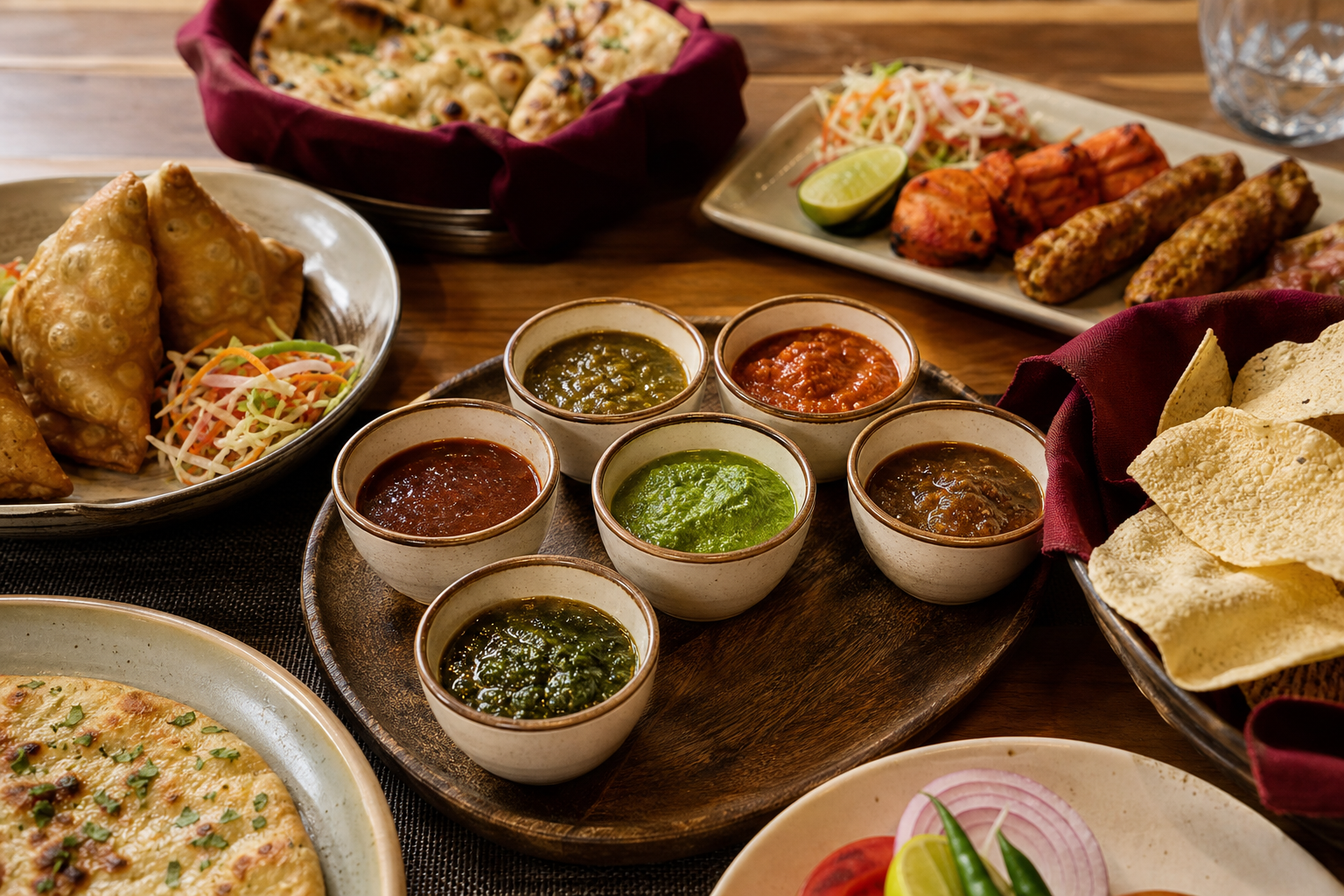
A chutney sampler usually contains several small portions of chutney on one plate, tray, or packaged set. The selection may include two, three, or four contrasting styles, sometimes with a crisp accompaniment such as papadum, depending on the restaurant and whether the item is served for dining in or sold as a packaged product.
The purpose is variety. Instead of choosing one condiment, you can taste fresh herb flavours, sweet-tart fruit or tamarind, cooling yogurt-based combinations, and hotter chilli profiles beside the same meal.
A generic definition does not confirm what any particular restaurant serves. For Taste of Amritsar in Brampton, the menu does not verify a named chutney sampler, its contents, portion size, price, or current availability.
Common Chutney Flavours Compared

Chutneys are easiest to choose by flavour direction rather than name alone. The table below describes common profiles found with Indian food. These are general categories, not a list of verified Taste of Amritsar recipes.
| Chutney style | Sweetness and acidity | Heat | Texture | Best use |
|---|---|---|---|---|
| Mint-cilantro | Low sweetness, bright and acidic | Low to medium, depending on chilli | Fresh, smooth or lightly textured | Tandoori dishes, paneer tikka, kulcha, and fried snacks |
| Tamarind | Sweet-tart with pronounced acidity | Usually low, though spice may be added | Glossy, smooth, or slightly thick | Samosas, pakoras, chaat, and chickpea dishes |
| Yogurt-based | Low sweetness with cooling tang | Usually low | Creamy and spoonable | Spicy starters, grilled foods, and rich breads |
| Fruit-forward | Noticeably sweet with mild acidity | Low to medium | Jammy, pulpy, or smooth | Balancing savoury snacks and adding contrast to a shared plate |
| Hot chilli | Often savoury, sharp, or lightly sweet | Medium to high | Thick, coarse, or oil-based | Diners who want extra heat with breads, grilled dishes, or rice |
Mint-cilantro chutney brings freshness and herbal acidity. Tamarind chutney contributes sweetness and tang. A cooling yogurt-based option softens a hot bite, while a chilli style is better for adding heat than for balancing an already spicy dish.
For more context on how mint-cilantro chutney and tamarind chutney fit into a wider Indian menu, compare the condiment with the rest of your order instead of tasting it in isolation.
How to Pair a Chutney Sampler With Indian Food
The simplest pairing rule is to match contrast with the dish. Use fresh acidity against richness, sweetness against sharp spice, cooling texture against heat, and a hot chutney only when the main food is mild enough to support it.
- With kulcha: Start with mint-cilantro chutney for freshness, then try tamarind if the stuffed bread needs a sweet-tart lift. Kulcha is rich and substantial, so a bright condiment usually works better than adding only another rich element.
- With samosas: Tamarind suits the crisp pastry and savoury filling, while mint-cilantro keeps each bite fresh. Try both together if you enjoy sweet, sour, and herbal flavours in the same mouthful.
- With pakoras: Choose an herb chutney for contrast with the fried coating. Add tamarind when you want a softer, sweeter finish.
- With chaat: Tamarind complements chickpeas, potatoes, and crisp toppings. A green herb chutney adds a sharper, fresher note. Ask how the chaat is already seasoned before adding a hot chutney.
- With paneer tikka or other tandoori dishes: Use mint-cilantro for acidity and freshness. A cooling option can help balance a strongly seasoned or smoky bite.
- With breads and curries: Use a small amount first. A sharp or hot chutney can change the character of a creamy or mildly spiced curry, while a fresh herb style can brighten a heavier meal.
Traditional Punjabi starters commonly include stuffed breads with chutneys or chole, fried snacks, paneer tikka, and other shareable dishes. The guide to traditional starters can help you choose the food around the sampler.
For a smoky order, bright condiments work particularly well with grilled food and other tandoori pairings. Take a small taste of each chutney with the main dish, not just with bread, because the same condiment can taste hotter or sweeter beside different foods.
Restaurant Chutneys Versus a Packaged Sampler
A restaurant accompaniment is usually a small serving placed beside a specific dish. It may be selected to suit that item and may not be intended as a standalone tasting experience.
A restaurant sampler is different because the variety is the point. It may arrive as several small portions for one table, with flavours chosen by the kitchen or selected by the diner if substitutions are offered.
A packaged retail sampler normally contains separate sealed containers or jars. That format matters if you are buying a gift, transporting the chutneys, storing leftovers, or serving them at an event. Packaging, expiry information, and storage instructions should be confirmed directly for the product.
Health Canada’s reference table lists 15 mL as the reference amount for major condiments, including chutney. That figure is a nutrition-labelling reference amount, not evidence of a restaurant’s serving size or a Taste of Amritsar sampler portion. Health Canada’s condiment reference is useful for understanding the distinction.
Who Should Choose a Chutney Sampler?
A sampler is especially useful if you are trying Indian chutneys for the first time or cannot decide between fresh, sweet, cooling, and spicy flavours. Variety lets you discover what suits your palate without committing to a larger container or a single dominant taste.
- One diner: Choose a sampler only if you want to compare several flavours. If you already know your favourite, one complementary chutney may create less waste.
- A couple or family: A shared sampler works well when the table includes several starters, breads, or tandoori dishes. Everyone can test a small amount before adding more.
- Entertaining: Variety helps guests customise samosas, pakoras, breads, and grilled foods. Confirm the number of servings and packaging before planning a larger gathering.
- Gifting: Treat a packaged set differently from a restaurant serving. Ask about sealed containers, labelling, storage, shelf life, and fulfilment before promising it as a gift.
The main tradeoff is variety versus quantity. A sampler gives you more flavour options, but several small portions may be less useful than one larger container if you already know how you want to serve the meal.
Questions to Ask Before Ordering
Use this short script when calling or ordering online: “How many chutneys are included, what are their names, and what size is each portion or container?” Then ask the questions that match your meal or dietary needs.
- Are the flavours fixed, or can I choose or substitute them?
- Which chutney is mildest, sweetest, most acidic, or hottest?
- What ingredients are used in each one?
- Does any recipe contain mustard, dairy, nuts, sesame, or another allergen relevant to me?
- Is the sampler vegetarian or vegan, and is it suitable for my gluten-related needs?
- Could shared equipment or preparation create cross-contact?
- What is the price, and does the sampler include papadum, bread, or another accompaniment?
- Is it served with a meal, packaged for takeaway, or available as a retail item?
- How should it be stored, and how long does it keep after opening?
- Is it currently available, and are pickup or delivery options offered?
Do not treat “medium spice” as a complete allergen or ingredient answer. Taste of Amritsar’s menu page says food prepared in the kitchen is medium spice and asks diners to request mild or extra spicy preparation, but the spice note does not identify a chutney recipe or establish dietary suitability.
What Taste of Amritsar Diners Can Confirm in Brampton
Taste of Amritsar is located at 27 Main St N in Brampton and presents Amritsari and Punjabi dishes with rich spices, smoky tandoori flavours, and imported signature spices. Its menu context includes traditional starters, chutneys, tandoori dishes, and signature curries.
Taste of Amritsar’s menu states that kitchen food is medium spice and invites diners to request mild or extra spicy preparation. That gives you a useful question to ask about heat, but it does not confirm the recipe, ingredients, or heat level of any individual chutney.
A named chutney sampler is not currently verified here. The number of chutneys, portion or container size, price, substitutions, storage instructions, delivery, pickup, retail packaging, and availability are also not verified. Ask before travelling if the sampler is the reason for your visit.
If you want to understand the wider regional context before ordering, explore Punjabi Indian cuisine and then use the confirmation script above for the specific condiment you want.
Chutney Sampler Questions Brampton Diners Still Ask
How many chutneys are usually in a chutney sampler?
There is no universal number. Restaurant and retail samplers commonly contain a few varieties, often three or four, but the selection and portion size depend on the business and format.
Is a chutney sampler the same as chutneys served with a restaurant meal?
No. A meal accompaniment is usually selected to support one dish, while a sampler is designed for tasting several profiles. A packaged sampler is a separate format again, with containers, labelling, and storage considerations.
What should I ask about allergens and dietary suitability?
Ask for the ingredients in each chutney and whether preparation creates cross-contact. Confirm dairy, mustard, nuts, sesame, gluten-related concerns, and whether the recipe is vegetarian or vegan. These details cannot be assumed from the word “chutney.”
Can a chutney sampler work for a family or group table?
Yes, if the group is sharing several starters, breads, or tandoori dishes. A sampler adds variety, but confirm the number of portions so a larger table does not mistake a tasting set for a full accompaniment serving.
Does Taste of Amritsar currently offer a chutney sampler in Brampton?
The current information does not confirm a named sampler or its availability. Ask Taste of Amritsar directly about the current menu, flavours, price, portion, and ordering format before you visit.
Plan the Right Chutney Pairing for Your Meal
For most shared Punjabi meals, start with one fresh or acidic profile and add one sweet, cooling, or spicy contrast. Pair herb chutney with smoky or rich food, tamarind with crisp snacks and chaat, and a hotter option only when the rest of the meal is mild enough to balance it.
For current Brampton menu options and the best way to ask about chutneys with your order, review the Taste of Amritsar menu before visiting.


Leave A Comment