







Achar Varieties Compared by Heat, Taste, and Texture
Achar is the broad South Asian term for seasoned, preserved fruit or vegetable pickles, often called Indian pickles in English. Mango, lemon, chili, garlic, and mixed vegetable achar differ in sourness, heat, texture, sweetness, and richness, so start with a small spoonful and choose based on the dish and your spice tolerance.
What Achar Means on an Indian Menu
On an Indian menu, achar usually means a strongly seasoned pickle served as a condiment. It can be made with fruit, vegetables, or other ingredients, then treated with combinations of salt, spices, oil, drying, or fermentation. “Indian pickle” is the broader English label, while achar is the familiar South Asian term.
Achar is not the same as chutney. Chutney is often fresh, cooked, blended, or sauce-like, while achar usually has a firmer ingredient and a preserved, concentrated flavour. Chutney may bring freshness or sweetness, while achar adds salt, acidity, spice, and a deeper pickled taste.
There is no single achar recipe. A Punjabi mango pickle can taste very different from a South Indian mango pickle, a sweet Gujarati-style preparation, or a homemade mixed vegetable version.
Common Indian pickle ingredients include mango, lime, carrot, cauliflower, mixed vegetables, and cucumber. Food-processing guidance describes oil preservation in which produce is covered with edible oil to create an environment that inhibits microorganisms. That does not mean every achar is oil-preserved or made in the same way. Food-processing guidance on Indian pickles lists several ingredient and preservation categories.
Achar Varieties Compared by Flavour, Heat, and Texture

The table below gives typical directions, not fixed rules. Heat and sweetness can change significantly between recipes, so treat these descriptions as a starting point when choosing from a menu.
| Variety | Main ingredient | Typical flavour | Typical heat | Texture and useful pairing |
|---|---|---|---|---|
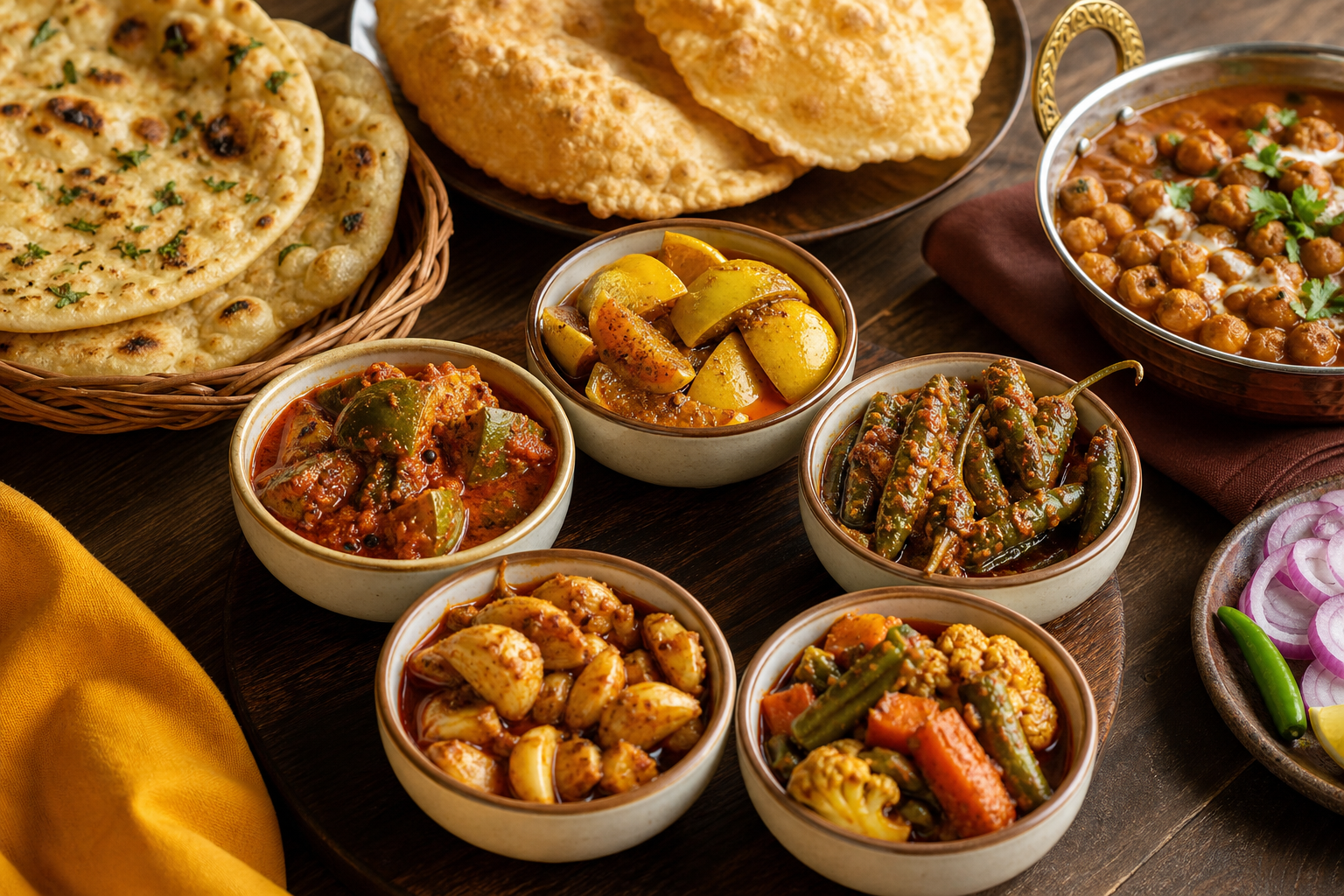
| Mango achar | Unripe mango | Sour, salty, spiced, sometimes slightly sweet | Mild to hot | Firm or chunky; breads, chole, rice, and rich curries |
| Lemon or lime achar | Lemon or lime | Bright, sharply tangy, salty, and aromatic | Mild to medium | Softening citrus pieces; buttery breads and creamy dishes |
| Green chili achar | Fresh green chilies | Direct chili flavour with sour, salty, or spiced notes | Medium to very hot | Soft or lightly crisp; plain breads and rice |
| Garlic achar | Garlic cloves | Bold, savoury, pungent, and warmly spiced | Mild to hot | Firm to tender cloves; roti, kulcha, dal, and grilled food |
| Mixed vegetable achar | Carrot, cauliflower, turnip, mango, or other vegetables | Layered, tangy, salty, and spiced | Mild to medium | Varied crunch; flexible for shared meals |
| Tomato achar | Tomato | Tangy, savoury, and sometimes sweet or jammy | Mild to medium | Soft and spreadable; breads, snacks, and rice |
| Onion achar | Onion | Pungent, sharp, salty, and often lightly sour | Mild to medium | Crisp or softened; grilled dishes and hearty meals |
Mango achar is often easy to recognize because the fruit stays substantial and its sourness balances spice. Lemon achar is brighter and more acidic, while garlic gives a savoury, concentrated flavour. Mixed vegetable achar offers more textural variety for a shared table.
Chili achar is not automatically the hottest option in every menu. Heat depends on the chili, quantity, seeds, and balance of oil, salt, sugar, and acidity. The same variation applies to garlic, mango, and mixed varieties.
Choose an Achar by the Taste You Want
If you are new to Indian pickles, start with mango or mixed vegetable achar and ask about the heat level. These varieties often offer a balance of sour, salty, spiced, and sometimes sweet notes.
- For a bright, tangy bite: choose lemon or lime achar.
- For a bold savoury flavour: try garlic achar.
- For direct chili heat: ask about green chili achar.
- For varied texture: choose mixed vegetable achar.
- For a sour, hearty pairing: mango achar is a natural starting point.
- For a softer, sweeter direction: ask whether tomato or fruit-based options have a sweet element.
There is no universal mildest or hottest achar. If spice is a concern, ask for the least spicy available variety and request a small amount first. If you enjoy intense heat, ask which option has the strongest chili profile.
Pair Achar With Punjabi and North Indian Food

Achar works best as a contrast, not as a sauce for the entire plate. A small sharp, salty bite can cut through rich bread, add lift to chickpeas, or make a simple rice and curry combination more layered.
- With Amritsari kulcha: try mango, lemon, or mixed vegetable achar. Their acidity can balance the bread’s richness.
- With chole: mango, lemon, or chili achar can reinforce the chickpeas’ bold spice profile. Use a little at first.
- With tandoori dishes: garlic, chili, or lemon adds a sharp counterpoint to smoky grilled flavours.
- With curries and rice: mango or mixed vegetable achar adds texture and acidity.
- With roti or plain breads: garlic, tomato, and chili varieties provide strong condiment flavour.
- With snacks and starters: mixed, lemon, or chili achar can complement crisp or fried foods.
Punjabi achar generally fits meals built around assertive seasoning, breads, chickpeas, tandoori cooking, and hearty curries. That does not create one fixed Punjabi style: households and regions use different ingredients, spice blends, oil levels, and preparation methods.
Taste of Amritsar presents its Brampton restaurant around traditional Amritsari and Punjabi dishes, imported masalas, smoky tandoori flavours, and recipes inspired by Punjab. Its related guidance also places stuffed breads, chole-style accompaniments, crisp snacks, and tandoor-grilled preparations within the traditional starter conversation. For help choosing bread to serve with a sharp pickle, compare Indian bread varieties and curry pairings.
How to Read Achar Preservation Labels
Preservation terms describe how an achar may be prepared, but they do not guarantee one flavour or texture. Two mango pickles can both be oil-based and still differ in acidity, sweetness, chili heat, and firmness.
Oil-based
Oil-based achar uses edible oil as part of the preservation system and often has a rich, rounded mouthfeel. Oil-based does not mean the pickle is mild or identify the exact oil or recipe.
Salt-cured
Salt-cured achar relies on salt to draw moisture from the ingredient and create a concentrated savoury taste. The final texture depends on the ingredient and preparation.
Sun-dried
Sun-drying reduces moisture and can intensify flavour before or during pickling. It may produce a denser ingredient and deeper taste.
Fermented
Fermentation uses microbial activity to develop acidity and complex flavours. Not every achar is fermented. Some are primarily salted, oil-preserved, cooked, dried, or made through several methods.
Sweet, sour, and mixed
“Sweet” usually signals sugar, fruit sweetness, or a sweeter seasoning balance. “Sour” points to citrus, unripe fruit, vinegar, fermentation, or another acidic element. “Mixed” generally refers to several vegetables or fruits in one preparation.
How Much Achar to Serve and What to Ask
Start with roughly one small spoonful per person as a condiment, then add more if the flavour suits the meal. Achar is concentrated, so a little can season each bite of kulcha, bread, rice, curry, or grilled food.
At a restaurant, use a short script:
- “Which achar varieties are available today?”
- “Which one is the mildest, and which one is the hottest?”
- “Is this preparation sweet, sour, fermented, or oil-based?”
- “What are the main ingredients and spices?”
- “Are there ingredients or preparation details I should know about for my dietary needs?”
Do not assume that vegetable-based achar is automatically dairy-free, nut-free, gluten-free, vegan, or suitable for a medical diet. Recipes and handling differ, so ask the restaurant about ingredients and preparation relevant to your needs.
Checking Achar Availability at Taste of Amritsar in Brampton
The restaurant information confirms Taste of Amritsar’s Brampton focus on traditional Amritsari and Punjabi food, authentic masalas imported from India, and smoky tandoori flavours. It does not confirm that mango, lemon, chili, garlic, mixed vegetable, tomato, onion, or another achar variety is currently listed.
Availability can differ between a condiment served with a dish and a variety available as a separate order. Review the current menu before visiting, then ask which achar is available with the meal you are planning.
Achar Questions Diners Still Ask
Is achar the same as an Indian pickle?
Achar is the common South Asian term for many seasoned, preserved pickles, while Indian pickle is the broader English description. The terms are often interchangeable, but neither identifies a single recipe.
Which achar is best for someone trying Indian pickles for the first time?
Mango or mixed vegetable achar is a sensible starting point because each can offer several familiar flavour notes. Ask for the heat level and begin with a small spoonful.
Does every achar contain oil, vinegar, or fermentation?
No. Achar recipes may use oil, salt, drying, cooking, fermentation, acidity, or a combination of methods.
Can I eat achar with naan, kulcha, rice, or curry?
Yes. Achar is commonly used in small amounts with breads, rice, curries, chickpeas, snacks, and grilled foods.
What should I ask a restaurant about achar ingredients and allergens?
Ask which variety is available, its heat level, main ingredients, preservation style, and whether it contains dairy, nuts, wheat, or another ingredient you avoid. Ask about the preparation details if you have a dietary restriction.
How do I know whether achar is currently available at a restaurant?
Check the restaurant’s current menu, then ask directly if the variety is not listed or availability is unclear. A general guide cannot confirm a restaurant’s daily stock.
For Brampton diners, the best achar choice balances the meal you are ordering and the flavour you enjoy. Check the current menu and ask about the available condiment before your visit to Taste of Amritsar’s Punjabi and Amritsari menu.


Leave A Comment