





Indian Cuisine Flavours: Taste, Heat, and Pairings
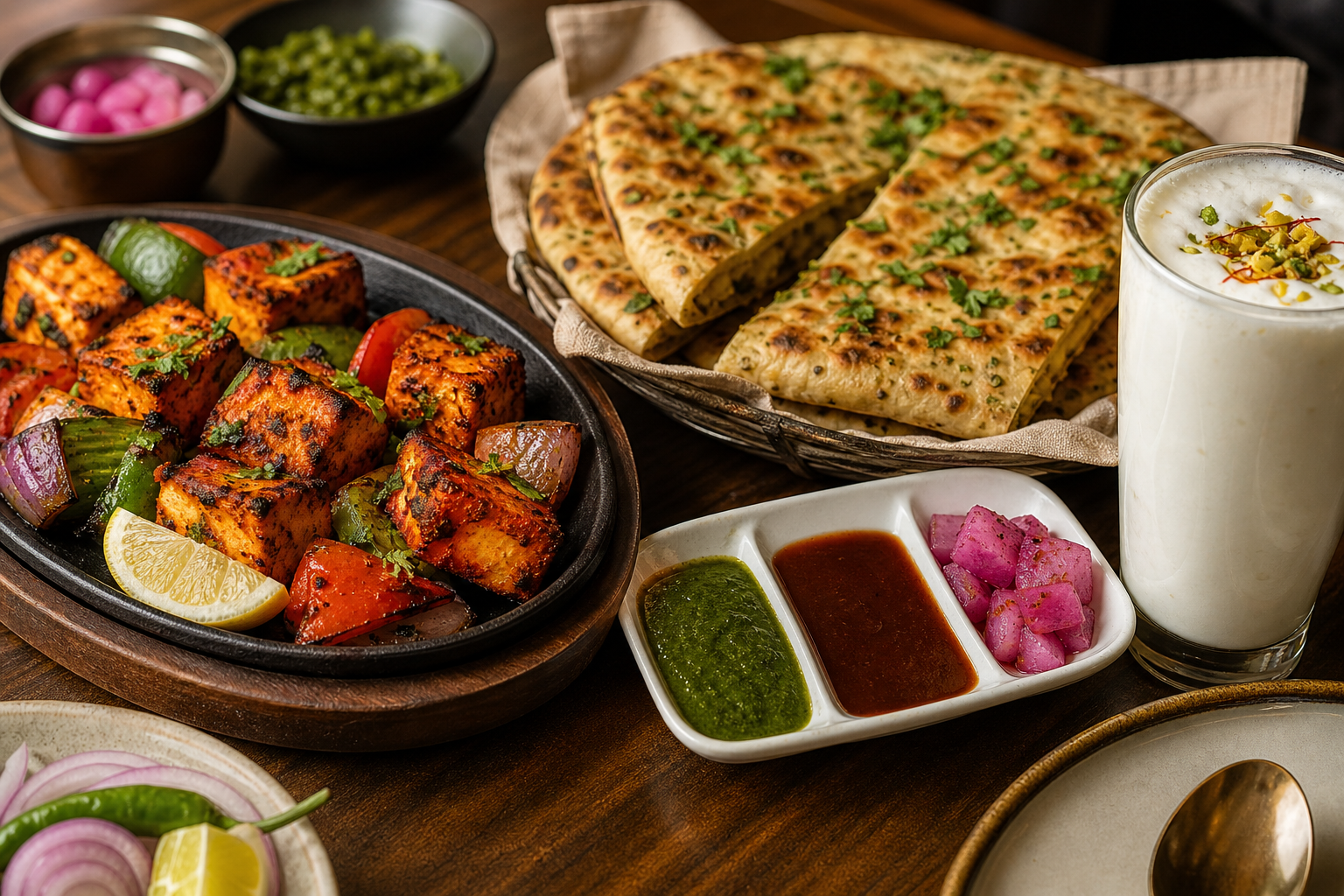
Indian cuisine does not have one single taste. Its flavour can be aromatic, earthy, tangy, creamy, smoky, sweet, or hot, depending on the spices, cooking method, sauce, and regional tradition. For an approachable first order, choose one familiar direction such as smoky tandoori, creamy curry, tangy chaat, or stuffed Amritsari kulcha, then balance it with bread, rice, lassi, or another cooling element.
Indian Cuisine Does Not Have One Single Flavour
Indian food is best understood as a combination of flavour, heat, aroma, richness, acidity, and texture. A dish can contain many spices without being chilli-hot, while a simple chilli-based preparation can feel much hotter but less layered.
Restaurant menus usually divide these experiences into starters and chaats, tandoor specials, signature curries, breads and rice, regional dishes, drinks, lassis, and desserts. You can use those categories as a map, then choose based on the taste and texture you want instead of ordering by name alone.
The Indian Cuisine Flavour Map
The quickest way to choose Indian food is to identify the dominant experience you want. The descriptions below are broad culinary directions, not guarantees about a particular dish’s current recipe, spice level, or availability.
| Flavour direction | What it feels like | Menu directions to explore | Useful pairing |
|---|---|---|---|
| Spicy | Chilli warmth or a lingering peppery finish | Chilli-forward curries, seasoned chaats, or dishes described as hot | Rice, yogurt-based accompaniments, or a cooling drink |
| Tangy | Bright, sour, salty, or mouth-watering | Street-style chaat, tamarind-led sauces, pickles, and chutneys | A mellow curry, bread, or a less acidic drink |
| Smoky | Roasted, charred, and slightly earthy | Paneer tikka, tandoori paneer tikka, tandoori chaap, or other tandoor dishes | Fresh salad, bread, lassi, or a gently creamy side |
| Creamy and rich | Soft, buttery, dairy-forward, or full-bodied | Rich curries, malai-style preparations, and buttery gravies | Tandoori roti, plain rice, or a sharp chutney in a small amount |
| Earthy | Toasted, savoury, warm, and grounded | Lentils, chickpeas, cumin-seasoned dishes, and roasted vegetables | Fresh herbs, tangy accompaniments, or a crisp starter |
| Aromatic | Fragrant and layered, with spice noticed through the nose as much as the tongue | Cardamom, cloves, coriander, garam masala, and slow-cooked gravies | A simple bread or rice that lets the aroma stand out |
| Sweet | Milky, syrupy, floral, nutty, or gently spiced | Indian desserts and sweet lassi | A finishing course after savoury or smoky food |
| Refreshing | Cool, creamy, lightly salted, or thirst-quenching | Sweet lassi, masala lassi, and other refreshing drinks | Spicy, smoky, or heavily seasoned food |
Traditional Punjabi starters can include stuffed kulcha, Nutri Kulcha, samosas, pakoras, paneer tikka, and chole-style accompaniments. If you want a closer look at how these foods differ by preparation, texture, and meal role, compare traditional Punjabi starters before ordering.
What the Main Indian Flavour Builders Contribute
Spices are not interchangeable heat pellets. Each one contributes a different combination of aroma, warmth, colour, bitterness, sweetness, freshness, or savoury depth.
- Cumin: Toasted, earthy, and slightly nutty. It gives depth to lentils, chickpeas, rice, and savoury spice blends.
- Coriander: Bright, citrus-like, and gently peppery when used as a seed or ground spice. Fresh coriander adds a green finish.
- Turmeric: Earthy and mildly bitter, with a vivid golden colour. It supports a spice blend but is rarely the only defining taste.
- Ginger and garlic: Ginger brings fresh warmth and lift. Garlic adds savoury intensity and a deeper, more rounded pungency.
- Chilli: Adds heat, fruitiness, or colour depending on the variety and amount. Chilli heat does not tell you how aromatic or complex the whole dish will be.
- Yogurt: Adds tang, tenderness in marinades, and a creamy counterpoint to spices. It can soften a dish’s impression without removing every source of heat.
- Cardamom: Floral, sweet, and cool-aromatic. It is common in fragrant gravies, drinks, rice dishes, and desserts.
- Cloves: Strong, warm, woody, and slightly sweet. A small amount can make a dish smell more intense.
- Garam masala: A finishing blend whose exact ingredients vary. It usually adds warm aroma and depth rather than one single flavour.
Cooking method changes these ingredients as much as the ingredients themselves. Whole spices toasted in fat release a different aroma from the same spices added late as a powder, while a yogurt marinade develops differently from a slow-cooked onion and tomato gravy. For a more detailed guide to Punjabi spice flavours, look at each spice as a contribution to the finished dish rather than treating the blend as a mystery.
Chilli Heat Is Not the Same as Flavour Intensity
Chilli heat describes the physical warmth or burn from peppers. Flavour intensity describes how strongly you notice smoke, acidity, aroma, richness, salt, sweetness, or toasted spice. A smoky tandoori dish can taste bold without being very hot, and a mild creamy curry can still be highly aromatic.
| If you want… | Look for… | Ask about… |
|---|---|---|
| A softer first experience | Creamy, yogurt-based, buttery, or gently aromatic directions | Whether the dish contains chilli and how the kitchen describes its heat |
| Smoke and char | Tandoori, tikka, grilled, or roasted preparations | Whether the item is served with a sauce, chutney, or cooling accompaniment |
| Bright tang | Chaat, tamarind, lemon, chutney, or pickle-led flavours | How much sour or spicy topping is added and whether it can be served separately |
| Deep aroma | Slow-cooked gravies and dishes with whole-spice or garam masala notes | Whether the dish is creamy, tomato-based, onion-based, or dairy-free |
| More heat | Chilli-forward curries and preparations described as spicy | The expected heat level rather than relying on the word “spiced” |
Ask directly about heat when the menu does not specify it. If you have a serious allergy, discuss the ingredients and possible cross-contact with the restaurant before ordering. A dish that suits your heat preference is not automatically safe for every dietary requirement.
What Punjabi and Amritsari Flavours Add
Punjabi and Amritsari cooking often brings together hearty breads, chickpea-based accompaniments, rich spice, smoky tandoor cooking, buttery or slow-cooked curries, and bright street-food tang. The result is usually designed to feel generous and satisfying, with contrast supplied by chutneys, fresh garnishes, lassi, or a sweet finish.
“Amritsari” on a menu points to a regional connection with Amritsar and its food traditions. It does not describe one universal spice level. Depending on the dish, the emphasis may be a crisp stuffed bread, a savoury chickpea pairing, a tandoori preparation, a tangy snack, or a rich comfort-food profile.
Taste of Amritsar describes its Brampton menu around traditional Amritsari and Punjabi dishes, imported spices, rich flavours, and smoky tandoori cooking. Its stated focus is useful for diners who want a regional Punjabi direction instead of an undefined Indian menu. You can compare broader regional Indian dishes to see how cooking traditions shape flavour beyond a single restaurant category.
For the smoky side of that flavour profile, tandoor cooking uses intense dry heat to create roasted aromas and browned edges. Explore tandoori cooking methods to understand why paneer, vegetables, chaap, and other ingredients can share a cooking style while still tasting different.
Choose Your First Dish by the Flavour You Want
If you are new to Indian food, start with a taste preference instead of trying to decode every unfamiliar name. Taste of Amritsar’s supported menu context includes Amritsari kulcha, Nutri Kulcha, paneer tikka, Tandoori Paneer Tikka, chaap preparations, Street Style Chaat, curries, lassis, and desserts, but current availability and preparation details should be confirmed.
If you prefer familiar, hearty flavours
Choose a stuffed kulcha or another bread-based Punjabi direction, then pair it with a chickpea accompaniment if available. This gives you toasted bread, savoury filling, and a substantial texture without requiring you to begin with a strongly unfamiliar sauce.
If you want mild-tasting food
Look for creamy, yogurt-based, buttery, or gently aromatic descriptions, then ask how much chilli is used. “Mild” can still mean rich, garlicky, tangy, or heavily spiced with warm aromatics, so describe the flavour you want rather than asking only for less spice.
If you want smoky flavour
Choose a tandoori or tikka direction. Paneer tikka and Tandoori Paneer Tikka are vegetarian-friendly examples in the supported menu context, while Tandoori Chaap and other tandoor preparations offer different textures and marinades. Ask whether the dish comes dry, with sauce, or with accompaniments.
If you enjoy tang and contrast
Try a chaat-style direction, where crisp, soft, sour, salty, sweet, and spicy elements may appear together. Street Style Chaat is a supported example, but ask how it is assembled and whether chutneys or yogurt are included.
If you want vegetarian flavour without a plain meal
Choose among paneer, kulcha, Nutri Kulcha, tandoori vegetables if listed, chaat, chickpea dishes, and vegetarian curries. Vegetarian does not mean mild or dairy-free, so ask about paneer, yogurt, butter, ghee, cream, and the cooking fat if those ingredients matter to you. A broader vegetarian Indian food guide can help you compare texture and meal roles.
If you are ordering for adventurous diners
Build around a contrast: one tandoori or chaap preparation, one tangy or chaat-style item, and one curry or bread that provides a softer centre. Ask about heat separately from the dish’s spice blend so you can explore complexity without accidentally choosing more chilli than the table wants.
Related Indian Dishes: Compare the Eating Experience
Some dish names are often confused because they belong to similar menu categories. These comparisons describe common culinary formats in general and do not confirm that every item appears on Taste of Amritsar’s current menu.
| Comparison | First option | Second option | Choose based on… |
|---|---|---|---|
| Naan versus roti | Naan is typically softer and richer | Roti is usually leaner, thinner, and more bread-forward | Whether you want a tender, indulgent bread or a lighter vehicle for curry |
| Chaat versus pakora | Chaat combines contrasting toppings, chutneys, and textures | Pakora centres on a crisp fried coating around the main ingredient | Bright, layered tang versus a focused crunchy bite |
| Biryani versus pulao | Biryani is generally more layered and intensely seasoned | Pulao is usually simpler and more evenly integrated | Aromatic drama versus a gentler rice accompaniment |
| Butter chicken versus tikka masala | Butter chicken is commonly associated with a smooth, buttery tomato-based profile | Tikka masala is commonly associated with grilled pieces in a spiced sauce | Extra creaminess versus a stronger grilled and spice-led impression |
The ingredients behind these differences include spice timing, grilling, frying, acidity, dairy, and the amount of sauce. A menu name gives you a starting point, but the restaurant can clarify the actual preparation, especially when you are comparing dietary suitability or heat.
Build a Balanced Indian Meal by Contrast
A balanced order usually combines different roles instead of repeating the same flavour in every dish. Start with one distinctive starter, add a main with a different texture or sauce, choose bread or rice to carry it, and finish with a drink or dessert that changes the pace.
Worked example: a smoky meal
Choose a tandoori starter or paneer tikka, then add a simple bread or rice accompaniment. A lassi or another refreshing drink can soften the roasted, seasoned impression. Avoid pairing several heavily grilled items unless your table specifically wants a full tandoor-focused meal.
Worked example: a rich curry meal
Pair one creamy or buttery curry with a less rich bread or rice. Add a sharper chutney or fresh side in a modest amount for contrast, then choose a lighter or chilled dessert direction if one is available. This keeps the meal from becoming uniformly heavy.
Worked example: a tangy chaat meal
Let the chaat provide the bright, sour, salty, and sweet contrast. Follow it with a milder curry, stuffed bread, or simple rice rather than another strongly acidic dish. A cooling lassi can work better here than another intensely spiced drink.
Worked example: a mixed family table
Order one familiar bread or curry, one smoky dish, one vegetarian option, and one tangy or crunchy starter. Keep high-heat items separate until you know everyone’s preference, and ask whether chutneys, sauces, or toppings can be served separately. This gives each diner a way to adjust the plate without making the whole table mild.
For dessert, match the ending to the meal. After very spicy food, a cool, creamy, gently sweet, or yogurt-based option may feel more balanced; after a rich curry, a lighter or less sweet finish may be easier to enjoy. Dessert availability and specific ingredients should be confirmed before visiting.
Questions to Ask Before Ordering
Use the following short script when the menu does not answer an important question:
- “Is this dish currently available today?”
- “How would you describe its chilli heat separately from its overall spice and aroma?”
- “Does it contain dairy, nuts, gluten-containing ingredients, or animal-derived cooking fat?”
- “Is it suitable for a vegan order, or does it contain yogurt, butter, ghee, cream, or another dairy ingredient?”
- “Can the kitchen adjust the spice level or remove garlic and onion from this dish?”
- “Are the sauces, marinades, and toppings made with the same ingredients as the dish description suggests?”
- “Could shared equipment or preparation surfaces create a cross-contact concern?”
- “What portion size and accompaniments should I expect?”
- “Which items travel well if I am ordering takeaway, and how soon should they be eaten?”
The available restaurant information does not verify custom spice adjustments, garlic or onion removal, allergen-safe preparation, vegan or gluten-free labels, current prices, portions, or availability. Ask the restaurant directly before relying on any of those details.
Indian Cuisine Flavours: Questions Diners Still Ask
What does Indian food taste like if I do not enjoy very spicy food?
Indian food can taste aromatic, creamy, earthy, tangy, smoky, or gently sweet without being very hot. Begin with a dish described by its texture or cooking method, such as a creamy curry, stuffed kulcha, or tandoori preparation, and ask specifically about chilli.
What is the difference between chilli heat and Indian spice flavour?
Chilli heat is the burning warmth from peppers, while Indian spice flavour includes aroma, toastiness, acidity, sweetness, smoke, and savoury depth. A dish can be richly spiced and aromatic while remaining moderate in chilli heat.
What should I ask about allergens or preparation before ordering Indian food?
Ask whether the dish contains dairy, nuts, gluten, sesame, or animal-derived cooking fat, and whether shared equipment creates a cross-contact concern. Also ask about marinades, sauces, toppings, and cooking methods because the main ingredient alone does not reveal the full preparation.
Can Taste of Amritsar adjust spice levels or remove garlic and onion?
Taste of Amritsar’s available information does not confirm whether spice levels can be adjusted or garlic and onion can be removed. Ask the restaurant directly about the specific dish and request before ordering rather than assuming a substitution is possible.
How do I choose Indian food for a group with different flavour preferences?
Choose a mix of one familiar dish, one vegetarian option, one smoky or grilled item, one bread or rice, and one cooling drink. Keep the hottest or most acidic toppings separate where possible, and ask about shared accompaniments so diners can build their own balance.
Plan Your Next Taste of Amritsar Meal Around the Flavour You Want
Start with the flavour you want to notice first: smoky tandoor, tangy chaat, rich curry, hearty kulcha, aromatic spices, or refreshing lassi. Then use the current menu to check the exact preparation, ingredients, availability, and dietary details before you visit.
For a Brampton meal built around traditional Amritsari and Punjabi flavours, explore the Taste of Amritsar menu and confirm any preparation or allergy questions with tasteofamritsar.com before ordering.


Leave A Comment