







Nutri kulcha recipes explained for home cooks and Brampton diners
Nutri kulcha is a stuffed, layered Punjabi flatbread celebrated for a soft, pillowy interior and crisp, flavored edges. This article defines Nutri kulcha, explains how it differs from other Amritsari and regional kulchas, gives one practical home recipe with oven and stovetop alternatives, offers two short variations, and provides a concise decision checklist to help you decide whether to make it at home or order in Brampton.
What Nutri kulcha is and how it differs from other kulchas
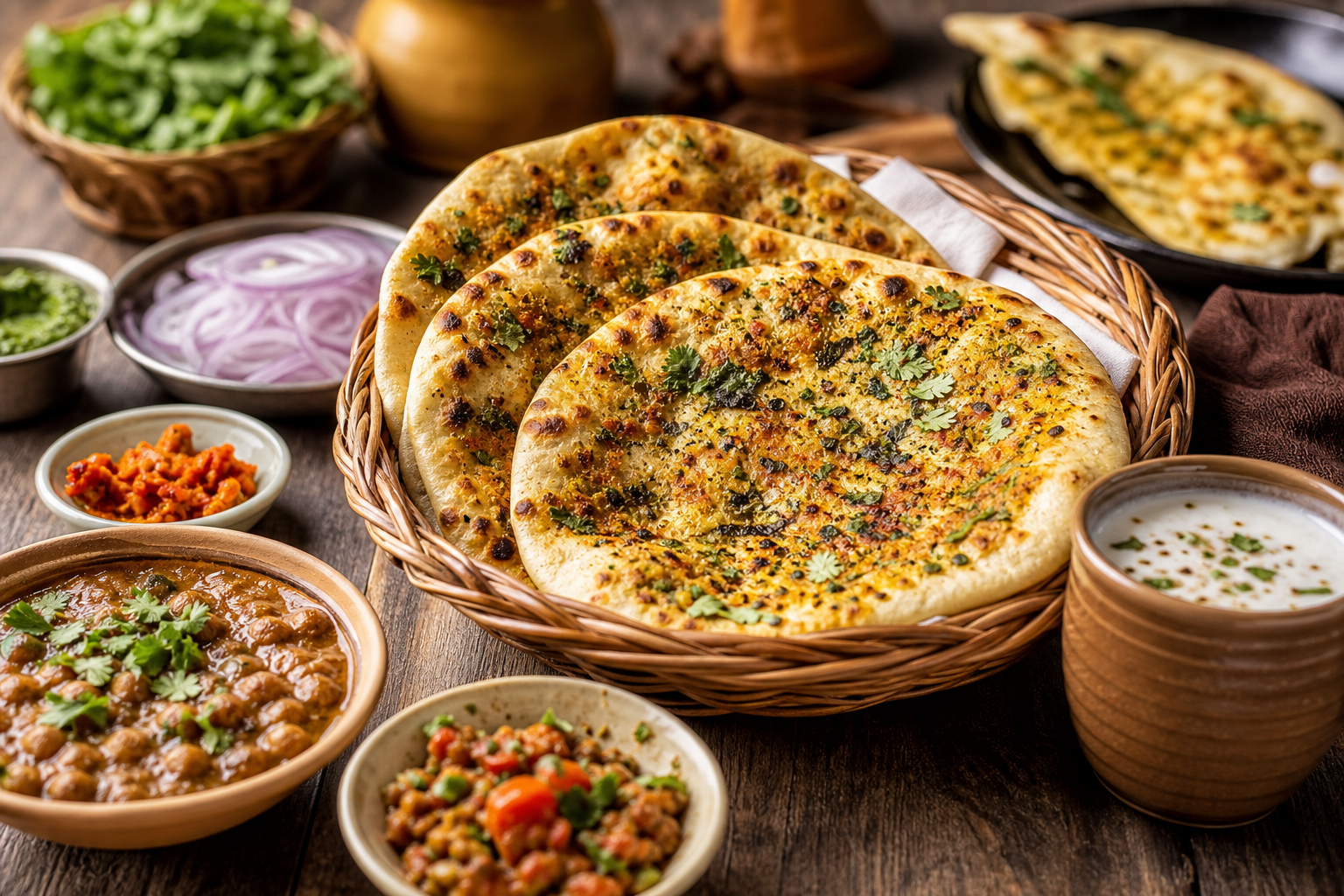
Nutri kulcha is a kulcha style where the dough is enriched and the interior is often brushed with butter or ghee so layers separate and remain soft while the exterior gets a light char. Amritsari kulcha is a close cousin that commonly comes stuffed with potato, paneer, or other savory fillings and is traditionally served with chole and chutneys. The distinguishing technique for Nutri kulcha is a brief covered-steam or closed-pan finish that traps moisture and helps internal flakiness while the final high-heat contact creates crisp edges.
For local context, Taste of Amritsar highlights Amritsari and Nutri kulchas among its signature breads and emphasizes imported masalas and traditional techniques to preserve authentic Punjabi flavours; see the restaurant’s regional menu overview for more context on how these breads are served on site.
A reliable home Nutri kulcha recipe with equipment alternatives
This tested recipe uses an enriched dough and a short pan finish to reproduce the soft layers and gentle char of a restaurant-style Nutri kulcha. The covered-steaming step is the key conversion from tandoor cooking to stovetop or oven methods.
Ingredients (yields about 8 medium kulchas)
- 3 cups all-purpose flour
- 1 teaspoon salt
- 1 teaspoon sugar
- 1 teaspoon instant yeast
- 2 tablespoons plain yogurt
- 2 tablespoons melted butter or neutral oil
- About 1 cup warm water, plus extra as needed
- 4 tablespoons melted ghee or butter for brushing
- Optional filling: 1 cup grated paneer or 1 cup mashed spiced potato (cooled)
- Optional nutri mix: toasted seeds or crushed roasted peanuts mixed with chopped coriander and a pinch of mild chili powder
Equipment
- Mixing bowl and rolling pin
- Cast-iron tava, heavy skillet, or oven with a preheated baking stone
- Lid for skillet or a large inverted metal bowl to cover during pan steaming
Method
- In a bowl, mix flour, salt, sugar, and yeast. Stir in yogurt and melted butter, then add warm water gradually to form a soft dough. Knead for 6 to 8 minutes until smooth and elastic.
- Place dough in a lightly oiled bowl, cover, and allow to rise until roughly doubled. In warm kitchens this takes about 45 to 60 minutes; in cooler kitchens 60 to 90 minutes.
- Divide dough into golf-ball sized portions. Roll one ball into a 6 to 7 inch circle, place 1 to 2 tablespoons of filling in the center, gather and seal the edges, then gently roll again into a flattened disc about 5 to 6 inches across. Handle gently to keep trapped air.
- Preheat a heavy skillet or griddle over medium-high heat. Cook the kulcha on the hot surface; after 30 to 60 seconds flip when the underside shows pale brown spots. Brush the cooked side with ghee, then cover the kulcha with a lid or inverted metal bowl for 1 to 2 minutes so trapped steam softens the layers.
- Finish on high heat for a light char. On a gas stove you can expose the kulcha briefly to direct flame, or return it to the hot skillet and press gently until the edges crisp. Brush with ghee before serving.
The short covered-steaming step helps develop internal layers while the final high-heat finish creates the desirable crispy edge. Home recipe and kulcha technique resources recommend this closed-pan step when working without a tandoor.
Equipment alternatives: how to mimic a tandoor at home
- Cast-iron skillet or tava: Preheat until very hot, use the covered-steam step to trap moisture, and finish over high heat for char.
- Oven on broil with a preheated baking stone: Slide kulchas onto the hot stone and broil briefly to blister and char, turning once for even spots.
- Outdoor grill: Use brief direct heat for spotting, then move to indirect heat with the lid closed to steam and soften layers.
These practical workarounds reproduce tandoor-like results. The covered-pan finish and immediate high-heat contact are the essential technique conversions.
Two quick Nutri kulcha variations to try
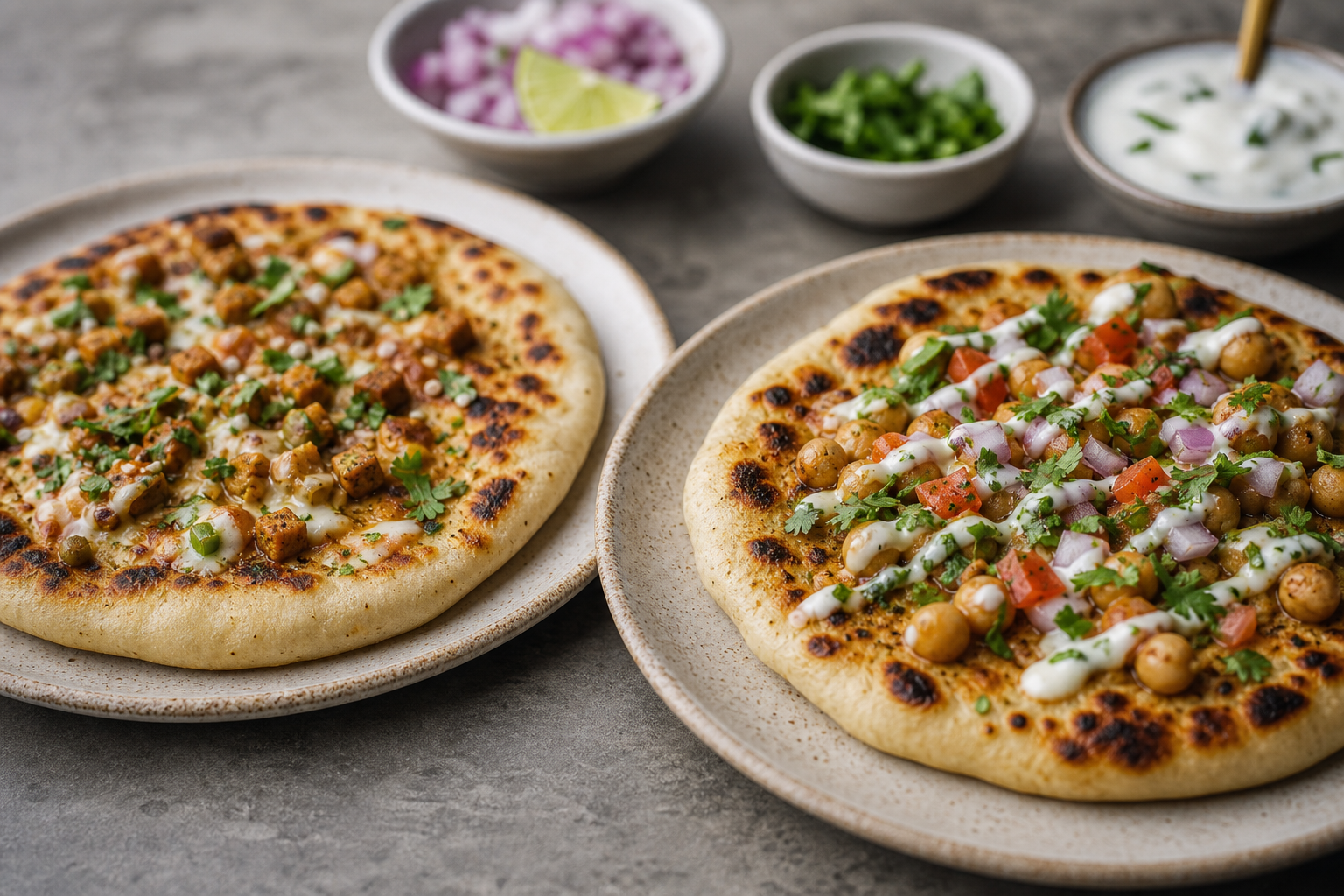
- Desi ghee Nutri: Brush generously with warm desi ghee after cooking to highlight nutty aroma and keep the interior soft. This finish increases richness and is common in Amritsari-style servings.
- Aloo or cheese-stuffed Nutri: Use spiced mashed potato or grated cheese in place of paneer. Reduce moisture in the filling by cooling or draining it to prevent sogginess.
Changing the fat or moisture level of the filling alters mouthfeel and richness. Keep fillings cool and reasonably dry before sealing to protect the dough during cooking.
Troubleshooting common problems and quick fixes
- Over-crisp exterior with dry interior: Lower pan heat and use the covered-steam step for 1 to 2 minutes to retain moisture inside.
- Flat or dense kulchas: Knead longer to develop gluten and allow a full rise. Underproofed dough yields dense breads.
- Soggy kulchas from wet filling: Thicken or cool the filling before sealing and reduce watery ingredients.
- Uneven charring: Ensure even preheat and rotate kulchas once during finishing; roll consistently to avoid thin spots.
These quick fixes reflect common home-kitchen observations and recommended adjustments from experienced cooks and kulcha-focused recipe notes.
Where to source authentic ingredients and spices in Brampton
Taste of Amritsar emphasizes imported masalas to preserve authentic Punjabi flavour profiles. For home cooks in Brampton, shop at reputable South Asian grocers and inspect packaging dates and whole-spice aroma. When a specific imported masala is unavailable, use freshly toasted and ground whole spices as the best substitute. For menu context and the restaurant’s approach to imported masalas, see the Punjabi dishes overview on the Taste of Amritsar site. For related first-party details, review Punjabi Dishes: Bold Flavors to Enjoy in.
Decision checklist: make at home or order in Brampton

Use this concise checklist to decide whether to cook Nutri kulcha at home or order from a local restaurant. Decision aids such as short checklists reduce cognitive load and make tradeoffs clearer.
- Equipment and time: Do you have a hot griddle or oven and at least 60 minutes for proofing and cooking? If no, ordering saves time.
- Ingredient access: Can you source fresh paneer, desi ghee, and authentic masalas locally? If not, a restaurant using imported masalas may be preferable.
- Desired texture: Do you want a soft layered interior with light char? If you are unsure about controlling pan heat, ordering reduces the risk of over-crisping.
- Portion consistency: Are predictable sizes important for a group? Restaurants often standardize portions better than an improvised home batch.
- Service reliability: Have you confirmed opening hours and order lead time for pickup or catering? A reliable restaurant saves coordination time for gatherings.
- Value and occasion: For casual cravings, cooking is economical; for special gatherings, ordering hot kulchas reduces stress and ensures consistent quality.
When you prefer ordering in Brampton, visit Taste of Amritsar to view menu items, hours, and ordering options on their official site.
Food safety, serving, and short plating notes
Follow standard food-safety practices when handling dairy and fillings. Keep perishable fillings refrigerated until assembly, reheat fillings until steaming hot before use, and avoid leaving cooked kulchas at room temperature for extended periods. Authoritative nutrition and food-safety resources recommend including clear storage and reheating instructions when sharing recipes.
Serve Nutri kulcha warm, brushed with ghee, alongside chole, green chutney, and a cooling lassi. To keep kulchas soft for service, stack them wrapped in a clean kitchen towel inside a covered container until plating.
Frequently asked questions
What makes Nutri kulcha different from Amritsari kulcha
Nutri kulcha emphasizes interior layering and a ghee-brushed richness that keeps the bread soft, while Amritsari kulcha often highlights specific stuffed fillings and a strong chole pairing. Both share Punjabi techniques but differ in finishing and typical serving choices.
Can I make Nutri kulcha without a tandoor and still get layered texture
Yes. Use a hot cast-iron skillet and the covered-steaming step to trap moisture so layers form, then finish on high heat for light charring. This stovetop method reproduces tandoor-like results for most home cooks.
How do I keep Nutri kulchas soft before serving
Stack cooked kulchas and wrap them in a clean towel inside a covered container, and brush with warm ghee before serving. The trapped steam preserves softness until plating.
Where can I buy authentic Punjabi masalas in Brampton
Look for well-stocked South Asian grocers and ask for brands known to import whole spices. Inspect packaging dates, aroma, and firmness of packaging to avoid moisture exposure. For an example of a local restaurant that prioritizes imported masalas, see the Taste of Amritsar site.
When should I choose to order Nutri kulcha from Taste of Amritsar instead of cooking it at home
Order from Taste of Amritsar when you need consistent portions, authentic imported masalas, or a ready-to-serve option for a gathering. Ordering removes timing and texture risk and can be the better choice for special occasions.
Visit Taste of Amritsar to view menus, opening details, and ordering options, or read their local dish overview on the Punjabi dishes page for menu context.
Selected references and technique sources used for this article include kulcha technique notes from regional recipe writeups, the Agency for Healthcare Research and Quality guidance on using decision aids to structure checklists, and nutrition and food-safety formatting recommendations from government resources.
Decide with confidence: test the recipe once to learn your pan and heat, or order locally when you want reliable portioning and authentic imported masala flavours from a Brampton kitchen.
Final CTA: Visit the official website to view the menu, opening details, and ordering options.
References: KULCHA — Saucepans and Spices; Incorporate decision aids into reports — AHRQ; recipe and food-safety formatting guidance — printable materials and handouts and the University of Maine Cooperative Extension food-safety style guide.


Leave A Comment