






What red flags should you look for in Indian sweets and desserts in Brampton?
Shopping for mithai or ordering dessert for an event is exciting, but Indian sweets vary widely in ingredients and handling. This article gives a focused checklist you can use in-store, on the phone, or when ordering online to avoid common mistakes, verify authenticity, and choose a trustworthy local vendor in Brampton.
Quick checklist, instant red flags to avoid before you buy
Use this scannable list while you browse a display case, review an online shop, or speak with a vendor. If you spot any of these red flags, pause and ask questions before paying.
- No refrigeration for dairy sweets, when the shop leaves milk-based sweets unrefrigerated for hours.
- Flat or chemical aroma instead of warm cardamom, saffron, or ghee notes.
- Syrupy sweets that look dull or have visible crystallised sugar instead of glossy syrup.
- No ingredient list or expiry date on packaged boxes, or the vendor cannot state when items were prepared.
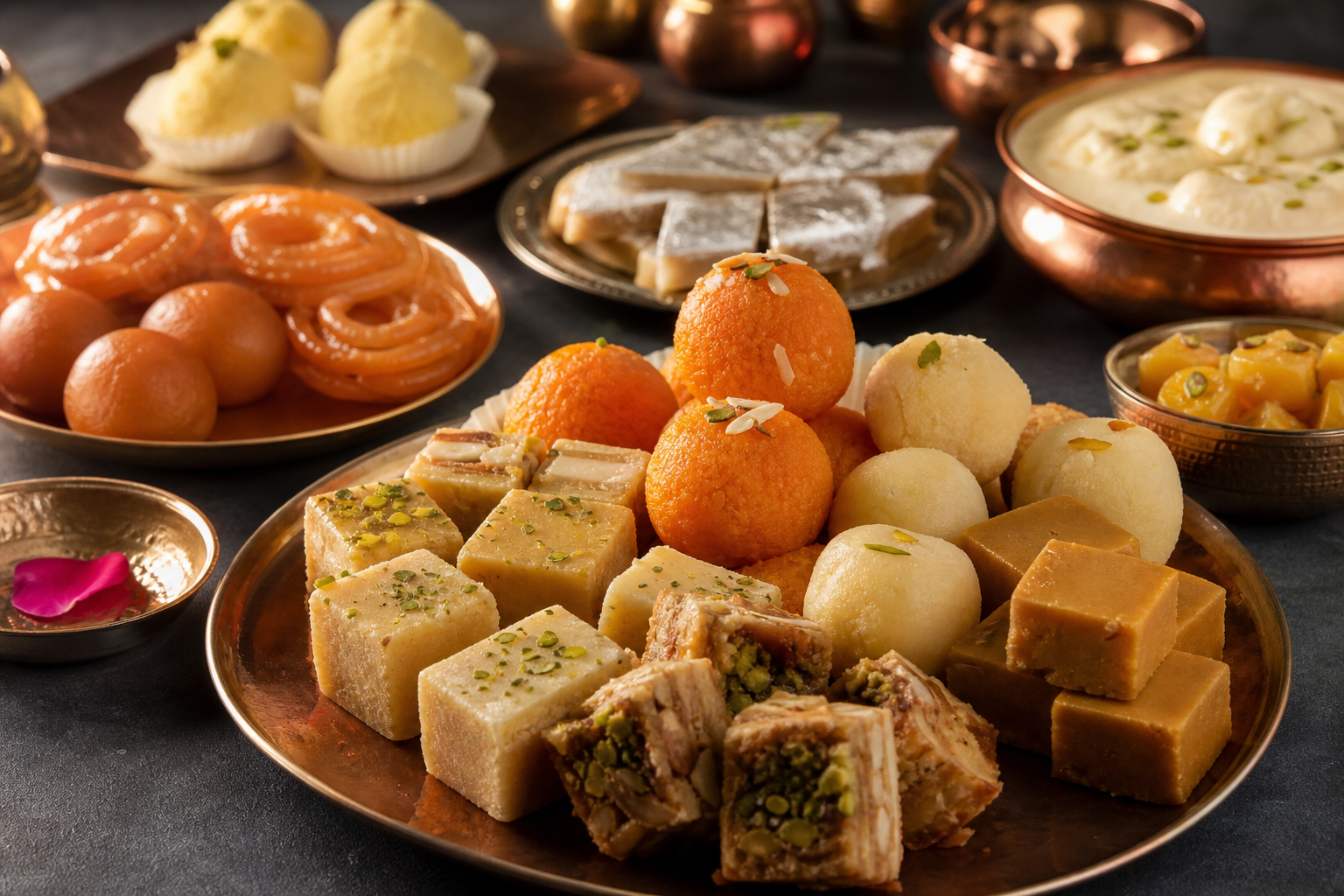
- Mass-produced texture for hand-finished items, such as perfectly uniform gulab jamun or jalebi that lacks variation.
- Oil-heavy or soggy fried sweets with an off taste, which indicates poor frying or old oil.
- Overuse of artificial colours that masks natural saffron or rose hues.
For context on the wide range of Indian dessert styles, browse curated examples and recipe notes on the Food Network collection. That resource highlights method differences that create distinct textures and storage needs. For related first-party details, review A Practical Guide to Punjabi Food.
Ingredient authenticity markers, what true mithai should taste and feel like
Many authentic mithai rely on a few core ingredients and flavour markers. Knowing these lets you recognise cost shortcuts and understand why freshness matters.
Khoya, ghee, saffron and cardamom, what to expect
Khoya is concentrated milk solids used in many traditional barfi, peda, and mawa-based sweets. Authentic khoya products have a dense, creamy mouthfeel without a cloying condensed-milk bite. Desi ghee should smell nutty and appear as a subtle sheen on barfi or halwa. Saffron adds faint golden strands and a delicate floral aroma, it should not smell chemical. Cardamom gives a warm, slightly citrusy lift that brightens dairy sweets. These ingredient signatures are described in background pieces about mithai traditions and common aromatics, for example the beginner’s guide to Indian sweets.
When vendors substitute cheaper bases such as condensed milk, vegetable fat, or artificial flavouring, the texture and aftertaste change. If you cannot detect the expected dairy richness, ask how the sweet was made.
Storage, perishability, and delivery mistakes that ruin sweets
Not all Indian sweets store the same way. Some items are shelf-stable for a day, others must be refrigerated and consumed quickly. Shipping and local delivery create another point of failure when perishable sweets travel long distances without temperature control.
Dairy-rich, syrup-soaked, and fried sweets, storage rules by type
- Dairy-rich sweets such as milk-based barfi, peda, ras malai, and khoya items require refrigeration and are best eaten within 2 to 4 days when stored properly. Consumer advice about buying fresh mithai online highlights this perishability.
- Syrup-soaked sweets like gulab jamun and some jalebi must be kept cool to avoid fermentation or sugar crystallisation. For long transports, vendors should provide insulated packaging and cooling packs.
- Fried sweets such as crispy jalebi or mawa jalebi taste best the same day. They go soggy with time as syrup migrates or moisture is absorbed.
- Dry sweets like some barfi or nut laddoos typically have longer shelf life, but still benefit from airtight packaging to prevent rancidity in nuts and ghee.
When buying online or from out-of-town shops, check the seller’s shipping methods and express options. Practical guides for ordering fresh Indian sweets emphasise express delivery and clear storage instructions from the vendor as essentials for maintaining quality. See a buying checklist at DesiClik for shipping tips and freshness checks.
Packaging and sourcing red flags, plus how to verify a vendor

Transparency is a strong indicator of quality. Reputable sweet shops publish or provide ingredient lists, preparation timelines, and storage directions. Watch for these red flags when inspecting packaging and vendor practices.
- No ingredient list for packaged sweets, or vague answers about what is inside.
- No preparation date or expiry on boxed orders, or refusal to confirm when items were made.
- Bulk pre-bottled syrup or re-used oil without visible freshness checks.
- Uncovered sweets in display cases that allow cross-contamination or attract pests.
- No allergy information and no willingness to confirm absence of nuts, ghee, or animal rennet.
If you want a naming guide to match sweets to textures and storage needs, consult a curated catalog such as the managed list of Indian sweets and desserts.
Questions to ask before ordering for pickup, delivery, or an event
Asking the right questions prevents most problems. Below are direct, copyable questions and what acceptable answers look like.
Sample questions to ask now, on the phone, or in the order notes
- When were these made? Acceptable answer, same day or yesterday for most dairy items. If the vendor cannot confirm a date, do not order perishable sweets for an event.
- Are these made with khoya or condensed milk? Khoya indicates traditional technique. If condensed milk is used, expect a different texture and shorter shelf life.
- Do these require refrigeration? Sweets that need refrigeration should be stored cold during transport. Vendor should provide explicit storage instructions.
- How will you package for delivery? Look for insulated packaging, cooling packs, or pickup recommendations within a short time window.
- Can you list all ingredients and allergens? A transparent vendor will supply a full ingredient list and note use of ghee, nuts, or animal rennet.
- What is the shelf life if I keep these refrigerated? Vendors should be able to give a conservative timeline for safe consumption.
- Do you use artificial colours or flavours? Honest answers should be specific about natural saffron, rose, or cardamom versus artificial substitutes.
- Can you make these fresh on the day of the event? For large orders, confirm lead time and whether same-day preparation is possible.
These questions are practical for event planners and everyday shoppers. When vendors answer clearly, you can assess their confidence and the likely freshness of the sweets.
Where to try authentic Amritsari and Punjabi desserts in Brampton
If you prefer to taste before you buy, local restaurants and sweet shops with transparent practices are the safest option. Taste of Amritsar is a downtown Brampton restaurant that focuses on Amritsari and Punjabi cuisine and highlights traditional ingredients and tandoori flavours. Check their site for contact, hours, and menu focus at the official website. Their listing notes a focus on imported masalas and traditional preparation, which signals a broader commitment to authentic techniques.
For a wider industry catalog and naming guide, consult the managed list of sweets linked above to match names to textures and storage needs before you order.
Decision criteria and common objections, and how to choose

Match your decision to the occasion. For same-day events, prefer local pickup from a shop that confirms same-day preparation or offers insulated delivery. For out-of-town shipping, restrict your order to dry sweets that travel well, and insist on express methods and clear storage instructions. If you cannot taste saffron or cardamom in a sample, ask about ingredient sourcing and request a small test order. For low-sugar needs, not all sweet shops can modify traditional recipes, so confirm changes in advance.
Common objections and quick responses:
- “I cannot taste saffron”, ask whether saffron is used or an artificial colour, and request a small sample or photo of the strands.
- “I need low sugar options”, vendors may offer lighter syrup levels for some sweets, but texture will differ. Confirm sample tasting before large orders.
- “Can I order far in advance”, avoid ordering perishable dairy sweets ahead of time. For events, schedule a close-to-event production date.
Frequently asked questions
How long do common mithai like gulab jamun, barfi, and jalebi stay fresh?
Gulab jamun and other syrup-soaked items last about 2 to 4 days refrigerated with proper packaging. Barfi and dry nut laddoos can keep 4 to 7 days refrigerated. Fried jalebi is best same day to preserve crispness. These practical timelines align with guidance for buying fresh mithai and their storage needs.
Can I safely order syrup-soaked sweets like gulab jamun for same-day delivery outside Brampton?
It is risky unless the vendor offers insulated packaging and express delivery. Syrup-soaked sweets change texture quickly in transit and may ferment or crystallise without cooling. Ask the seller for their shipping protocol and a conservative estimate of delivery time.
How can I tell khoya made from milk solids versus cheap condensed milk?
Khoya has a granular, rich dairy mouthfeel and a natural milky aroma. Condensed milk tends to leave a slightly sweeter, more uniform texture and a cooked-sweet aftertaste. The vendor should disclose which was used if you ask directly.
Are Indian sweets usually vegetarian, and how should I ask about ghee or animal rennet?
Many mithai are vegetarian, but ghee is a dairy fat and not vegan. For lacto-vegetarian needs, verify ghee use. For strict vegetarian or kosher concerns, ask the vendor about animal rennet in dairy processing and request documented ingredient lists.
What is the best way to store and reheat jalebi or fried sweets so they do not go soggy?
Store fried sweets in an airtight container on the same day and reheat briefly in a low oven or air fryer for a few minutes to crisp. Avoid microwaving, which traps steam and makes them soggy.
Final recommendation
When in doubt, ask direct questions, demand ingredient transparency, and prefer local shops that confirm same-day preparation and safe packaging. For a local Brampton option with a focus on authentic Punjabi flavours and traditional techniques, contact the official website for menu and ordering information. Their site lists the downtown address and phone, and explains their Amritsari focus, which can help you evaluate whether their desserts meet your needs.


Leave A Comment