







Explore North Indian Food With a Practical Ordering Guide
North Indian food for first-time and returning diners
Short answer. Start with the people at the table, not a list of famous dishes. Confirm dietary needs, scan the current menu by category, choose contrasting cooking styles and textures, add an appropriate bread or rice choice if available, and ask the restaurant to confirm ingredients or cross-contact concerns. North Indian food includes many regional and household traditions, so no single order represents the whole cuisine.

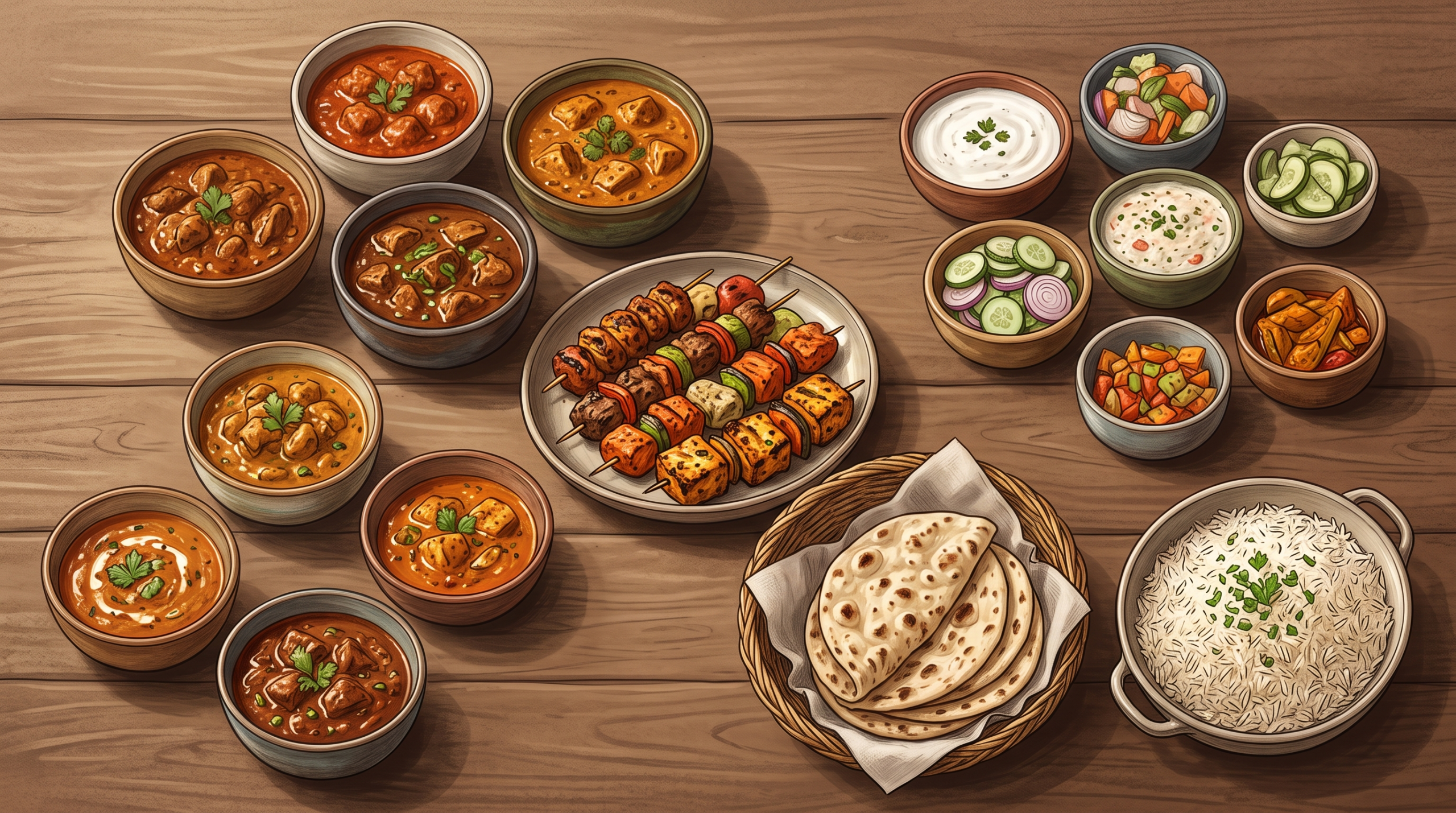
A satisfying shared order usually combines contrast rather than repeating the same sauce, texture or cooking style.
Understand North Indian food without reducing it to one style
North India contains many regions, languages, communities, climates, and cooking traditions. Restaurant menus may draw from several of them, sometimes alongside Punjabi or specifically Amritsari influences. The practical lesson is simple: use a restaurant’s own descriptions to understand its current food instead of assuming that every North Indian restaurant serves the same dishes or prepares them in the same way.
Flavour is also more useful than a one-dimensional “mild versus hot” label. Aromatic spices can contribute warmth, earthiness, bitterness, sweetness, fragrance, or depth without creating the same chilli heat. Richness can come from several ingredients or techniques, and a familiar dish name does not guarantee the same recipe from one kitchen to another. Ask about the specific choice you are considering.
Taste of Amritsar currently introduces its offering through broad sections such as starters, curries, tandoori preparations, and sweet or refreshing choices on its restaurant website. Those category labels are useful wayfinding, but they do not confirm a dish, ingredient, price, portion, preparation, or availability. The live menu page remains the place to begin a current order.
Read North Indian menu categories as decision clues
A category tells you the role a selection might play in the meal. It does not tell you everything about ingredients or preparation. Use these broad roles to create variety, then rely on the current menu and staff for the details.
| Menu role | What it can contribute | What to compare | What to confirm |
|---|---|---|---|
| Starter or snack | A smaller opening taste or contrasting texture | Fried, grilled, fresh, soft or crisp options | Serving format, ingredients, sauces and current availability |
| Grilled or tandoor-style section | Roasted character and a less sauce-centred choice | Protein or vegetable base, marinade and accompaniments | Ingredients, doneness, dietary needs and kitchen practice |
| Curry or gravy section | A spoonable main component with layered seasoning | Base ingredient, richness, heat and texture | Dairy, nuts, gluten sources, meat stock, garnish and substitutions |
| Bread or rice section | A base for sharing and a contrast to sauced foods | How many people are sharing and what else is ordered | Current varieties, ingredients and preparation surfaces |
| Sweet or refreshing section | A finish or cooling contrast | Whether the table wants a drink, dessert or both | Dairy, nuts, added ingredients, size and availability |
If two selections occupy the same role, ask whether both add meaningful contrast. Two rich gravies may be enjoyable, but a table that also wants a roasted element, something crisp, or a lighter accompaniment may prefer a broader mix. This is not a nutrition rule; it is a way to avoid accidental repetition in a shared order.
For one diner, choose a complete combination that fits appetite and dietary needs rather than trying to sample every category. For a group, assign roles before selecting names: an opening item, one or more mains with different profiles, an appropriate base, and an optional finish. Confirm portion guidance with the restaurant because serving sizes are not standardized.
Build a North Indian food order in five practical steps

Choose by category and contrast, then verify current ingredients, availability and dietary requirements directly.
- Count diners and collect needs. Note allergies, intolerances, religious or ethical dietary requirements, heat preferences, appetite, and whether people are comfortable sharing. A preference and a medical allergy are not the same question.
- Open the current menu. Ignore old screenshots and third-party lists when possible. Availability, descriptions and prices can change. Use the restaurant’s live route, then confirm anything important directly.
- Choose contrast deliberately. Compare cooking style, texture, sauce level, richness and temperature. A varied table might combine a dry or roasted element with a sauced one and a crisp element with a softer one, subject to what the menu actually offers.
- Check the base and quantity. Bread and rice choices can affect how the mains are shared. Ask the restaurant for current portion guidance instead of relying on a universal formula.
- Confirm before ordering. Ask about the exact choices, important ingredients, cross-contact limitations, substitutions, spice adjustment, and packaging or serving details that matter to your group.
When several people are ordering, designate one person to collect questions before contacting the restaurant. A short consolidated list is easier to answer accurately than messages arriving separately. Repeat the confirmed details to the group so no one assumes that one answer applies to a different dish.
If the meal includes newcomers, avoid making the “most intense” option a test of authenticity. A thoughtful introduction gives each person a clear choice and room to discover what they enjoy. The goal is not to prove expertise; it is to build a meal the table can comfortably share.
Ask specific questions about ingredients and dietary needs
“Is this safe for me?” can be too broad for staff to answer without context. Name the ingredient or requirement and the exact menu choice. For example, ask which ingredients are used, whether a garnish or sauce changes the answer, whether equipment or preparation surfaces are shared, and whether a requested modification can actually be followed.
Health Canada’s overview of food allergies and intolerances explains why these concerns deserve direct attention. The Canadian Food Inspection Agency lists Canada’s priority allergens, gluten sources and added sulphites. A restaurant conversation is different from reading a packaged-food label, and an ingredient list alone may not resolve cross-contact risk.
- Which current menu choices can the kitchen discuss for this specific requirement?
- What are the ingredients in the main component, marinade, sauce, garnish, bread, and accompaniment?
- Are shared fryers, grills, utensils, storage areas, or preparation surfaces relevant?
- Can a modification be made consistently, and will the final order be clearly identified?
- If the restaurant cannot confirm the requirement, what is the safest next step for the diner?
Do not use this guide as medical advice or as proof that any food is allergen-free, gluten-free, vegetarian, vegan, halal, or otherwise suitable. People managing a serious allergy should follow their established care plan and make decisions based on direct, current information.
Common North Indian food ordering mistakes to avoid
Ordering only by familiar dish names
Names may be prepared differently across restaurants. Read the current description and ask about ingredients rather than treating familiarity as certainty.
Using heat as the only flavour measure
Heat preference matters, but so do aroma, tang, sweetness, smokiness, texture and richness. Describe what you enjoy instead of asking only for the hottest or mildest option.
Repeating the same role across the whole table
A shared order can feel heavy or monotonous when every choice has a similar texture and sauce profile. Use the category table to create contrast.
Assuming a dietary label from the main ingredient
A vegetable-centred name does not establish every ingredient, cooking medium, garnish, stock, sauce, or preparation surface. Confirm the exact choice.
Relying on an old or third-party menu
Menus, prices, recipes and availability can change. Start with the business’s current information and contact the restaurant when a detail affects the decision.
Frequently asked questions about North Indian food
Is all North Indian food spicy?
No single heat level defines the cuisine. Recipes and restaurant preparations vary, and aromatic spice is not identical to chilli heat. Ask how the specific choice is prepared and whether heat can be adjusted.
How should a first-time diner choose?
Describe preferred textures and flavours, identify dietary needs, and ask for a current option from two or three different menu roles. A smaller, varied order is often more informative than choosing many similar items.
Can I tell whether a dish is vegetarian or vegan from its name?
No. The base ingredient may not reveal dairy, stock, garnish, cooking medium, or preparation details. Ask the restaurant to confirm the exact current preparation.
How much food should a group order?
There is no reliable universal count because portions, appetites, ages and sharing styles vary. Tell the restaurant the group size and meal format, then request current portion guidance.
Take the next step with the current Taste of Amritsar menu
Write down the number of diners, dietary requirements, desired flavour contrast, and any ingredient questions. Then review the current Taste of Amritsar menu, learn how the restaurant describes its approach on the about page, and use the contact page to confirm important details before ordering. The restaurant—not this general guide—should be the source for current dishes, ingredients, preparation, prices, portions and availability.


Leave A Comment